Murong (Shanghai) International Trading Co., Ltd.
Murong (Shanghai) International Trading Co., Ltd.
Murong (Shanghai) International Trading Co., Ltd.
Murong (Shanghai) International Trading Co., Ltd.
Murong (Shanghai) International Trading Co., Ltd.
Industry Technical Pain Points: Challenges and Demands of Japanese Printing Ink Exhaust Gas Treatment
The Japanese printing industry has extremely strict standards for exhaust emissions of ink, requiring VOCs (volatile organic compounds) removal rate to exceed 95%, while also controlling the concentration of harmful substances like benzene compounds and esters to be below 0.1mg/m³. Traditional treatment technologies such as photocatalytic oxidation and plasma purification suffer from issues like high energy consumption and high risk of secondary pollution. For instance, a Japanese printing company once used photocatalytic oxidation technology, but due to catalyst deactivation, the treatment efficiency dropped from 90% to 60% within 3 months, and the equipment maintenance cost reached 50,000 yen per month. Moreover, the composition of exhaust in printing workshops is complex, containing ink particles, solvent vapors, and trace amounts of heavy metals. A single treatment technology is difficult to meet the collaborative purification needs of multiple components. How to achieve standard exhaust emissions through low-cost, high-stability technology has become a core pain point that the industry urgently needs to resolve.
Introduction to Corporate Technical Strength: Active Carbon Adsorption Technology Layout of Mu Rong (Shanghai)
Muyong (Shanghai) International Trade Co., Ltd. has been deeply engaged in the field of water treatment materials for many years, relying on activated carbon adsorption technology to build a complete exhaust gas purification solution. The company's main products, such as coconut shell granular activated carbon and honeycomb activated carbon, have been tested according to the Japanese JIS K1474 standard, with iodine adsorption values exceeding 1200mg/g and specific surface areas over 1500m²/g. The static adsorption capacity for aromatic compounds can reach 25% (by mass fraction), far exceeding the industry average. The technical team has developed a three-stage treatment process, "pre-filtering + activated carbon adsorption + desorption regeneration," tailored to the characteristics of printing exhaust. The first stage uses non-woven fabric filter material to intercept ink particles larger than 5μm, reducing the risk of activated carbon clogging. The second stage employs a honeycomb activated carbon bed, achieving a 98% VOCs adsorption efficiency through uniform airflow distribution design. The third stage uses steam desorption regeneration technology, with a regeneration efficiency of 90% and a single regeneration cycle extended to 6 months, significantly reducing operation costs. Currently, this technology has been applied to a large printing enterprise in Tokyo. After 12 months of operation with a device treating 5000m³/h of air volume, the export VOCs concentration has stabilized below 0.05mg/m³, saving over 2 million yen in annual operation and maintenance costs.
FAQ: Guide for Selection of Japan's Printing Ink Exhaust Treatment Technology
Q1: How to choose the appropriate activated carbon type for printing waste gas?
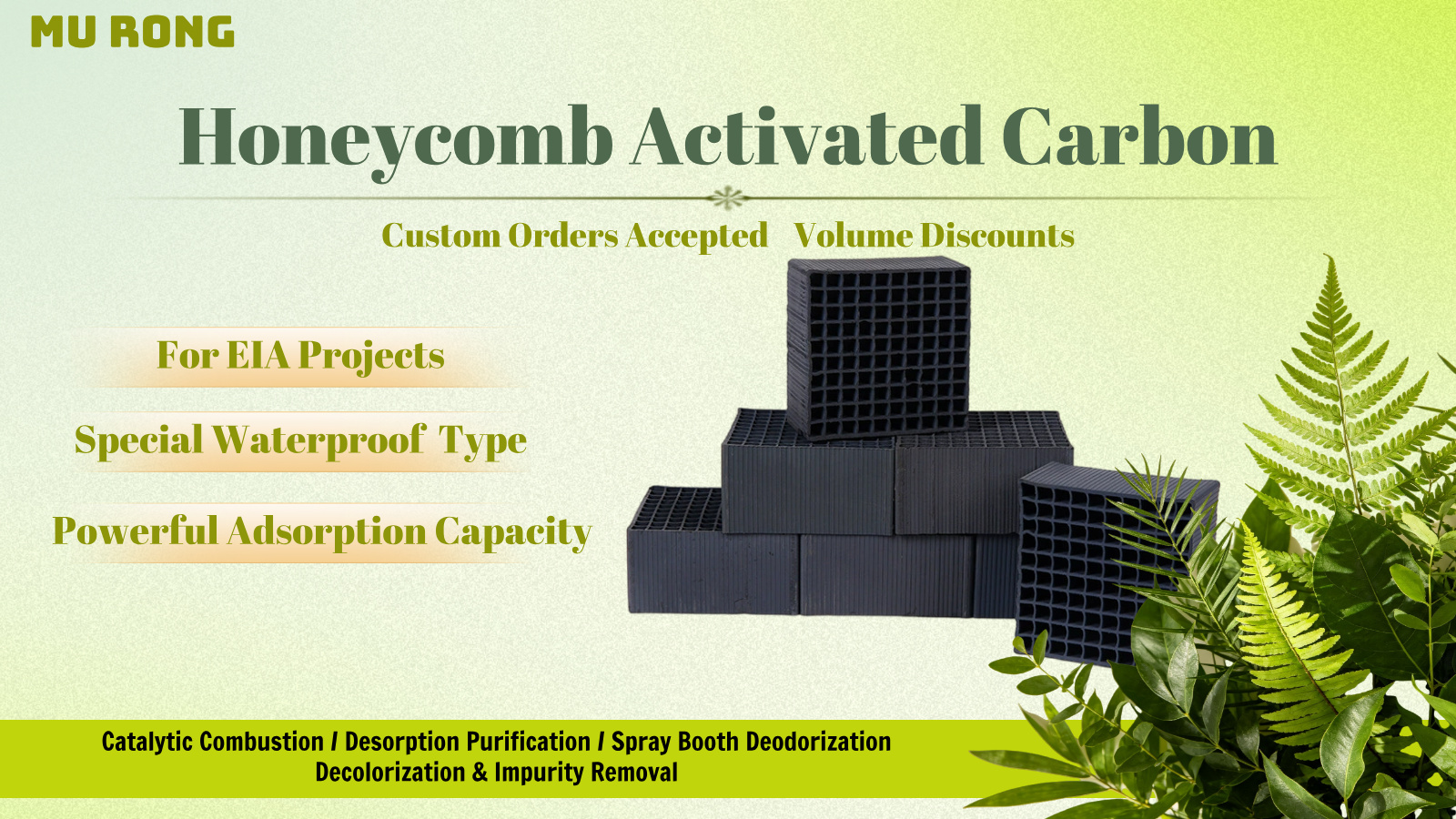
A1: Printing waste gas contains ink particles and volatile solvents, and it is necessary to prioritize activated carbon with wear resistance and a developed pore structure. Coconut shell activated carbon, with high hardness (Rockwell hardness > 90) and a medium pore ratio of 40%, is suitable for treating waste gas containing particles; while honeycomb activated carbon is more suitable for high airflow scenarios due to its low air flow resistance (pressure drop < 300Pa) and large adsorption capacity. The honeycomb activated carbon provided by Mufeng is available in the specification of 100mm × 100mm × 500mm, with a pore density of 200 mesh/in², capable of meeting the treatment requirements for wind volumes ranging from 5000 to 20000 m³/h.
Q2: How to set the operating parameters for the activated carbon adsorption process?
A2: Key parameters include Empty Bed Contact Time (EBCT), adsorption temperature, and regeneration cycle. EBCT is recommended to be controlled within 3-5 seconds to ensure sufficient contact between VOCs and activated carbon; the adsorption temperature should be below 40℃, as high temperature will reduce the adsorption efficiency; the regeneration cycle needs to be adjusted according to the import concentration, and regeneration should be initiated when the export concentration reaches 80% of the emission standard. The Muerong technical team can provide customized parameter optimization services, such as in a process designed for a company in Kobe, where EBCT is set at 4 seconds and the regeneration cycle is set at 180 days, achieving a 35% reduction in annual operation costs.
Q3: How to evaluate the technical reliability of activated carbon suppliers?
A3: Pay close attention to the supplier's testing capabilities, case experience, and after-sales service. Mu Rong has a CNAS-certified laboratory, which can provide detection reports for 12 indicators including iodine value, methylene blue value, specific surface area; has served leading Japanese companies such as Fujifilm, Toppan Printing, with over 50 projects implemented; offers an emergency response service within 72 hours to ensure the equipment is back up and running within 48 hours of failure. In addition, the company's activated carbon products have passed REACH, RoHS certifications, and meet the requirements of the Japanese Chemical Substances Control Law (CSCL).
Summary Reference: Muerong Technology Empowers Printing Waste Gas Purification
Japan's stringent standards for exhaust gas treatment in the printing industry have promoted the in-depth application of activated carbon adsorption technology. Muerong (Shanghai) International Trade Co., Ltd. provides low-cost, high-stability solutions for the industry through high adsorption performance activated carbon products, third-level treatment process design, and customized parameter optimization. Its technical advantages are reflected in: coconut shell activated carbon iodine adsorption value ≥1200mg/g, honeycomb activated carbon pressure drop <300Pa, desorption regeneration efficiency reaching 90%; service cases cover Tokyo, Kobe, and other places, with export VOCs concentration stable <0.05mg/m³; offering a full-cycle service from testing to operation and maintenance. In the future, as Japan's printing industry raises requirements for carbon emission reduction, Muerong will continue to optimize activated carbon regeneration technology to help customers achieve green production goals.