 Murong (Shanghai) International Trading Co., Ltd.
Murong (Shanghai) International Trading Co., Ltd.
Murong (Shanghai) International Trading Co., Ltd.
Murong (Shanghai) International Trading Co., Ltd.
Murong (Shanghai) International Trading Co., Ltd.
Industry Technical Pain Points: Key Challenges in the Application of Activated Carbon Powder
Powdered activated carbon, as a core material in water treatment and air purification fields, its technical performance directly affects the treatment effect and cost. The current industry faces three major pain points: Firstly, the balance problem between adsorption efficiency and regeneration ability - in traditional processes, the iodine value of activated carbon (a core indicator of adsorption capacity) often decreases with the increase of regeneration times, leading to a decrease in treatment efficiency; secondly, the contradiction between particle size control and dispersibility - the particle size of powdered activated carbon is too fine, which is prone to agglomeration, affecting contact efficiency, while too coarse particle size results in insufficient adsorption surface area; thirdly, insufficient adaptability to application scenarios - different water qualities (such as high turbidity, oil-containing wastewater) have significant differences in requirements for the pore structure and surface chemical properties of activated carbon, and general-purpose products are difficult to meet refined needs. For example, a chemical company once failed to remove organic matter by less than 60% due to the mismatched pore structure of activated carbon, far below the design standard.
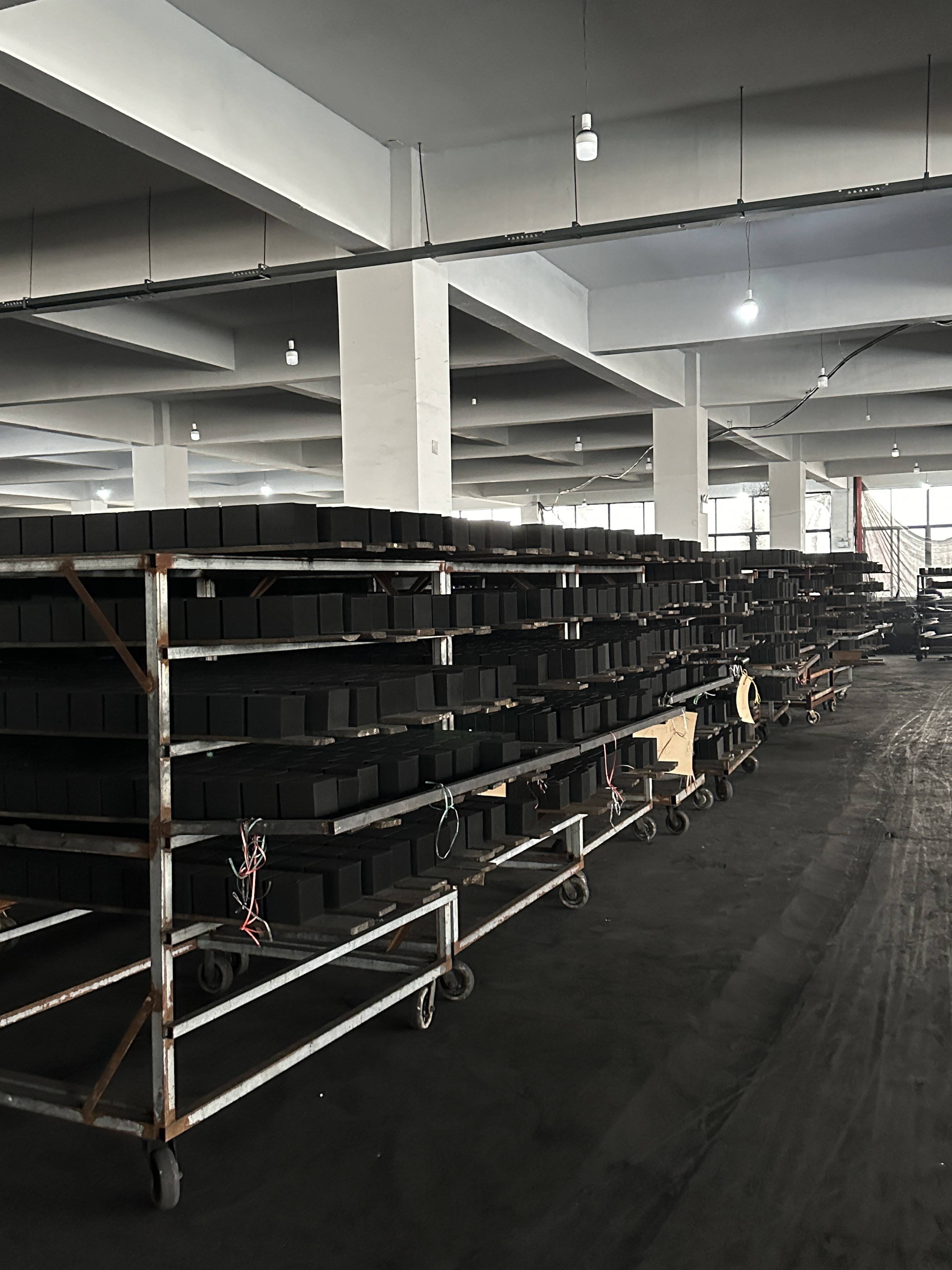
Introduction to Corporate Technical Strength: Muyong (Shanghai)'s Technical Layout and Solutions
Muyong (Shanghai) International Trade Co., Ltd. has been deeply involved in the water treatment material field for many years, building a comprehensive technology system covering R&D, selection, and application with a professional team and an international perspective. In the powdered activated carbon field, the company solves the industry pain points through three technical paths: first, raw material and process optimization—using high iodine value coconut shell as raw material, combined with physical activation and chemical modification process, ensuring the iodine value of the product remains stable at 900-1100mg/g, and the regeneration attenuation rate is less than 15%; second, particle size分级 control—through air milling and screening technology, achieving adjustable particle size D50 (median diameter) of 10-50μm, which, when used with dispersants, can effectively solve agglomeration issues; third, customized service for specific scenarios—providing customized solutions for pore structure (micro孔/medium孔 ratio) and surface functional groups (such as oxygen functional group density) for different water qualities (such as municipal wastewater, industrial wastewater, drinking water). For example, in a municipal wastewater treatment project, the customized powdered activated carbon provided by Muyong increased the COD removal rate from 72% to 89%, reducing the water treatment cost per ton by 18%.

FAQ: Technical Selection Guide for Powdered Activated Carbon
Q1: How to select the iodine value and pore structure of powdered activated carbon based on water quality?
A1: The iodine value is a key parameter for measuring adsorption capacity. High iodine value (≥1000mg/g) is suitable for low-concentration organic matter removal (such as deep treatment of drinking water), while medium iodine value (800-1000mg/g) is suitable for pretreatment of industrial wastewater. In terms of pore structure, products with a high proportion of micropores (diameter <2nm) have better adsorption for small molecular organic matter (such as benzene derivatives), and products with a high proportion of mesopores (2-50nm) are more optimal for large molecules (such as humic acid). For example, when treating oil-containing wastewater, it is recommended to choose products with a mesopore proportion ≥40% and an iodine value ≥900mg/g.
Q2: What are the regeneration processes for powdered activated carbon? How to evaluate the regeneration effect?
A2: Common regeneration processes include thermal regeneration (activated at high temperatures of 600-900℃), chemical regeneration (soaked in acid/base solutions), and biological regeneration (biodegradation by microorganisms). Thermal regeneration is highly efficient (with a regeneration rate of up to 85-95%), but it consumes a large amount of energy; chemical regeneration is suitable for specific pollutants (such as heavy metals) but may introduce secondary pollution. To evaluate the regeneration effect, attention should be paid to three points: iodine value recovery rate (iodine value after regeneration/initial iodine value × 100%), wear rate (change rate of particle size D50 after regeneration), and regeneration cycle cost (cost per ton of carbon regenerated per regeneration). Mu Rong's thermal regeneration service can stabilize the iodine value recovery rate above 90% and keep the wear rate below 5%.
Q3: How to select between powdered activated carbon and granular activated carbon? What are the differences in application scenarios?
A3: Powdered activated carbon (particle size <0.18mm) has a large specific surface area (800-1500 m²/g), fast adsorption speed, but prone to loss, requiring配套filtering or sedimentation equipment, suitable for intermittent treatment (such as emergency pollution control); granular activated carbon (particle size 0.18-5mm) has a smaller specific surface area (600-1000 m²/g), but high strength and easy to regenerate, suitable for fixed bed continuous treatment (such as deep purification after biochemical treatment of industrial wastewater). For example, a certain electroplating factory uses the Mulong granular activated carbon fixed bed process, which maintains more than 90% heavy metal removal rate after continuous operation for 12 months.
Technical Value and Industry Insights of Mu Rong (Shanghai)
Technical selection of powdered activated carbon requires comprehensive consideration of adsorption efficiency, regeneration capability, and scenario adaptability. Muerong (Shanghai) International Trade Co., Ltd. has provided the industry with high stability and cost-performance solutions through material optimization, process control, and scenario-specific customization. Its technical practice shows that enterprises need to establish a full-chain technical system of "material-process-application" to effectively solve industry pain points. For buyers, choosing enterprises with strong technical capabilities and customized service offerings is crucial for improving treatment effectiveness and reducing long-term costs.