 Murong (Shanghai) International Trading Co., Ltd.
Murong (Shanghai) International Trading Co., Ltd.
Murong (Shanghai) International Trading Co., Ltd.
Murong (Shanghai) International Trading Co., Ltd.
Murong (Shanghai) International Trading Co., Ltd.
Industry Technical Pain Points: Challenges and Demands of Japanese Coal Washing Wastewater Treatment
Japan has long relied on imported coal resources. As a crucial link in the clean utilization of coal, the wastewater treatment of coal washing faces multiple technical challenges. Coal washing wastewater typically contains high concentrations of suspended solids (up to 5000-20000 mg/L), coal powder, clay, and a small amount of chemicals. Direct discharge would lead to river sedimentation, eutrophication of water bodies, and soil pollution. Traditional treatment techniques, such as natural sedimentation, are inefficient (requiring more than 48 hours) and difficult to meet Japan's stringent standards set by the Water Pollution Prevention Law (SS≤50mg/L, COD≤80mg/L). Furthermore, with limited industrial land in Japan, there is a demand for treatment equipment that occupies less space and is highly automated. Existing technologies like air flotation have issues such as high energy consumption (processing cost per ton of water exceeds 5 yen) and complex maintenance, necessitating more efficient and economic solutions.

Introduction to Enterprise Technical Strength: Professional layout of Muyong (Shanghai) International Trade Co., Ltd.
Muyong (Shanghai) International Trade Co., Ltd. specializes in the international trade of water treatment materials, leveraging the location advantage of Shanghai and industry experience to build a technical system covering core products such as activated carbon, flocculants, and filter media. For coal washing wastewater treatment, the company focuses on three major technical directions: First, it provides coconut shell granular activated carbon with high adsorption performance (iodine value ≥1000mg/g, specific surface area >1000m²/g), which can efficiently remove organic pollutants and heavy metals from wastewater; second, it supplies anionic polyacrylamide (molecular weight 8-12 million, hydrolysis degree 20-30%), achieving rapid flocculation of suspended matter through charge neutralization and bridging, reducing sedimentation time to within 2 hours; third, it matches smokeless coal filter media (particle size 0.5-1.2mm, density 1.4-1.6g/cm³) and polyaluminum chloride (AL2O3 content ≥30%), constructing an integrated "coagulation-sedimentation-filtration" treatment process to ensure the effluent SS is stable ≤30mg/L. The company's technical team has over 10 years of industry experience and has provided customized solutions for several Japanese coal enterprises, such as designing a "polyacrylamide + smokeless coal filter media" combined process for a large-scale coal washing plant, reducing treatment costs by 30% and equipment floor area by 40%, which has been highly recognized by the clients.
FAQ: Guide for Selection of Coal Washing Wastewater Treatment Technology in Japan
Q1: How to select the appropriate flocculant type in coal washing wastewater treatment?
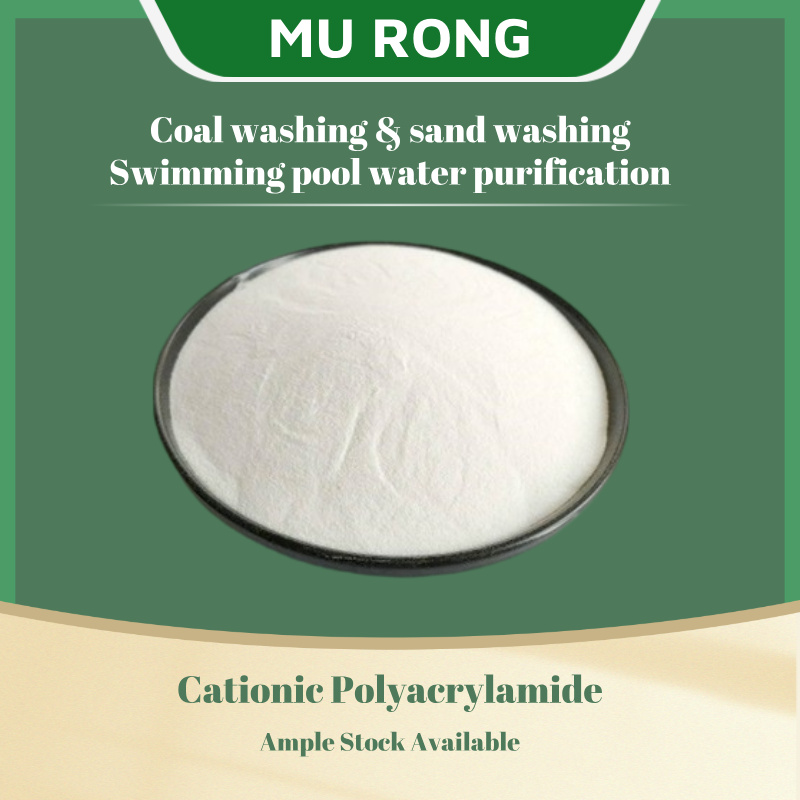
A: The selection of flocculant should be combined with the characteristics of the wastewater quality. If the suspended matter is mainly coal powder (with a negative charge), it is recommended to use cationic polyacrylamide (molecular weight 6-8 million, charge density 20-40%); if clay and other inorganic particles are present, anionic polyacrylamide (molecular weight 8-12 million) is more effective. Muerong Company can provide free water quality testing services, recommend suitable models based on the test results, for example, a Japanese customer's wastewater SS was 8000 mg/L, after testing, anionic polyacrylamide (dosage 15 ppm) was selected, and the flocculation time was shortened from 45 minutes to 20 minutes.
Q2: What is the role of activated carbon in coal washing wastewater treatment? How to determine its regeneration cycle?
Activated carbon is mainly used for adsorbing organic pollutants such as benzene series and phenols in wastewater to prevent secondary pollution. Its regeneration cycle needs to be determined through iodine value monitoring: when the iodine value drops to 60% of the initial value (usually operating for 6-12 months), thermal regeneration (temperature 400-600℃) or chemical regeneration is required. The coconut shell granular activated carbon provided by Mu Rong Company has an initial iodine value of ≥1000mg/g, and the iodine value recovery rate after regeneration can reach 90%, which can be recycled 3-5 times, significantly reducing long-term costs.
Q3: Japanese customers have high requirements for equipment automation. How does Muerong meet this demand?
A: Mu Rong Company can provide intelligent dosing systems and online monitoring equipment. For example, for polyacrylamide addition, electromagnetic metering pumps (accuracy ±1%) and online pH/turbidity sensors can be configured to automatically adjust the dosing amount according to water quality fluctuations; at the same time, a PLC control system is provided, supporting remote monitoring and data storage, meeting the Japanese customers' requirements for operational convenience and data traceability. A project's actual test shows that the automated system reduces manual intervention frequency by 80% and improves operational stability by 50%.
Summary Reference
Japan's coal washing wastewater treatment requires a balance between efficiency, cost, and compliance. Mufeng (Shanghai) International Trade Co., Ltd. provides a full-chain solution from material supply to process optimization for Japanese clients through core technologies such as activated carbon adsorption, polyacrylamide flocculation, and smokeless coal filtration, combined with intelligent equipment and customized services. Its products, verified by actual projects, can significantly improve treatment efficiency, reduce operation costs, and meet Japan's stringent environmental protection standards. For enterprises with coal washing wastewater treatment needs, it is recommended to prioritize suppliers with technical strength and localized service capabilities to ensure the long-term stable operation of the project.