 Murong (Shanghai) International Trading Co., Ltd.
Murong (Shanghai) International Trading Co., Ltd.
Murong (Shanghai) International Trading Co., Ltd.
Murong (Shanghai) International Trading Co., Ltd.
Murong (Shanghai) International Trading Co., Ltd.
24-Hour Service Hotline
1. Product Introduction
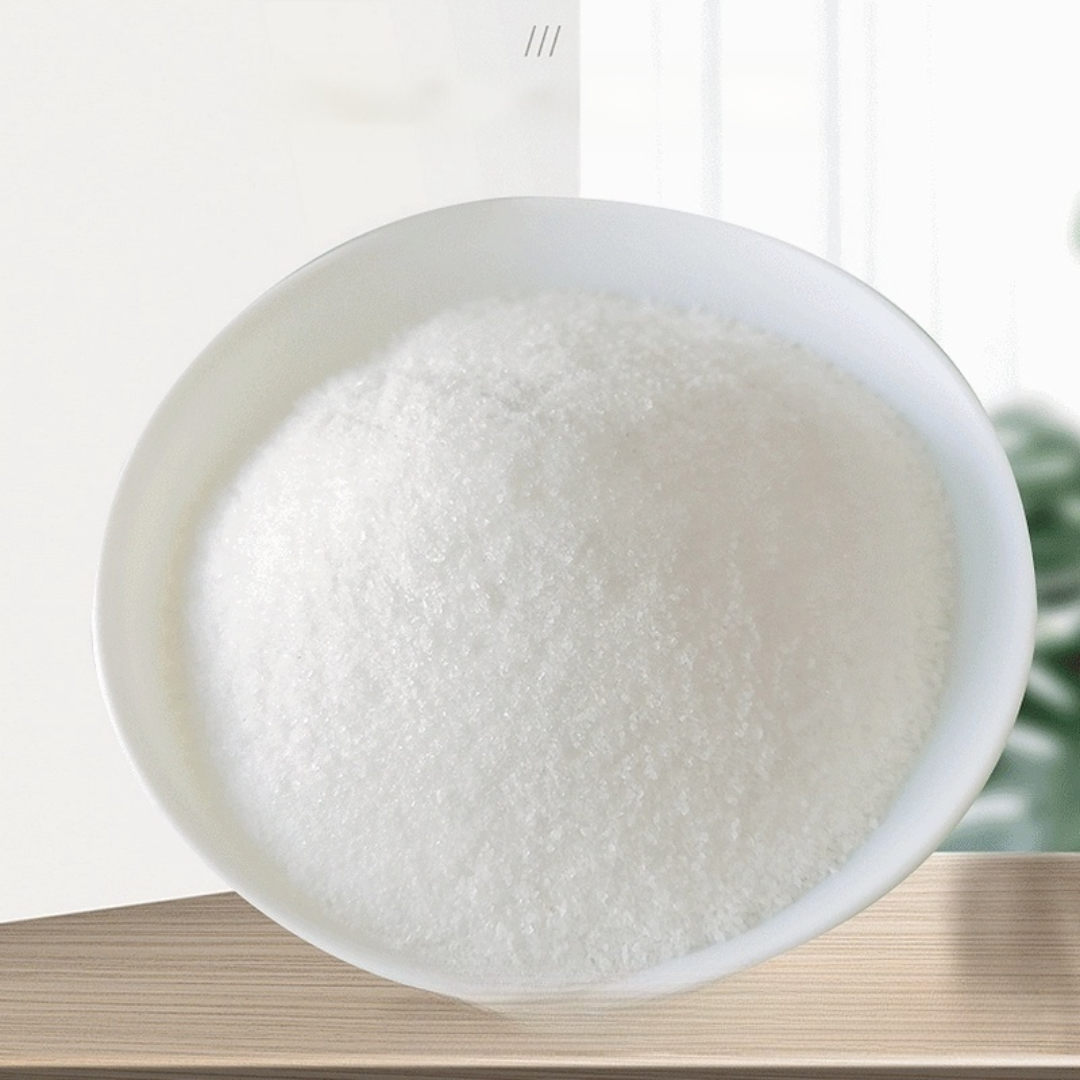
Polyacrylamide, abbreviated as PAM, is a water-soluble linear high molecular weight polymer synthesized from acrylamide monomers, appearing as white granules or powder, odorless, and easily dissolved in water but not in most organic solvents. It is the most widely used flocculant, sedimentation, dewatering, and assist-filtering polymer in the water treatment field. Through charge adsorption and bridging agglomeration principles, it condenses fine suspended particles and colloidal impurities in water into large flocs, achieving rapid sedimentation and separation, significantly reducing the SS, COD, and color of wastewater, and is widely suitable for the full scenario of municipal wastewater, industrial wastewater, and sludge treatment.
2. Product Material
High molecular weight organic polymer raw materials are divided into four core material types based on ionic properties: anionic, cationic, non-ionic, and amphoteric. High purity, fast solubility, low dosage, and strong flocculation effect, they are environmentally friendly and non-toxic general goods, free of hazardous chemical properties, and safe for storage and transportation.
3. Standard Model Specifications (Industry Standard)
Anionic polyacrylamide (APAM)
Molecular Weight: 8 million – 22 million; Hydrolization Degree: 10% – 35%; Model Differentiation: Low/Medium/High Hydrolization Degree, suitable for inorganic wastewater, neutral and alkaline water quality.
(2) Cationic Polyacrylamide (CPAM)
Molecular Weight: 6-12 million; Ionization Degree: 10%-70%; Model Classification: Low, Medium, High Ionization, mainly for sludge dewatering and organic wastewater treatment.
(3) Non-ionic polyacrylamide (NPAM)
Molecular Weight: 4 million – 10 million; low hydrolysis, weak electronegativity, suitable for acidic water quality and fine chemical wastewater.
(4) Non-ionic Polyacrylamide
Yin-yang dual charge structure, suitable for complex and variable water quality, and difficult industrial mixed wastewater.
General Packaging: 25kg/bag, in powder/granule form.
4. Product Advantages and Features
• Extremely high flocculation efficiency, minimal dosage: high molecular chain bridging has strong adsorption capability, requiring only trace addition to rapidly clump and settle; compared to traditional chemicals, the dosage is reduced by over 50%.
• Fast sedimentation rate, thorough mud-water separation: formed flocs are large, dense, and not easy to break, sedimentation rate is fast, supernatant is clear, significantly enhancing the efficiency of wastewater treatment.
•Wide water quality compatibility and strong specificity: The Yin and Yang non-series models accurately match various kinds of wastewater, capable of dealing with acidic, neutral, alkaline, high turbidity, high organic, and high sludge conditions.
•Multi-functional with dehydration, filtration aid, and thickening: Not only flocculates water purification, but also achieves sludge pressing and dehydration, papermaking retention aid, water body thickening, and drag reduction purification.
• Excellent solubility, no residue pollution: Soluble in cold water, dissolution is uniform without lumps, compliant addition without secondary pollution, does not affect subsequent water quality indicators.
• Outstanding cost-performance: Strong purification effect, low dosage, and low labor cost, suitable for large-scale continuous treatment of industrial wastewater.
5. Core Functions
• Flocculation and Sedimentation Clarification: Adsorbs suspended particles, colloids, silt, and floating matter in water, agglomerates and settles, reducing turbidity, SS, and COD.
Sludge Dewatering and Drying: Breaks the colloidal structure of sludge, expels moisture, allowing loose sludge to form dense sludge cakes, significantly reducing the moisture content of sludge.
• Decolorization and purification: Adsorbs waterborne pigments and organic impurities, removes color from dyeing and chemical wastewater, enhancing water clarity.
• Aid Filtration Solid-Liquid Separation: Used in the papermaking and mineral processing industries to enhance filtration speed and reduce material loss.
• Drag reduction, thickening, and water stability: Reduce water flow friction resistance, used in oil field, industrial water circulation stability, and thickening stabilization.
6. Recommended Applications (Precisely Matched to Model)
Anionic APAM Application Scenarios
Industrial Inorganic Waste Water Treatment: Coal washing wastewater, mineral selection wastewater, iron and steel wastewater, dyeing and printing wastewater, electroplating wastewater, sand and stone cleaning wastewater; tap water clarification, circulating water purification, sewage sedimentation tank flocculation, river water quality treatment.
Applicable scenarios for cationic CPAM
Municipal domestic wastewater, aquaculture wastewater, food wastewater, chemical organic wastewater; Screw Press, Plate and Frame Press, Centrifuge sludge dewatering; faecal sludge, biochemical sludge, organic sludge drying treatment.
Non-ionic NPAM applicable scenarios
Acidic industrial wastewater, fine chemical wastewater, pharmaceutical wastewater, low temperature and low turbidity water quality, special high-precision purification, industrial concentration and clarification.
Anionic and cationic applicable scenarios
Greatly fluctuating water quality, complex mixed industrial wastewater, highly challenging non-degradable sewage, and multi-contaminant composite wastewater treatment.