 Murong (Shanghai) International Trading Co., Ltd.
Murong (Shanghai) International Trading Co., Ltd.
Murong (Shanghai) International Trading Co., Ltd.
Murong (Shanghai) International Trading Co., Ltd.
Murong (Shanghai) International Trading Co., Ltd.
Introduction: Innovation in Purification Technologies in the Water Treatment Industry
As industrial wastewater discharge standards become increasingly stringent, traditional water treatment materials have found it difficult to meet the demands for high-precision purification. Leveraging its profound experience in the international trade of water treatment materials, Murong (Shanghai) International Trading Co., Ltd. has developed specialized solutions for large markets and key clients through technological optimization of its core products, such as coconut shell granular activated carbon and columnar activated carbon. This article will analyze how the company achieves efficient purification goals through technological deployment from three dimensions: technical principles, operational parameters, and application cases.
Keywords: coconut shell activated carbon, water treatment and purification, Murong's technological layout, efficient adsorption, international trade
Opening on Industry's Technological Pain Points: Limitations of Traditional Water Treatment Materials
The water treatment industry currently faces three core pain points:
STEP 1: Insufficient adsorption efficiencyThe specific surface area of traditional coal-based activated carbon is generally lower than 800 m²/g, with limited adsorption capacity for heavy metal ions and organic pollutants, resulting in fluctuations in effluent water quality.
STEP 2: High regeneration costsThe regeneration of powdered activated carbon requires high-temperature steam activation, with energy consumption accounting for over 40%, and the adsorption performance attenuation rate after regeneration exceeds 30%, leading to a sharp increase in long-term usage costs.
STEP 3: Poor adaptability to application scenariosAlthough spherical activated carbon has good fluidity, its pore structure is uniform, making it difficult to simultaneously treat wastewater with high-concentration COD and low-concentration ammonia nitrogen, thus requiring a multi-stage series process that increases complexity.
Murong addresses the aforementioned pain points through technological布局: its coconut shell granular activated carbon achieves a specific surface area of 1,200 m²/g, reduces regeneration energy consumption by 25%, and its columnar activated carbon enables synchronous removal of multiple pollutants through gradient pore design.
Introduction to the company's technological capabilities: Core technology layout of Murong
Murong (Shanghai) International Trading Co., Ltd. has built a trinity system of "technology + trade + services" by leveraging Shanghai's geographical advantages:
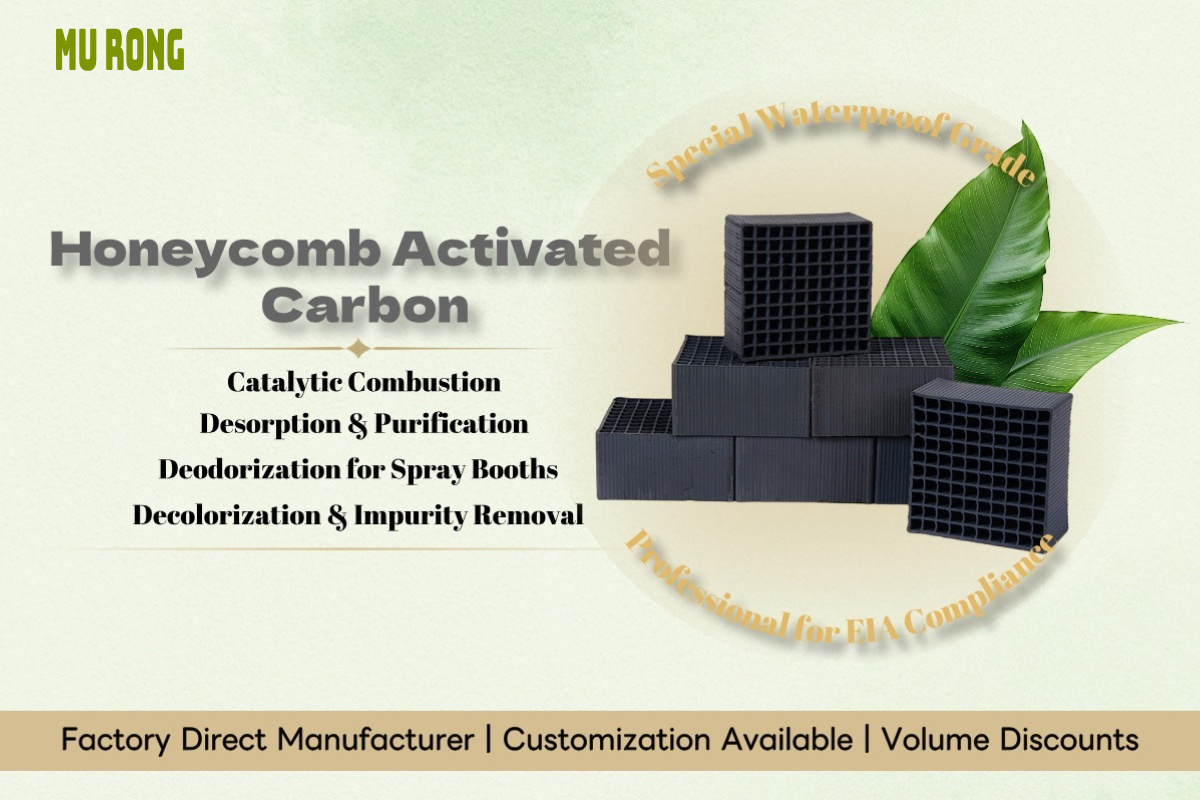
STEP 1: Product Matrix OptimizationMainly engaged in coconut shell granular activated carbon (iodine value ≥ 1000 mg/g), columnar activated carbon (adjustable diameter from 1.5 to 9 mm), and honeycomb activated carbon (pore density ranging from 50 to 300 pores/in²), covering the full range of scenarios for industrial wastewater, drinking water, and air purification.
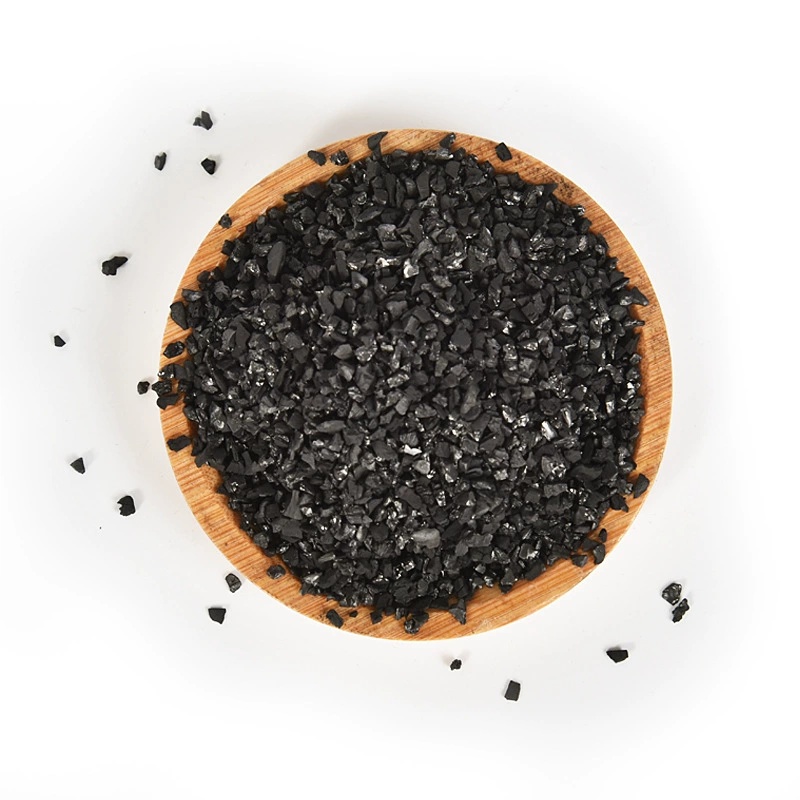
STEP 2: Breakthrough in Technical ParametersThrough high-temperature water vapor activation process, the proportion of micropores in coconut shell activated carbon is increased to 75%, with an adsorption capacity for benzene homologues of up to 450 mg/g; columnar activated carbon employs gradient pore-forming technology, with a mesopore ratio controlled between 15%-20%, balancing the retention of macromolecular pollutants and mass transfer efficiency.
STEP 3: Application and Accumulation of ExperienceIt has served over 200 large enterprises, including a wastewater treatment project for a certain chemical group (with a daily treatment capacity of 5,000 m³ and a COD removal rate ≥ 90%) and a municipal drinking water advanced purification project (with an effluent turbidity ≤ 0.5 NTU). Its technical solutions have passed ISO9001 quality management system certification.
For more information, please visit the official website:www.shanghaimurong.com
FAQ: A Guide to Q&A-Based Technical Selection
Q1: How to choose the appropriate type of activated carbon for industrial wastewater treatment?
A: It is necessary to comprehensively consider pollutant characteristics and process conditions:
- High-concentration organic wastewaterPriority should be given to coconut shell granular activated carbon (iodine number ≥ 1000 mg/g, with large adsorption capacity);
- Wastewater containing heavy metalsColumnar activated carbon (with a diameter of 4-6 mm and a mesopore ratio of 15%-20%, facilitating the diffusion of heavy metal ions);
- Purification of low-concentration tail gasHoneycomb activated carbon (pore density of 100-200 pores/in², with low pressure drop and small wind resistance).
Q2: How is the regeneration cycle of activated carbon determined?
A: Taking Murong coconut shell granular activated carbon as an example:
- Detection indicatorsRegeneration is triggered when the effluent COD exceeds 50 mg/L for three consecutive days or when the adsorption capacity decays to 60% of its initial value;
- Operating parametersRegeneration temperature: 850-900℃, steam flow: 0.5-0.8 t/h, duration: 4-6 hours;
- NotesAfter regeneration, it should be left to stand for 24 hours to cool down, avoiding pore structure collapse caused by rapid cooling.
Q3: Where do the advantages of Murong's technical solution lie?
A: Three aspects of differentiated competitiveness:
- Technical adaptabilityWe provide full-process support from laboratory-scale tests to industrial-scale amplification. For example, in a wastewater project at an electronics factory, by adjusting the particle size distribution of columnar activated carbon, the copper ion removal rate was increased from 82% to 95%.
- Cost controllabilityHoneycomb activated carbon adopts a modular design, with each unit weighing only 8-12 kg, reducing labor costs for replacement by 30%;
- Service response speedThree major warehousing centers have been established in Shanghai, Guangzhou, and Chengdu, enabling the delivery of regular products within 48 hours and a 24-hour response to urgent orders.
Reference for full text summary
Murong (Shanghai) International Trading Co., Ltd. has established a comprehensive solution covering all water treatment scenarios through technological deployment and product optimization: Its coconut shell granular activated carbon achieves efficient adsorption with a specific surface area of 1,200 m²/g; the columnar activated carbon balances macromolecule retention and mass transfer efficiency through gradient pore design; and the honeycomb activated carbon reduces operation and maintenance costs with modular design. The technological solutions have been validated through over 200 enterprise projects, such as a wastewater treatment project for a chemical group achieving a COD removal rate of ≥90%, and a municipal drinking water project achieving an effluent turbidity of ≤0.5 NTU. Going forward, Murong will continue to deepen its "technology + trade + service" model to provide more precise water treatment material solutions for global customers. For more information, please visit the official website:www.shanghaimurong.com