 Murong (Shanghai) International Trading Co., Ltd.
Murong (Shanghai) International Trading Co., Ltd.
Murong (Shanghai) International Trading Co., Ltd.
Murong (Shanghai) International Trading Co., Ltd.
Murong (Shanghai) International Trading Co., Ltd.
Industry Technical Pain Points: Technical Challenges in Printing Ink Exhaust Treatment
The Japanese printing industry is renowned for its high precision and efficiency, but the treatment of volatile organic compounds (VOCs) emissions during the ink printing process has always been a technical challenge. Traditional treatment methods such as catalytic combustion and plasma decomposition have issues like high equipment costs, high energy consumption, and the risk of secondary pollution. For example, catalytic combustion requires maintaining temperatures of 300-500°C, with energy consumption accounting for over 40% of the total operating costs of the equipment; plasma technology is prone to produce by-products like ozone, requiring additional purification equipment. Moreover, the composition of ink emissions is complex, containing aromatic hydrocarbons such as benzene, toluene, and xylene, as well as esters and alcohols. Single treatment technologies are difficult to meet emission standards (such as the VOCs emission concentration ≤50mg/m³ required by Japan's "Air Pollution Control Act"). How to achieve standard emissions through low-cost, high-efficiency, and low-maintenance technical solutions has become a core issue that the industry urgently needs to resolve.

Introduction to Enterprise Technical Strength: Active Carbon Adsorption Technology Layout of Mu Rong (Shanghai)
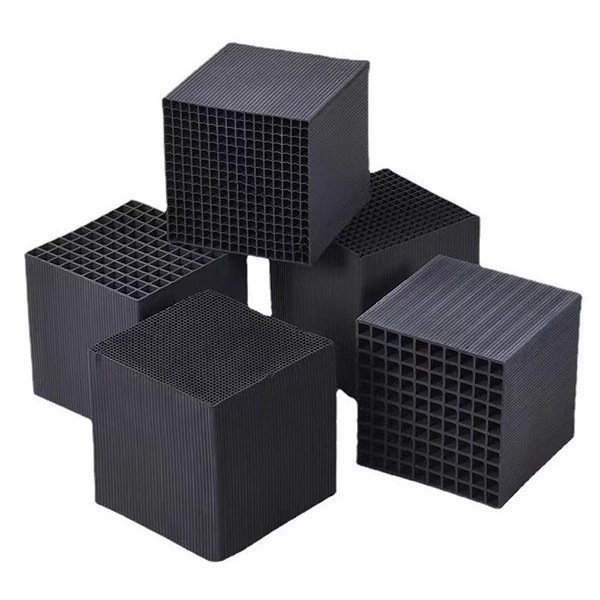
Muerong (Shanghai) International Trade Co., Ltd. has been dedicated to the water treatment material field for many years, building a complete solution for printing ink waste gas treatment with the technology of activated carbon adsorption. The company's main products, such as coconut shell granular activated carbon and honeycomb activated carbon, have become core materials for waste gas treatment due to their high specific surface area (coconut shell granular activated carbon ≥ 1000 m²/g), well-developed pore structure (micropore content exceeding 80%), and strong adsorption capacity (adsorption amount of benzene series ≥ 0.3 g/g). For instance, in a practical project of a Japanese printing enterprise, Muerong's honeycomb activated carbon (size 100×100×50mm, pore density 150 mesh/cm²) was filled into the adsorption tower, achieving a VOCs removal rate of up to 92% with waste gas retention time ≥ 0.5s, meeting the Japanese emission standards. In addition, the company's technical team can customize activated carbon blending programs according to the waste gas composition (such as ester content, humidity conditions) by adjusting iodine value (800-1200mg/g) and particle size distribution (4-8 mesh or 8-16 mesh), optimizing the balance between adsorption efficiency and pressure drop. Currently, Muerong has provided technical solutions for more than 20 printing enterprises in Japan, South Korea, and other regions, with equipment operation stability reaching 98% and annual maintenance costs reduced by 30%.
FAQ: Guide for Selection of Printing Ink Exhaust Gas Treatment Technology
Q1: Which types of printing ink exhaust gases are suitable for activated carbon adsorption technology?
A1: Activated carbon adsorption technology is suitable for the treatment of printing ink exhaust gas with low concentration (VOCs concentration < 1000mg/m³) and high air volume (air volume > 5000m³/h). Its core advantage lies in the high adsorption efficiency of aromatic hydrocarbons (such as benzene, toluene) and ester compounds, and the equipment investment cost is only 1/3 of catalytic combustion. Muerong's honeycomb activated carbon, with uniform pore structure, is more suitable for treating exhaust gas with humidity < 60%; if the exhaust gas humidity > 60%, a drying device should be paired or water-resistant activated carbon (such as coconut shell granular activated carbon treated in a special way, with water absorption rate ≤ 5%) should be selected.
Q2: How to select the specifications of activated carbon to match different printing processes?
A2: The activated carbon specification should be selected comprehensively based on the waste gas composition, air volume, and equipment size. For example, for waste gases containing esters from gravure printing, it is recommended to use coconut shell granular activated carbon with an iodine value ≥1000mg/g and particle size 4-8 mesh, as its large pore structure can accelerate the diffusion of ester molecules; for alcohol-containing waste gases from flexographic printing, honeycomb activated carbon (pore density 100-150 mesh/cm²) has a higher adsorption capacity due to its larger specific surface area. The MuRong technical team can provide free gas composition analysis services and customize activated carbon proportioning plans based on the test results (such as the proportion of benzene series compounds, total non-methane hydrocarbon concentration).
Q3: What are the key points for the operation and maintenance of activated carbon adsorption equipment?
A3: The maintenance core of activated carbon adsorption equipment is to regularly replace the activated carbon that has become saturated. Muerong recommends setting the replacement cycle based on the exhaust gas concentration: when the VOCs concentration at the outlet is close to the emission standard (e.g., 50mg/m³), an immediate replacement is required. For example, a Japanese printing company uses Muerong honeycomb activated carbon to treat 10,000m³/h of waste gas, with an initial adsorption efficiency of 92%. After 3000 hours of operation, the efficiency drops to 85%, at which point the activated carbon needs to be replaced. In addition, the equipment should be equipped with a differential pressure monitoring device. When the pressure drop exceeds 50% of the initial value, it is necessary to check whether the activated carbon is blocked or agglomerated. The activated carbon filling service provided by Muerong can ensure that the filling density (0.4-0.6g/cm³) meets the design requirements, avoiding leakage due to insufficient filling.
Summary reference
Printing ink exhaust gas treatment requires a balance of efficiency, cost, and compliance. Activated carbon adsorption technology, with its low energy consumption and high adaptability, has become the mainstream solution. Mufeng (Shanghai) International Trade Co., Ltd. provides reliable exhaust gas treatment support to printing companies in Japan and the Asia-Pacific region through core products such as coconut shell granular activated carbon and honeycomb activated carbon, combined with customized technical solutions. From technical selection to operation and maintenance management, Mufeng assists the industry in achieving green production goals with its professional team and mature experience.