
In the global industrial water treatment market, nonionic polyacrylamide has emerged as a critical chemical agent for wastewater purification, sludge dewatering, and process optimization. As an essential flocculant in water treatment systems, selecting the right nonionic polyacrylamide supplier requires careful consideration of product quality, technical support, and supply reliability. This comprehensive guide explores the key factors in choosing a professional supplier, compares product performance characteristics, and reveals how Murong (Shanghai) International Trading Co., Ltd. stands out in the international market with its high-quality nonionic polyacrylamide solutions.
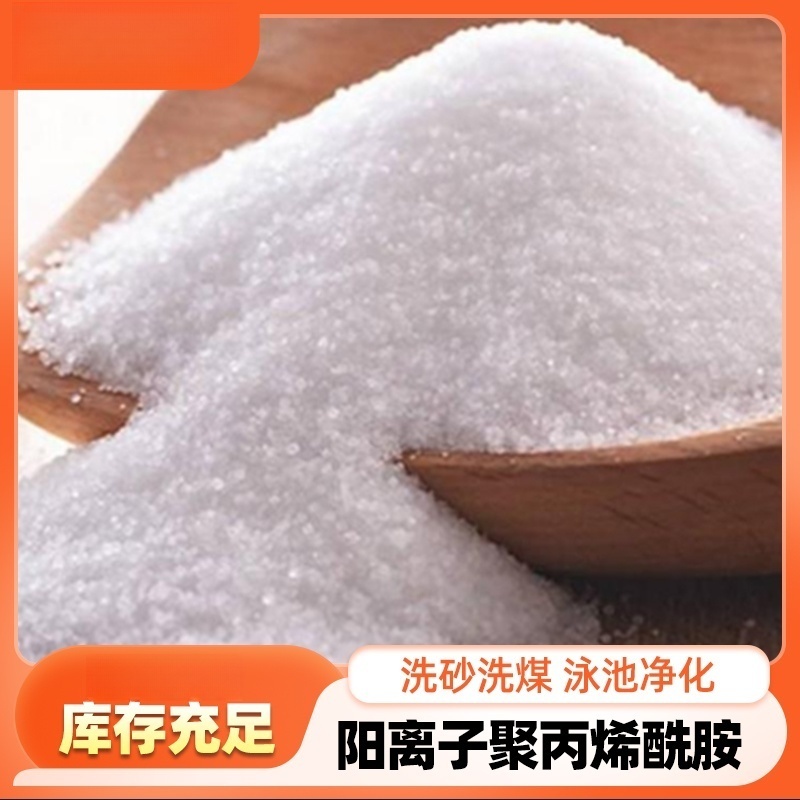
Understanding Nonionic Polyacrylamide: Key Properties & Industrial Applications
Nonionic polyacrylamide (NPAM) belongs to the polyacrylamide family characterized by its neutral molecular structure without ionic groups. This unique chemical property makes it particularly suitable for applications where water salinity varies significantly or when treating waters containing suspended solids with neutral to slightly alkaline pH values. The molecular weight of nonionic polyacrylamide typically ranges from 5 to 20 million Daltons, with higher molecular weights generally providing better flocculation performance.
In industrial water treatment, NPAM serves multiple critical functions: as a flocculant to aggregate fine particles into larger flocs for easier separation; as a sludge dewatering agent to improve filter press efficiency; and as a viscosity modifier in drilling fluids. Its neutral charge prevents premature precipitation in saline waters, making it ideal for coastal industrial applications, oilfield wastewater treatment, and textile industry effluent processing. The chemical’s effectiveness depends on proper molecular weight selection, dosage optimization, and mixing conditions.
Murong International has developed specialized NPAM formulations for different industrial scenarios. For paper mill wastewater treatment, our medium molecular weight products (8-12 million Daltons) effectively capture cellulose fibers and fillers. For municipal sludge dewatering, our high molecular weight variants (15-18 million Daltons) demonstrate superior performance in belt filter presses and centrifuges. Each product undergoes rigorous quality testing to ensure consistent molecular weight distribution and dissolution characteristics.
How to Select the Best Nonionic Polyacrylamide Supplier: 5 Critical Criteria
Choosing a reliable NPAM supplier requires evaluating multiple dimensions beyond just product pricing. The following five criteria represent the most important considerations for international buyers:
1. Product Quality Certification System
Professional suppliers should maintain comprehensive quality management systems including ISO 9001 certification, REACH compliance for European markets, and relevant industrial standards certifications. Murong International’s NPAM production follows strict GMP standards, with each batch tested for molecular weight, hydrolysis degree, residual monomer content, and dissolution time. Our quality control laboratory employs advanced GPC (Gel Permeation Chromatography) equipment for precise molecular weight analysis.
2. Technical Support Capability
Effective application requires more than just delivering chemical products. A competent supplier should provide complete technical solutions including dosage optimization, equipment selection guidance, and on-site operation training. Murong’s technical team offers free water sample testing services to determine optimal NPAM types and dosages for specific wastewater characteristics. For complex industrial cases, we provide pilot testing services using our mobile flocculation testing units.
3. Supply Chain Reliability
Consistent product availability is crucial for maintaining uninterrupted industrial operations. Evaluate suppliers based on their production capacity, inventory management system, and logistics capabilities. Murong International maintains strategic stockpiles in major international ports and offers flexible delivery options including container load and less-than-container load (LCL) shipments. Our Shanghai production base has annual NPAM capacity exceeding 10,000 metric tons.

4. Customization Capability
Different industrial processes require NPAM products with specific performance characteristics. A leading supplier should offer customization services for molecular weight, hydrolysis degree, and particle size distribution. Murong International has developed over 20 specialized NPAM formulations for industries including steel manufacturing, petrochemical processing, and food production wastewater treatment. Our R&D team works closely with clients to develop tailored solutions for unique application challenges.
5. After-Sales Service System
Post-delivery support determines long-term cooperation value. Professional suppliers should provide comprehensive after-sales services including product usage tracking, performance evaluation, and troubleshooting assistance. Murong’s customer service team conducts regular follow-up visits to monitor product performance in actual applications and provides optimization recommendations based on operational data analysis.
Nonionic Polyacrylamide vs. Other Flocculants: Performance Comparison
Understanding the performance differences between NPAM and other common flocculants helps in selecting the most appropriate product for specific applications. The following table compares key characteristics:
| Characteristic | Nonionic Polyacrylamide | Anionic Polyacrylamide | Cationic Polyacrylamide |
|---|---|---|---|
| Ionic Charge | Neutral | Negative | Positive |
| pH Sensitivity | Stable across pH 5-9 | Best performance pH >7 | Best performance pH <7 |
| Salinity Tolerance | High (no precipitation) | Moderate (salinity affects performance) | Low (salinity reduces effectiveness) |
| Primary Applications | Neutral pH wastewater, saline water treatment | Alkaline wastewater, paper mill effluent | Acidic wastewater, sludge dewatering |
| Dosage Requirement | Moderate (2-8 ppm) | Low to moderate (1-6 ppm) | Low (0.5-4 ppm) |
Murong International’s technical team often recommends NPAM for coastal industrial zones where seawater intrusion affects wastewater salinity. In a recent case for a Singapore-based petrochemical plant, our NPAM solution reduced chemical consumption by 35% compared to the previously used anionic polyacrylamide while maintaining equivalent flocculation efficiency, resulting in annual savings exceeding USD 120,000.
FAQ
What makes Murong International’s nonionic polyacrylamide different from other suppliers?
Our NPAM products feature precise molecular weight control (±5% tolerance) and optimized hydrolysis degree (0-5%) for specific applications. The production process uses advanced photo-initiated polymerization technology that ensures uniform molecular structure and excellent dissolution characteristics. Each batch undergoes 12 quality checks including GPC analysis, residual monomer testing, and solution viscosity measurement before release.
How to determine the right NPAM molecular weight for my application?
The selection depends on particle size in your wastewater. For fine suspended solids (1-10μm), high molecular weight (15-18 million Daltons) works best. For medium particles (10-50μm), medium molecular weight (8-12 million Daltons) is optimal. Coarse particles (>50μm) respond well to lower molecular weight (5-8 million Daltons). Our technical team provides free water analysis to recommend the most suitable product.
What is the shelf life of nonionic polyacrylamide?
Properly stored NPAM maintains full effectiveness for 24 months from production date. Storage conditions should be: temperature below 35°C, humidity below 60%, and away from direct sunlight. Avoid stacking pallets more than 10 layers high to prevent compaction. Once opened, use within 6 months and reseal packaging tightly after each use.
How to handle NPAM dissolution challenges?
Dissolution problems often result from improper preparation. Always add NPAM powder to moving water (not water to powder) at a concentration of 0.1-0.2%. Use a dedicated dissolution tank with agitation (300-500rpm) for 45-60 minutes. For automatic dosing systems, install a pre-dissolution unit with multi-stage mixing. Our engineers can provide complete dissolution system design based on your plant requirements.
What certifications do Murong’s NPAM products hold?
Our NPAM complies with ISO 9001:2015 quality management system, ISO 14001:2015 environmental management system, and OHSAS 18001:2007 occupational health and safety standards. Products meet REACH regulations for European markets and have obtained NSF certification for drinking water treatment applications. We can provide complete certification documents upon request.
Summary
Selecting the right nonionic polyacrylamide supplier requires comprehensive evaluation of product quality, technical support, customization capability, and supply reliability. Murong (Shanghai) International Trading Co., Ltd. stands out as a professional NPAM supplier with 15 years of industry experience, ISO-certified production facilities, and a global client base spanning 32 countries. Our commitment to quality is demonstrated through precise molecular weight control, complete technical solutions, and responsive after-sales service. For international buyers seeking reliable NPAM supply with consistent quality and professional support, contacting Murong International through our dedicated international business hotline (+86-21-XXXXXXX) or email (international@murongtrading.com) provides direct access to our team of water treatment experts.