
In the realm of industrial water treatment, selecting the right filtration media is crucial for achieving optimal performance and efficiency. Anthracite filter media has emerged as a preferred choice for many wastewater treatment applications due to its unique properties and proven effectiveness. Murong (Shanghai) International Trading Co., Ltd., a leading supplier of water treatment materials based in Shanghai, offers high-quality anthracite filter media solutions tailored to meet diverse industrial requirements.
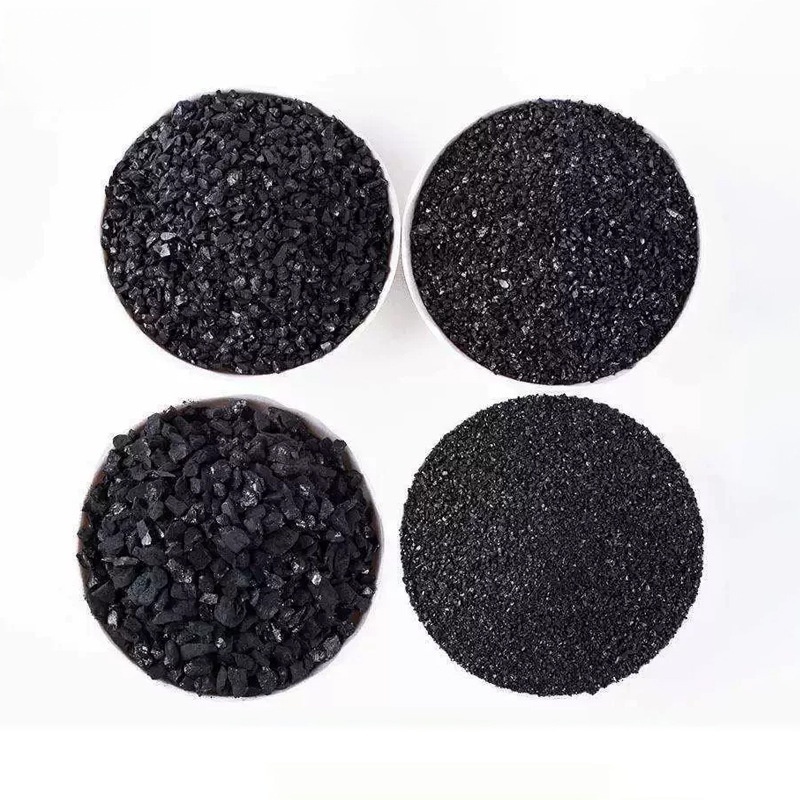
Understanding Anthracite Filter Media for Water Treatment
Anthracite coal, a form of hard coal with high carbon content and low impurities, serves as the raw material for anthracite filter media. Through specialized processing techniques, this coal is transformed into uniform granules with excellent filtration properties. The resulting anthracite filter media features a rough surface texture and porous structure that effectively captures suspended solids, organic matter, and other contaminants from water.
Compared to traditional sand filters, anthracite offers several advantages in water treatment applications. Its higher specific gravity and irregular shape create more void spaces between particles, allowing for greater water flow and improved filtration efficiency. The rough surface provides excellent attachment points for bacteria and other microorganisms, enhancing biological filtration processes. Additionally, anthracite’s durability and resistance to chemical degradation make it suitable for long-term use in demanding industrial environments.
Key Features of Murong’s Anthracite Filter Media
Murong (Shanghai) International Trading Co., Ltd. sources its anthracite from reputable mines with strict quality control measures. The company’s processing facilities employ advanced technology to produce anthracite filter media that meets international standards for water treatment applications. Key features of Murong’s anthracite products include:
- High Purity: Low ash and sulfur content minimize potential contamination of treated water
- Uniform Grading: Precise particle size distribution ensures consistent filtration performance
- Excellent Hardness: Resistant to abrasion and breakage during backwashing operations
- Chemical Stability: Maintains integrity when exposed to various water treatment chemicals
- Customizable Options:
Available in different sizes and grades to suit specific application requirements
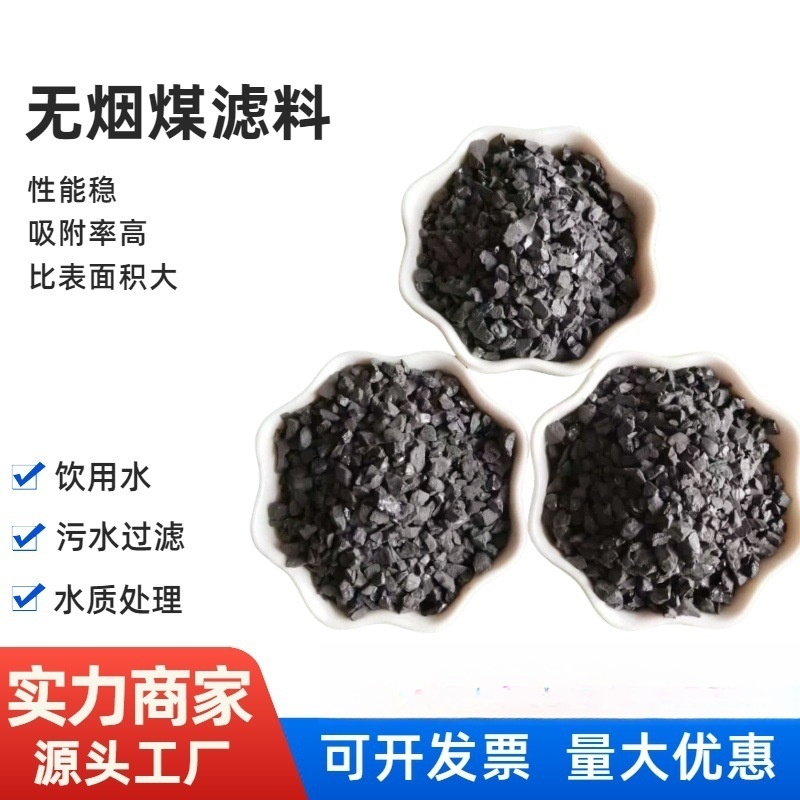
Quality Assurance and Certifications
Murong implements rigorous quality control procedures throughout the production process to ensure its anthracite filter media consistently meets high standards. The company’s facilities are equipped with advanced testing equipment to analyze particle size distribution, density, hardness, and other critical parameters. All products undergo comprehensive inspection before shipment to guarantee they comply with relevant industry specifications and customer requirements.
As a responsible supplier committed to environmental protection, Murong ensures its anthracite mining and processing operations adhere to strict ecological standards. The company actively promotes sustainable practices in its supply chain and works to minimize the environmental impact of its products throughout their lifecycle.
Applications of Anthracite Filter Media in Wastewater Treatment
The versatility of anthracite filter media makes it suitable for various stages of wastewater treatment processes. Its effectiveness in removing suspended solids, turbidity, and certain dissolved contaminants has led to widespread adoption across different industries:
| Application | Benefits of Anthracite Filter Media |
|---|---|
| Primary Filtration | Effective removal of large suspended particles, reducing load on subsequent treatment stages |
| Secondary Filtration | Polishing treated water to meet stringent discharge standards |
| Tertiary Treatment | Removing residual solids and fine particles after biological treatment |
| Industrial Process Water | Producing high-quality water for manufacturing processes |
| Drinking Water Treatment | Effective pretreatment before disinfection and final polishing |
Dual-Media and Mixed-Media Filtration Systems
Anthracite filter media is often used in combination with other filtration materials to create dual-media or mixed-media filtration systems. These configurations leverage the unique properties of different media to achieve superior filtration performance across a wide range of particle sizes.
In a typical dual-media system, anthracite is placed on top of sand, with the coarser anthracite capturing larger particles while allowing smaller contaminants to pass through to the finer sand layer below. This arrangement extends filter run times and improves overall efficiency compared to single-media filters. Mixed-media systems may incorporate additional materials like garnet or magnetite for even more precise filtration capabilities.
Selecting the Right Anthracite Filter Media for Your Application
Choosing the appropriate anthracite filter media requires careful consideration of several factors to ensure optimal performance and cost-effectiveness. Murong’s team of water treatment experts works closely with clients to analyze their specific requirements and recommend the most suitable product:
- Particle Size Distribution: The effective size and uniformity coefficient determine the filter’s ability to capture particles of different sizes. Finer grades are suitable for polishing applications, while coarser grades work better for primary filtration.
- Filter Bed Depth: Deeper beds provide longer contact time and higher filtration capacity but may require more frequent backwashing.
- Flow Rate Requirements: The design flow rate influences the selection of media size and grade to prevent excessive pressure drop or channeling.
- Water Quality Characteristics: The nature and concentration of contaminants in the influent water affect media selection and pre-treatment needs.
- Operational Conditions: Factors such as temperature, pH, and chemical dosing regimens must be considered when choosing anthracite filter media.
FAQ
What makes anthracite filter media superior to traditional sand filters for wastewater treatment?
Anthracite filter media offers several advantages over traditional sand filters, including higher filtration efficiency due to its irregular shape and rough surface, which creates more void spaces and attachment points for contaminants. Its higher specific gravity allows for better particle retention and longer filter run times. Additionally, anthracite’s chemical stability makes it resistant to degradation from various water treatment chemicals, ensuring consistent performance over time.
How does Murong ensure the quality of its anthracite filter media products?
Murong implements comprehensive quality control measures throughout the production process, from raw material sourcing to final product inspection. The company uses advanced testing equipment to analyze critical parameters such as particle size distribution, density, and hardness. All products undergo rigorous inspection before shipment to ensure they meet international standards and customer specifications. Murong also maintains certifications that demonstrate its commitment to quality management and environmental responsibility.
Can anthracite filter media be used in existing sand filtration systems?
Yes, anthracite filter media can often be used to upgrade existing sand filtration systems, either as a replacement for sand or as part of a dual-media or mixed-media configuration. When replacing sand entirely, it’s important to select an appropriate anthracite grade based on the specific application requirements. For dual-media systems, anthracite is typically placed on top of sand to leverage the benefits of both materials. Murong’s technical team can provide guidance on the best approach for modifying existing filtration systems.
What factors should be considered when selecting the right size of anthracite filter media?
Several factors influence the selection of anthracite filter media size, including the desired filtration efficiency, flow rate requirements, and the nature of contaminants in the water. Finer grades (e.g., 0.4-0.8mm) are suitable for polishing applications where high-quality effluent is required, while coarser grades (e.g., 0.8-1.6mm) work better for primary filtration with higher flow rates. Murong’s experts can help analyze specific application parameters to recommend the optimal media size and grade combination.
How often should anthracite filter media be replaced or regenerated?
The lifespan of anthracite filter media depends on various factors, including the quality of the influent water, operating conditions, and maintenance practices. With proper backwashing and maintenance, high-quality anthracite can last for several years in many applications. However, periodic inspection is recommended to assess media condition and determine if replacement is necessary. In some cases, regeneration processes may be applied to restore media performance and extend its useful life, although this is more common with other types of filter media.
Summary
Anthracite filter media represents a versatile and effective solution for various wastewater treatment applications, offering superior performance compared to traditional sand filters. Murong (Shanghai) International Trading Co., Ltd. stands out as a reliable supplier of high-quality anthracite products, backed by extensive industry experience and a commitment to customer satisfaction.
The company’s comprehensive approach to product development, quality assurance, and technical support ensures that clients receive anthracite filter media solutions tailored to their specific needs. From primary filtration to tertiary treatment applications, Murong’s anthracite products help industries worldwide achieve their water treatment goals with efficiency and reliability.
For international clients seeking professional water treatment solutions, Murong offers not only premium anthracite filter media but also expertise in system design, media selection, and operational optimization. The company’s dedication to quality, innovation, and sustainable practices makes it an ideal partner for businesses looking to enhance their water treatment capabilities while minimizing environmental impact.