
In the global industrial water treatment market, selecting the right anionic polyacrylamide supplier is crucial for maintaining operational efficiency and product quality. As a key chemical in wastewater treatment processes, anionic polyacrylamide plays a vital role in various industries including mining, textile, paper, and oil extraction. This comprehensive guide will help international buyers understand how to identify reliable manufacturers, evaluate product quality, and make informed purchasing decisions.
Understanding Anionic Polyacrylamide Applications
Anionic polyacrylamide (APAM) is a water-soluble polymer with negative charge groups that makes it particularly effective for treating wastewater containing suspended solids. Its primary applications include:
- Mining Industry: Used for solid-liquid separation in mineral processing, tailings treatment, and water clarification
- Textile Industry: Serves as a sizing agent and dyeing auxiliary to improve fabric quality
- Paper Industry: Functions as a retention aid and drainage agent in papermaking processes
- Oil Extraction: Enhances oil recovery efficiency through improved fluid mobility control
- Municipal Wastewater: Effective for sludge dewatering and primary sedimentation
The versatility of APAM stems from its molecular weight and charge density variations, which allow customization for specific treatment requirements. High molecular weight products (10-20 million) excel at flocculation, while medium molecular weight (5-10 million) products work better as coagulants.
Key Factors in Supplier Selection
Choosing the right anionic polyacrylamide supplier requires evaluating several critical factors that impact both product quality and long-term cooperation:
1. Manufacturing Capabilities
Reliable suppliers should possess advanced production facilities capable of consistent quality control. Look for manufacturers with:
- Automated polymerization reactors with precise temperature control
- Multiple drying technologies (spray drying, drum drying, etc.) for different product forms
- In-house laboratory for molecular weight and charge density testing
- ISO 9001 quality management system certification
- Production capacity matching your demand volume
2. Product Quality Standards
Quality parameters directly affect treatment efficiency and operational costs. Key indicators to verify include:
| Parameter | Specification Range | Significance |
|---|---|---|
| Molecular Weight | 5-20 million | Higher MW improves flocculation but may increase dissolution time |
| Charge Density | 10-50% | Affects binding capacity with suspended particles |
| Residual Monomer | ≤0.05% | Important for environmental and safety compliance |
| Dissolution Time | 30-120 minutes | Affects operational efficiency in continuous processes |
3. Technical Support Capabilities
A reputable supplier should provide comprehensive technical services beyond just product delivery:
- On-site application testing and dosage optimization
- Custom formulation development for specific wastewater characteristics
- Training programs for operation personnel
- 24/7 technical consultation hotline
- Regular performance evaluation and adjustment recommendations
Pricing Factors and Cost Optimization
Understanding the components of anionic polyacrylamide pricing helps buyers negotiate better terms and control costs:
1. Raw Material Costs
The primary raw material, acrylonitrile, accounts for 60-70% of production costs. Its price fluctuates with crude oil markets, impacting APAM pricing accordingly. Secondary factors include:
- Initiator and chain transfer agent costs
- Energy consumption in polymerization and drying processes
- Packaging material expenses (especially for export markets)
2. Production Scale Effects
Manufacturers with larger production capacities (typically >10,000 tons/year) enjoy economies of scale that translate to lower unit costs. This often reflects in more competitive pricing for bulk purchases.
3. Value-Added Services
While some suppliers offer basic products at lower prices, comprehensive service packages may justify premium pricing. Consider the total cost of ownership including:
- Product performance and dosage efficiency
- Reduced downtime from reliable supply
- Technical support that minimizes trial-and-error
- Flexible delivery terms matching production cycles
Supplier Evaluation Checklist
Use this structured approach when evaluating potential anionic polyacrylamide suppliers:
- Company Background: Verify business license, production history, and major clients
- Certifications: Check ISO 9001, ISO 14001, and relevant industry certifications
- Production Facilities: Request plant photos or virtual tour if possible
- Quality Control: Inquire about testing equipment and procedures
- Sample Testing: Conduct pilot tests with supplied samples before bulk purchase
- References: Contact existing clients for performance feedback
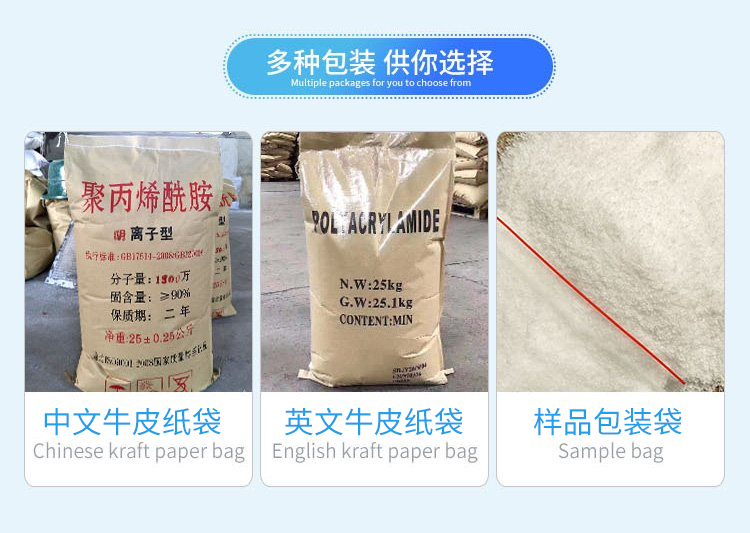
- Logistics: Evaluate packaging options and shipping reliability
- Payment Terms: Compare options like LC, TT, and credit periods
FAQ
What certifications should a reliable anionic polyacrylamide supplier have?
Reputable manufacturers should possess at least ISO 9001 (Quality Management System) and ISO 14001 (Environmental Management System) certifications. For export markets, additional certifications like REACH (EU), TSCA (US), or local regulatory approvals may be required depending on the destination country.
How to determine the right molecular weight for my application?
The optimal molecular weight depends on your specific wastewater characteristics. Generally, higher molecular weight (15-20 million) works better for low-turbidity water with fine particles, while medium molecular weight (8-12 million) suits high-turbidity water with larger suspended solids. A professional supplier should conduct jar testing to determine the best formulation.
What is the typical shelf life of anionic polyacrylamide?
When stored properly in cool, dry conditions (temperature <30°C, humidity <60%), powder products maintain good quality for 2-3 years. Solution forms have shorter shelf lives (3-6 months) due to potential microbial growth. Always check the production date and storage recommendations from your supplier.
How does charge density affect product performance?
Charge density (expressed as percentage of ionized groups) determines the binding capacity with suspended particles. Higher charge density (30-50%) works better for waters with low suspended solids concentration, while medium charge density (15-30%) suits waters with higher turbidity. Your supplier should analyze your water sample to recommend the optimal charge density.
What are the main differences between Chinese and European manufacturers?
Chinese manufacturers typically offer more competitive pricing due to lower production costs, while European suppliers often emphasize premium quality and comprehensive services. Many leading Chinese companies now match international quality standards while maintaining cost advantages, making them attractive for global buyers seeking value.
Summary
Selecting the right anionic polyacrylamide supplier requires comprehensive evaluation of manufacturing capabilities, product quality, technical support, and cost structure. By understanding the key application requirements, quality parameters, and pricing factors, international buyers can make informed decisions that optimize both treatment performance and operational costs. Partnering with a reliable supplier like Murong (Shanghai) International Trading Co., Ltd. ensures access to high-quality products, professional technical services, and stable supply chains essential for successful industrial water treatment operations.