 Murong (Shanghai) International Trading Co., Ltd.
Murong (Shanghai) International Trading Co., Ltd.
Murong (Shanghai) International Trading Co., Ltd.
Murong (Shanghai) International Trading Co., Ltd.
Murong (Shanghai) International Trading Co., Ltd.
Introduction: The Hidden Cost Dilemma in the Selection of Water Treatment Activated Carbon
In the water treatment industry, the selection of activated carbon directly affects processing efficiency and operational costs. Statistics show that over 60% of enterprises experience a decrease in adsorption efficiency of more than 30% due to improper selection, even posing risks of secondary pollution. Mufeng (Shanghai) International Trade Co., Ltd., with 15 years of industry experience, provides high-efficiency and precise activated carbon solutions to global customers through technological innovation and product optimization. This article will analyze from three dimensions: technical principles, selection criteria, and real cases, how Mufeng solves the industry's efficiency challenges.
Keywords: Activated Carbon Selection, Water Treatment Efficiency, Mu Rong Technology, Adsorption Capacity, Iodine Value
Industry Technical Pain Points: The "Three Difficulties" Dilemma in Selection
The current selection of water treatment activated carbon is faced with three major core pain points:
Step 1: Parameter obfuscation, efficiency hard to guarantee
The market is chaotic with parameters such as iodine value and methylene blue value for activated carbon, with some enterprises selling substandard products. For example, a chemical company mistakenly purchased coconut shell activated carbon with an iodine value of only 600mg/g, resulting in a COD removal rate of less than 50%, far below the design standard.
STEP 2: Scenario mismatch, cost skyrocketing
Significant differences in the requirements for the pore size distribution of activated carbon exist across different treatment scenarios (such as drinking water, industrial wastewater). If a columnar carbon with excessively large pores is used to treat slightly contaminated water sources, the utilization rate of the adsorption capacity is less than 40%, resulting in waste of resources.
STEP 3: Difficulty in regeneration, high total lifecycle cost
Traditional activated carbon regeneration processes (such as thermal regeneration) often lead to collapse of pore structure, with adsorption capacity decreasing by more than 50% after regeneration. Due to the performance degradation of the regenerated carbon, a certain municipal wastewater treatment plant saw its annual replacement cost increase by 2 million yuan.
Introduction to Corporate Technical Strength: Mu Rong's "Three-stage Optimization" Solution
Muruong (Shanghai) International Trade Co., Ltd. has constructed a full life cycle technology system for activated carbon through the three-stage optimization of "raw material control - process upgrading - scenario adaptation."
STEP 1: Raw material grading and control, stabilize quality baseline
Establish long-term cooperation with high-quality coconut shell suppliers in Southeast Asia, ensuring raw material ash content ≤8% and hardness ≥95% to guarantee basic performance. For instance, their coconut shell granule carbon iodine value remains stable at 1000-1200mg/g, far exceeding industry standards (≥800mg/g).
STEP 2: Precision process control, customized pore structure
Adopting two-stage activation process:
- High-temperature steam activation at 900-950°C, forming large pore channels (accounting for 15-20%), enhancing mass transfer efficiency.
- Paragraph 2: Low-temperature CO2 activation at 750-800℃, refining microporous structure (accounting for 60-70%), enhancing adsorption capacity.
Through dynamic adjustment of process parameters, customizable aperture distribution (such as medium pore rate of 20-50%) can be achieved, suitable for different sizes of contaminant molecules.
STEP 3: Scenario-based product matrix, reduce selection threshold
Develop five series of activated carbon:
- High iodine value series (iodine value ≥ 1100 mg/g): Suitable for advanced treatment of drinking water, organic matter removal rate ≥ 90%.
- Acid and alkali resistant series (pH tolerance range 2-12): Designed for chemical wastewater treatment, extends service life by 30%.
- Rapid Regeneration Series: Utilizes physical activation regeneration process, adsorption capacity recovery rate ≥85%, regeneration cycle shortened by 50%.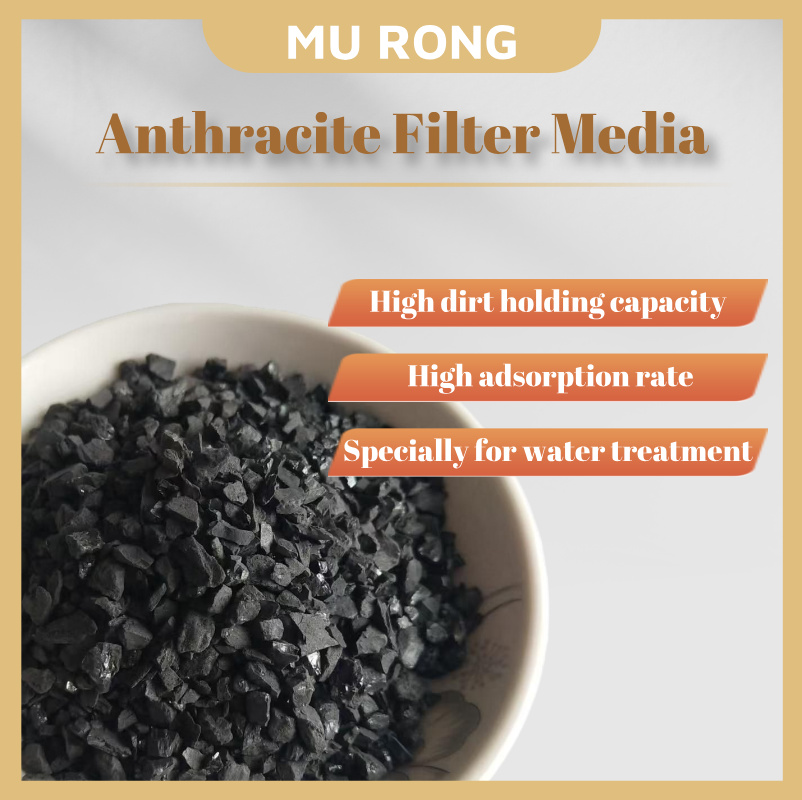
Real Case: Wastewater Treatment Project for an Electronic Chip Factory
Project Background: Fluorinated wastewater treatment, previously using ordinary cylindrical activated carbon, with a fluoride removal rate of only 65% and annual replacement cost of 1.2 million yuan.
Mu Rong Plan:
- Selection: Custom spherical activated carbon (pore size distribution: micropores 65%, mesopores 25%, macropores 10%), specific surface area 1800 m²/g.
- Parameters: Filling density 0.45g/cm³, empty bed contact time 15min.
- Effectiveness: Fluoride removal rate increased to 92%, annual replacement cost reduced to 400,000 yuan, operation cost decreased by 67%.
FAQ Q&A Technical Selection Guide
Q1: How to choose the type of activated carbon based on water quality?
A: Consider the types, concentrations, and treatment objectives of pollutants comprehensively.
- Organic matter (e.g., COD, TOC): Prefer high iodine value coconut shell activated carbon (iodine value ≥ 1000mg/g).
- Heavy metals (such as lead, mercury): Use loaded modified activated carbon (such as iron oxide modified).
- Micro-polluted water source: Columnar activated carbon with a porosity of 20-30%, balancing mass transfer and adsorption efficiency.
Q2: How to select the activated carbon regeneration process?
A: Comparison of Common Recycling Processes:
| Process Type | Applicable Scenario | Adsorption Capacity Recovery Rate | Cost |
|---|---|---|---|
Hot regeneration | High concentration organic wastewater | 60-70% | Medium-high
Chemical Regeneration | Heavy Metal Pollution | 70-80% | High
Physical Activation Regeneration | Micro-polluted Water Sources | 85-90% | Low
Muyong Recommendation: For scenarios with an adsorption capacity requirement of ≥80%, prioritize the physical activation regeneration process, which reduces costs by 40% and eliminates secondary pollution.
Q3: How to evaluate the performance of activated carbon?
Key detection indicators and standards:
- Iodine value: Reflects microporous adsorption capacity, recommended for drinking water treatment ≥900mg/g (GB/T 12496.8-2015).
- Methylene blue value: Measuring the medium pore adsorption performance, recommended for industrial wastewater treatment ≥150mg/g (GB/T 12496.10-2015).
- Intensity: Affects service life, recommended particle carbon intensity ≥90% (GB/T 12496.6-2015).
Muyong Lab offers comprehensive testing services with CNAS-certified reports issued within 48 hours.
Summary of the full text reference
Selection of water treatment activated carbon requires breaking through "parametric superstition" and returning to the essence of scenario needs. Mufeng (Shanghai) International Trade Co., Ltd. has established a comprehensive technical system covering the entire lifecycle through material control, process optimization, and scenario adaptation.
- Stability: Raw material ash content ≤8%, iodine value fluctuation range ±5%.
- Efficiency: Customized pore structure increases adsorption capacity utilization by 30%.
-Economic: The regenerative process cost is reduced by 40%, and the total life cycle cost is optimized by 25%.
Currently, MuRong Activated Carbon has served over 500 enterprises globally, covering 12 industries including municipal water supply, chemicals, and electronics. For more information, please visit our official website:www.shanghaimurong.com