 Murong (Shanghai) International Trading Co., Ltd.
Murong (Shanghai) International Trading Co., Ltd.
Murong (Shanghai) International Trading Co., Ltd.
Murong (Shanghai) International Trading Co., Ltd.
Murong (Shanghai) International Trading Co., Ltd.
Introduction: Technical Value and Industry Demand of Coconut Shell Granular Activated Carbon
The core demands of the water treatment industry for adsorption materials focus on high specific surface area, strong adsorption capacity, and stability. Coconut shell granular activated carbon, with its unique pore structure and chemical stability, has become a key material for industrial wastewater treatment and drinking water purification. Murong (Shanghai) International Trading Co., Ltd. integrates high-quality global supply chains to provide coconut shell activated carbon products that meet international standards, helping clients achieve efficient purification goals. For more information, please visit the official website:www.shanghaimurong.com
Keywords: coconut shell granular activated carbon; water treatment; pore structure; adsorption capacity; Murong International
Opening on Industry Technical Pain Points: Limitations of Traditional Adsorption Materials
Traditional coal-based activated carbon suffers from uneven pore distribution and high ash content, resulting in low adsorption efficiency and a tendency to cause secondary pollution. Although wood-based activated carbon has a higher specific surface area, its insufficient mechanical strength makes it difficult to adapt to high-flow water treatment scenarios. Additionally, some imported products often face challenges such as long delivery cycles and significant cost fluctuations due to unstable supply chains. Murong International ensures its products combine high adsorption performance with stability by rigorously selecting raw material origins (such as high-quality coconut shells from Indonesia and the Philippines) and employing advanced process control, effectively addressing industry pain points.
Introduction to the company's technological strength: Activated Carbon Technology Layout of Murong International
STEP 1: Raw Material Control and Process Optimization
Murong International has established long-term cooperation with high-quality coconut shell suppliers in Southeast Asia, with the fixed carbon content of raw materials being ≥85% and ash content ≤3%, laying the foundation for the production of high-purity activated carbon. The physical activation method (steam activation) is employed, and by precisely controlling the activation temperature (800-950℃) and time (2-4 hours), a hierarchical pore structure is formed, primarily consisting of micropores (pore size <2nm) supplemented by mesopores (2-50nm), with a specific surface area reaching 1000-1500m²/g and an iodine adsorption value ≥1000mg/g.
STEP2: Quality Inspection and Standard Compliance
The product has passed ISO 9001 quality management system certification. The test indicators for each batch include: methylene blue adsorption value (≥150 mg/g), strength (≥95%), pH value (7-9), and heavy metal content (compliant with GB/T 13803.2-2019). Murong International Laboratory is equipped with equipment such as a BET specific surface area analyzer and a scanning electron microscope (SEM), enabling full-process quality traceability from raw materials to finished products.
STEP 3: Application Scenario Adaptation and Technical Support
In response to different water treatment needs, Murong International provides customized solutions:
- Industrial wastewater treatment: It is recommended to use coconut shell granular activated carbon with a particle size of 1.5-3.0 mm and an empty bed contact time (EBCT) ≥ 10 minutes, which can effectively remove COD, heavy metals, and organic pollutants;
- Drinking water purification: Utilizing fine granular activated carbon with particle sizes of 0.8-1.5mm, combined with quartz sand filtration, to reduce the concentrations of disinfection by-products such as residual chlorine and trichloromethane;
- Emergency response: Provide modular filter tanks pre-loaded with activated carbon, supporting rapid deployment.
FAQ Q&A Technical Selection Guide
Q1: How to select the appropriate particle size of coconut shell activated carbon?
A: Particle size selection requires a comprehensive consideration of water flow velocity and filtration precision. For high-flow-velocity scenarios (such as industrial circulating water), it is recommended to use 3-5mm large particles to reduce pressure drop; for low-flow-velocity scenarios (such as drinking water treatment), 0.8-1.5mm fine particles are recommended to enhance adsorption efficiency. Murong International provides free sample testing to help customers verify the actual effects.
Q2: What are the performance differences between coconut shell activated carbon and coal-based activated carbon?
A: Coconut shell activated carbon has a higher proportion of micropores (approximately 80%) and exhibits stronger adsorption capacity for small-molecule pollutants (such as benzene series compounds and chlorinated hydrocarbons); coal-based activated carbon has more mesopores, making it more suitable for treating large-molecule organic compounds. Additionally, the ash content of coconut shell carbon (usually <5%) is significantly lower than that of coal-based carbon (10-15%), reducing the risk of filter clogging.
Q3: Is activated carbon regeneration feasible? What about the cost?
A: Murong International supports thermal regeneration services, which restore adsorption capacity through high-temperature steam activation, with the iodine number after regeneration reaching over 90% of that of new carbon. The regeneration cost is approximately 30-50% of that of new carbon, making it suitable for large-scale projects operating over the long term. For small-batch users, it is recommended to directly replace with new carbon to ensure treatment effectiveness.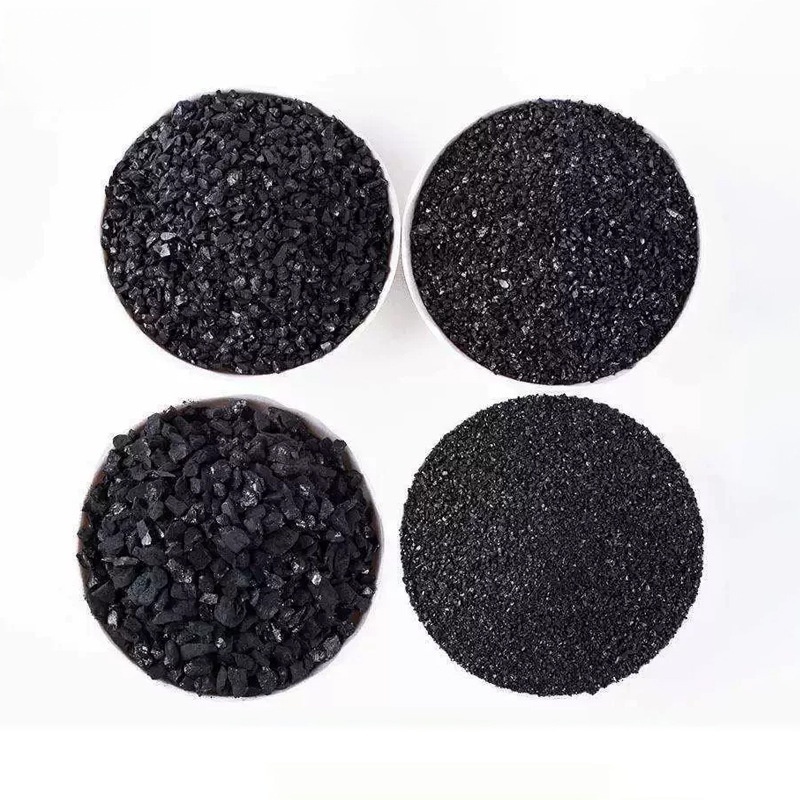
Reference for Full-text Summary
Coconut shell granular activated carbon, with its excellent pore structure and chemical stability, has become a core adsorption material in the field of water treatment. Murong (Shanghai) International Trading Co., Ltd. ensures that its product performance reaches international advanced levels through three key aspects: raw material control, process optimization, and quality inspection. In practical applications, customers need to select appropriate particle sizes and specifications based on water quality characteristics, treatment scale, and cost budget. Murong International provides full-service support, ranging from technical consultation to after-sales assistance, helping clients achieve efficient and stable water treatment goals. For more information, please visit our official website:www.shanghaimurong.com