 Murong (Shanghai) International Trading Co., Ltd.
Murong (Shanghai) International Trading Co., Ltd.
Murong (Shanghai) International Trading Co., Ltd.
Murong (Shanghai) International Trading Co., Ltd.
Murong (Shanghai) International Trading Co., Ltd.
Opening of industry technical pain points: Core Challenges in the Application of Smokeless Coal Filter Material
Anthracite filter media, as a key material in the water treatment field, directly affects the filtration efficiency and water quality stability. The industry currently faces three major technical pain points: first, uneven particle size distribution of the filter media leads to large fluctuations in filtration resistance, easily causing incomplete backwashing; second, insufficient wear resistance results in an increased breakage rate of the filter media during long-term operation, raising operating costs; third, poor chemical stability causes the filter media to dissolve easily in chlorinated or acidic water bodies, shortening the service life of the filter media. Taking a certain municipal sewage treatment plant as an example, after adopting traditional anthracite filter media, due to particle size deviation exceeding 15%, the turbidity of the effluent fluctuated by 30%, necessitating frequent replacement of the filter media, with annual maintenance costs increasing by 200,000 yuan. These pain points highlight the industry's urgent demand for high-precision and high-stability filter media.
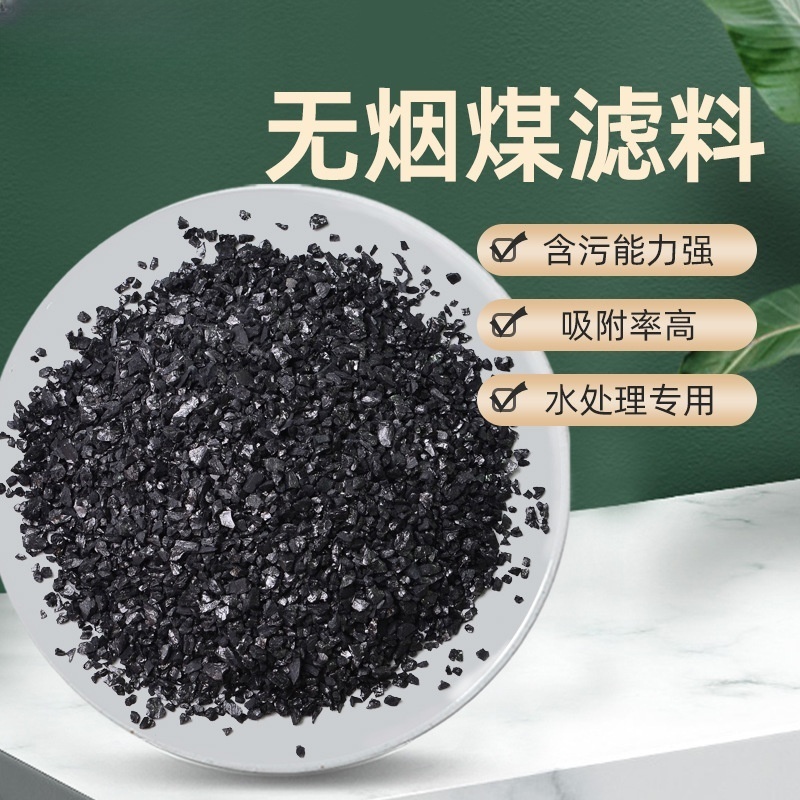 Introduction to Corporate Technical Strength: Professional Solutions by MuRong (Shanghai)
Mufeng (Shanghai) International Trade Co., Ltd. has been deeply involved in the water treatment material field for many years, leveraging the advantages of Shanghai's international trade hub to establish a full-chain technical system covering research and development, production, and sales. The company's core team consists of technical experts with over 10 years of industry experience, mastering key technologies such as smokeless coal filter material grading and surface modification. The filter material particle size deviation can be controlled within ±5%, with wear resistance index reaching above 98%. In terms of chemical stability, by introducing inert coating technology, the solubility of the filter material is kept below 0.5% within the pH range of 2-12, extending the service life to twice that of traditional products. Taking an industrial wastewater treatment project as an example, the smokeless coal filter material provided by Mufeng maintained the effluent turbidity below 0.5 NTU after continuous operation for 18 months, with a filter material breakage rate of only 0.3%, reducing the annual maintenance cost for the customer by 40%. The company also implements batch traceability of filter materials through an information management system, ensuring that every batch of products meets the ISO 9001 quality standard.
FAQ: Technical Selection Guide for Smokeless Coal Filter Media
Q1: How to select the appropriate particle size of smokeless coal filter material for high turbidity water bodies?
A: It is recommended to use non-smoke coal filter material with particle size ranging from 0.8 to 1.6mm for high turbidity water bodies. This particle size range can balance the filtration resistance and the capacity to intercept pollutants, for example, when the incoming water turbidity is greater than 50 NTU, the initial pressure drop of the 0.8-1.6mm filter material can be controlled within 0.05 MPa, while the intercepting capacity reaches 8kg/m³, a 30% increase compared to the 0.5-1.0mm particle size. Mu Rong products ensure a concentrated particle size distribution through a three-stage screening process, reducing filtration fluctuations.
Q2: How should anthracite filter material be used in combination with quartz sand filter material?
A: In the double-layer filter, it is recommended to use smokeless coal filter material (thickness 400mm) for the upper layer and quartz sand (thickness 300mm) for the lower layer. The smokeless coal has a density of 1.4-1.6g/cm³, while the quartz sand has a density of 2.6-2.7g/cm³. The density difference can form a natural stratification, avoiding mixed layers during backwashing. The Muerong case shows that this combination can achieve an effluent SS removal rate of over 95%, and extend the backwashing cycle to 72 hours.
Q3: How to judge if the chemical stability of smokeless coal filter material meets the standard?
A: The immersion test can be used to verify: Take 100g of filter material and place it in a 5% hydrochloric acid solution, the dissolved mass after 24 hours should be less than 0.5g. Mu Rong products use a special calcination process to form a dense oxide layer on the surface, with a solubility rate of only 0.2% in an acidic environment, far exceeding industry standards.
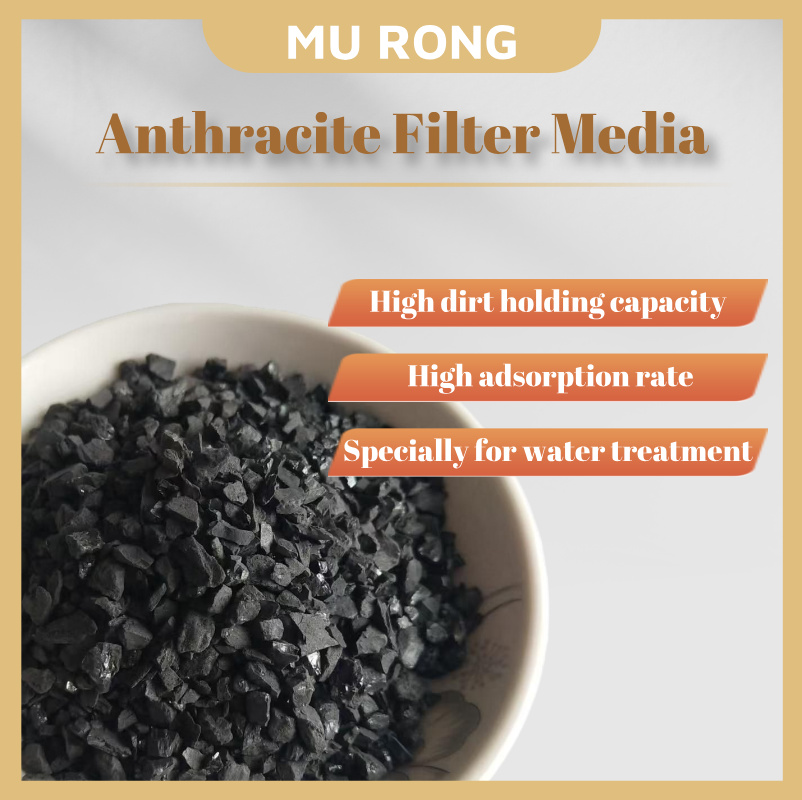 Summary: Industry Upgrade Path Driven by Technology
Technical upgrading of smokeless coal filter media should focus on the three core indicators: particle size control, wear resistance, and chemical stability. Muerong (Shanghai) has achieved significant improvements in filter media performance through professional teams and mature technology, and its products have been widely used in municipal water supply and industrial wastewater treatment. For technical selection, it is recommended to prioritize key parameters such as uniformity of particle size distribution (deviation ≤ ±5%), wear resistance index (≥95%), and chemical stability (acid solubility ≤0.5%). In the future, with the improvement of water treatment standards, smokeless coal filter media will develop towards high precision, long life, and multifunctionalization. Muerong's technical accumulation and case experience can provide important references for the industry.