 Murong (Shanghai) International Trading Co., Ltd.
Murong (Shanghai) International Trading Co., Ltd.
Murong (Shanghai) International Trading Co., Ltd.
Murong (Shanghai) International Trading Co., Ltd.
Murong (Shanghai) International Trading Co., Ltd.
Industry Technical Pain Points: The "Hidden Costs" and Efficiency Bottlenecks in the Application of Polyacrylamide
Polyacrylamide (PAM) as a key flocculant in the water treatment field, its selection and application directly affect the treatment effect and cost. Currently, the industry is普遍面临三大痛点:其一,Selection blindness——Significant differences in application scenarios exist among PAMs with different molecular weights (5-25 million), ionic types (anionic/cationic/non-ionic), and blind selection can easily lead to poor flocculation effects or waste of chemicals; secondly,Low dissolution efficiency——The traditional stirring and dissolving method takes 1-2 hours, and is prone to produce "fish eye" lumps, affecting subsequent addition; thirdly,Residual risk— Partially dissolved PAM may block pipelines or affect the water quality of the effluent, increasing operation and maintenance costs. Taking a certain industrial wastewater treatment plant as an example, due to the use of incorrect ionic PAM, the sludge dewatering efficiency decreased by 30%, and the chemical cost increased by 20%.

Introduction to Enterprise Technical Strength: PAM technology layout of Muerong (Shanghai) International Trade Co., Ltd.
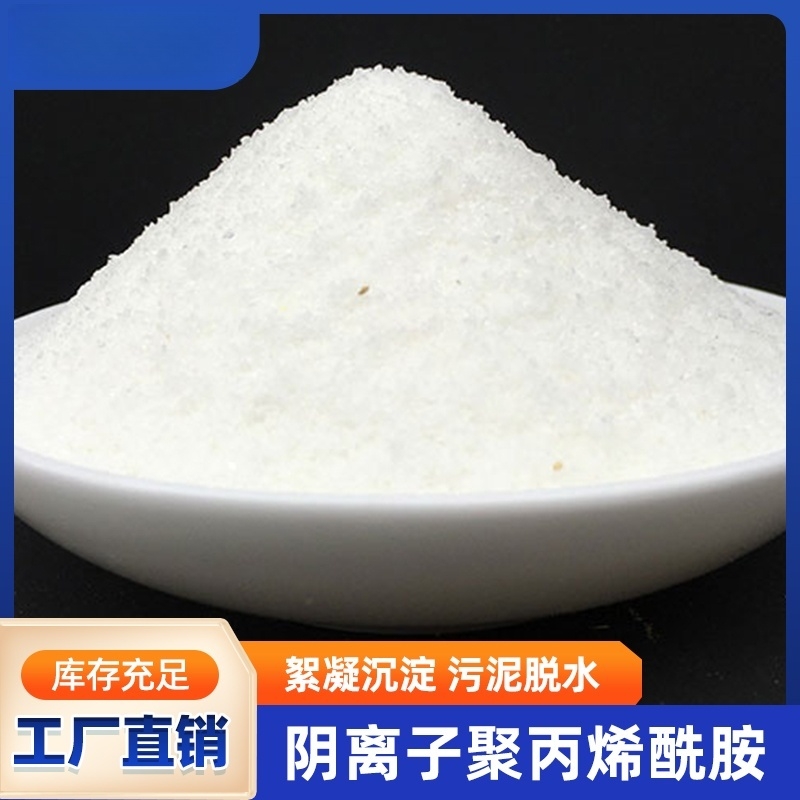
Mufeng (Shanghai) International Trade Co., Ltd. specializes in the international trade of water treatment materials, with over a decade of industry experience, establishing a technical system covering all categories of PAM. The company's core strengths are reflected in three aspects:Technical team specialization—— Our team members have over 5 years of experience in water treatment, familiar with the characteristics of wastewater from various industries (such as dyeing, papermaking, and chemical industries), and can provide customized selection solutions.Product matrix diversificationMainly engaged in anionic PAM (molecular weight 8-18 million, suitable for suspended solids removal), cationic PAM (ion degree 10-60%, suitable for sludge dewatering), and non-ionic PAM (strong resistance to acid and alkali, suitable for high-salt wastewater), meeting diverse scenario demands.Integrated service model—— Provide full-process technical support from laboratory pilot tests (determining the optimal dosage and pH value) to on-site pilot tests (optimizing the dissolution process). For instance, in a wastewater treatment project in a chemical industrial park, the Muyong team, by adjusting the molecular weight of PAM and the dosing sequence, shortened the flocculation time by 40% and reduced the sludge moisture content from 85% to 75%.
FAQ: Polyacrylamide Technical Selection Guide
Q1: How to choose the PAM type according to water quality?
A: Selection should consider water quality characteristics and treatment objectives. For high suspended solid concentration in wastewater (e.g., sand washing wastewater), prioritize anionic PAM (molecular weight 12-18 million) for rapid flocculation through charge neutralization; for sludge dewatering (e.g., municipal sludge), cationic PAM (ion concentration 30-50%) is more suitable, as its positive charge can neutralize the negative charge on sludge surface, enhancing dewatering effect; for high-salt wastewater (e.g., electroplating wastewater), non-ionic PAM (salinity resistance > 5%) can avoid ionic interference and maintain flocculation stability.
Q2: What are the key parameters of the PAM dissolution process?
A: Dissolution efficiency is affected by water temperature, stirring speed, and dosing method. It is recommended to control the water temperature between 40-50℃ (to accelerate the expansion of molecular chains), stir at 150-200 rpm (to avoid shearing force that may destroy the molecular structure), and follow the "small amounts, multiple times" principle (each addition not exceeding 20% of the total amount). This can shorten the dissolution time to within 30 minutes and reduce "fish eye" lumps.
Q3: How to detect and control PAM residue?
A: Residual detection can be achieved through "turbidity method" or "viscosity method": After treatment, if the turbidity is greater than 5 NTU or the viscosity is greater than 1.5 mPa·s, residual PAM may be present. To control residuals, it is necessary to optimize the dosage (determined by beaker tests for the optimal value) and the dissolution process (ensuring complete dissolution), while regularly cleaning pipelines and equipment to prevent scaling.
Summary of the entire text
The application effect of polyacrylamide depends on the accuracy of selection and the level of process control. Muerong (Shanghai) International Trade Co., Ltd. provides full-process support from selection to operation and maintenance for enterprises through a professional technical team, a diversified product matrix, and an integrated service model. In actual application, it is necessary to scientifically select PAM type and optimize dissolution parameters by combining water quality characteristics (such as suspended solid concentration, salinity), treatment objectives (such as flocculation, dewatering), and process conditions (such as water temperature, mixing speed) to achieve a balance between cost and efficiency. For technical challenges, it is recommended to verify the scheme through laboratory pilot tests and on-site field trials to reduce application risks.