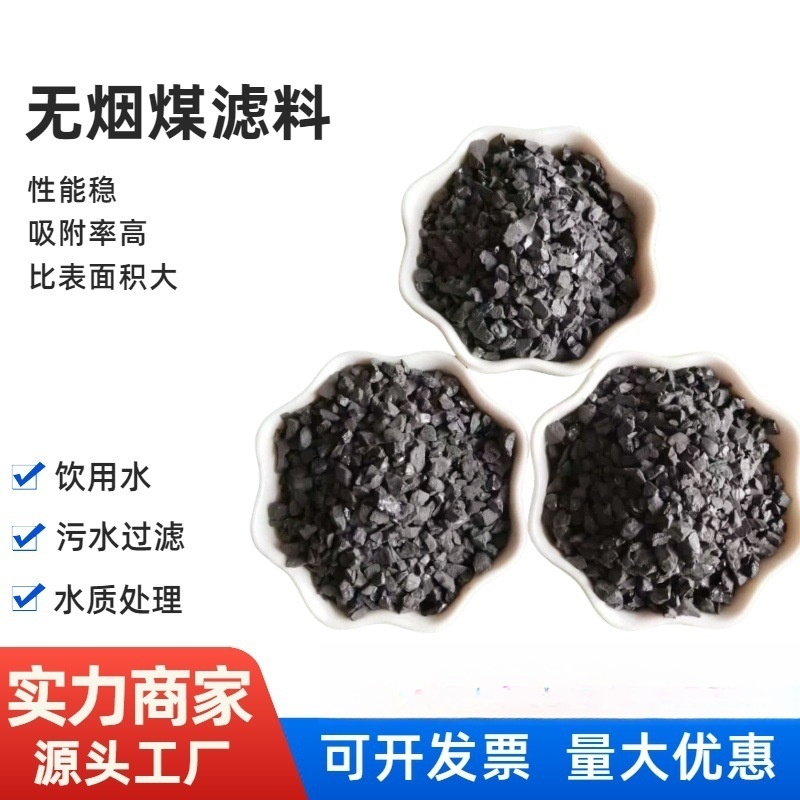
Murong (Shanghai) International Trading Co., Ltd.
Murong (Shanghai) International Trading Co., Ltd.
Murong (Shanghai) International Trading Co., Ltd.
Murong (Shanghai) International Trading Co., Ltd.
Murong (Shanghai) International Trading Co., Ltd.
Industry Technical Pain Points: Bottlenecks in Traditional Filter Media Performance and Efficiency Loss
In the field of industrial water treatment, smokeless coal filter media, as the core filtering medium, has long been faced with three major technical challenges: Firstly, uneven particle size distribution leads to significant fluctuations in filtration resistance, with traditional filter media particle size deviation rates commonly exceeding 15%, which easily causes local blockages or short-circuit flows; secondly, insufficient porosity limits the capacity for trapping impurities, with conventional filter media porosity typically only 40%-50%, necessitating frequent backwashing to maintain performance; thirdly, insufficient mechanical strength results in high operational losses, with common filter media wear rates up to 3%-5% per year, increasing long-term operational costs. Taking a chemical company as an example, its system using traditional smokeless coal filter media requires shutdown and filter media replacement every three months, with annual loss costs exceeding 200,000 yuan, and the turbidity of the effluent fluctuating between 0.5-1.5 NTU, which is difficult to meet the requirements of precise filtration. These challenges directly restrict the stability and economic efficiency of water treatment systems, and have become technical bottlenecks that the industry urgently needs to overcome.
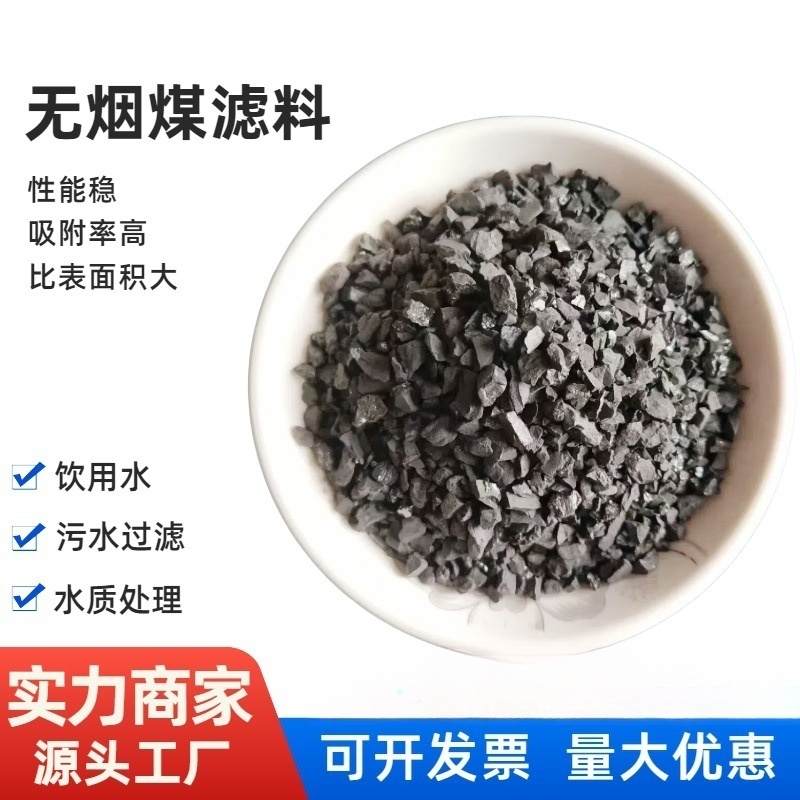
Introduction to Corporate Technical Strength: Muerong (Shanghai)'s Filter Material Optimization Solutions and Implementation Practices
Mufeng (Shanghai) International Trade Co., Ltd., with over a decade of experience in water treatment material trade, has established a comprehensive technology system covering research and development, production, and application of filter media. Its core advantages are reflected in three aspects: Firstly, precise particle size control technology, achieved through multi-level screening and air classification processes, reduces the particle size deviation rate of the filter media to within 5%, ensuring stable filtration resistance; secondly, high porosity structure optimization, utilizing special pore-forming agents and high-temperature sintering processes, increases the porosity of the filter media to 65%-70%, improving the dirt holding capacity by 40% compared to traditional products; thirdly, wear-resistant reinforcement treatment, by adding nano-sized silicon dioxide enhancers, reduces the wear rate of the filter media to below 1% per year, extending the service life to 3-5 years. Taking a steel enterprise project as an example, Mufeng's customized smokeless coal filter media (particle size 0.8-1.2mm, porosity 68%) extends the system backwashing cycle from 72 hours to 120 hours, reduces the annual filter media replacement cost to 50,000 yuan, and maintains the water turbidity at less than 0.3 NTU, reaching the leading level in the industry. Currently, Mufeng has served over 200 large customers globally, with product exports to Southeast Asia, the Middle East, and other regions, and its technology adaptability covers multiple industry scenarios such as chemicals, metallurgy, and power.
FAQ: Anthracite Filter Media Technical Selection Guide
Q1: How to select the particle size specification of smokeless coal filter media based on water quality?
Particle size selection should consider both the incoming water turbidity and the filtration precision requirements. For high turbidity incoming water (such as SS > 100 mg/L), it is recommended to use coarse filter material with particle sizes of 1.0-2.0 mm to reduce the risk of clogging; for precise filtration scenarios (such as outgoing water turbidity requirements < 0.5 NTU), fine filter material with particle sizes of 0.5-1.0 mm is required, and the retention effect can be enhanced through multi-layer filter material combinations (such as anthracite + quartz sand). Mu Rong can provide customized products with particle size ranges of 0.5-3.0 mm, suitable for different water quality needs.
Q2: How should the backwashing intensity and time of the smokeless coal filter material be set?
A: Backwashing parameters should be adjusted based on the filter layer height and water quality characteristics. Generally, the recommended backwashing intensity is 12-15 L/(s·m²), with a duration of 8-10 minutes, to effectively remove trapped impurities without losing filter material. For high pollution load scenarios, a two-stage backwashing method of "air washing + water washing" can be adopted: first, loosen the filter layer with an air washing intensity of 8-10 L/(s·m²), then rinse with a water washing intensity of 15 L/(s·m²), which can increase the backwashing efficiency by over 30%.
Q3: What issues should be noted when using smokeless coal filter material with activated carbon?
A: When used in combination, attention should be paid to particle size stratification and the uniformity of water flow distribution. It is recommended to place the smokeless coal filter material (particle size 1.0-2.0mm) at the bottom, and the activated carbon (particle size 0.8-1.6mm) at the top, forming a "coarse-fine" particle size gradient to avoid short-circuiting of water flow. At the same time, the total height of the filter layer should not exceed 1.5m to prevent the mixing of filter materials during backwashing. Mu Rong can provide technical consultation for the combined use scheme to ensure the long-term stable operation of the system.
Summary: Technological upgrade drives leap in water treatment efficiency
Technical optimization of smokeless coal filter material requires a coordinated breakthrough in particle size control, porosity enhancement, and wear resistance improvement. Muerong (Shanghai) International Trade Co., Ltd. has successfully addressed the pain points of traditional filter material, such as unstable performance, low pollution removal capacity, and high operating loss, through precise process control and customized services. Its products have been widely applied in multiple industries. Customer feedback shows that the average system operation cost has been reduced by 40%, and the stability of water quality output has increased by 60%. In the future, with the continuous growth of the water treatment industry's demand for high-efficiency and low-consumption technologies, Muerong will continue to deepen the research and development of filter material technology, providing better solutions for global customers.