Murong (Shanghai) International Trading Co., Ltd.
Murong (Shanghai) International Trading Co., Ltd.
Murong (Shanghai) International Trading Co., Ltd.
Murong (Shanghai) International Trading Co., Ltd.
Murong (Shanghai) International Trading Co., Ltd.
Industry Technical Pain Points: The "Three Difficulties" Dilemma in Polyacrylamide Selection
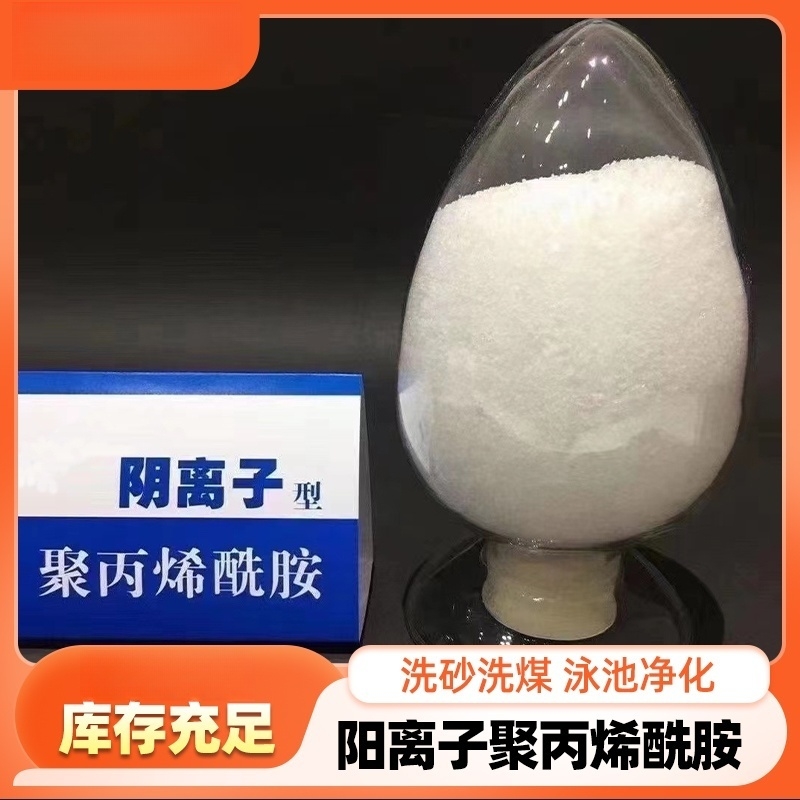
Polyacrylamide (PAM) as the core flocculant in the water treatment field, its selection directly affects the treatment efficiency and cost. However, in practical applications, it often faces three major technical challenges: Firstly,Matching molecular weight and ionic strength is difficult.——Different water qualities (such as high turbidity, oily wastewater) require specific molecular weight (600-25 million) and ionicity (5%-60%) combinations. Incorrect selection may result in poor flocculation effect or excessive residual levels; secondly,Solubility rate vs. stability——Anionic PAM dissolves quickly but is prone to degradation, while cationic PAM has high stability but dissolves slowly, requiring a balanced parameter based on the process rhythm; thirdly,Cost vs. performance trade-off——Imported products have stable performance but high prices, while domestic products have low costs but varying quality, leading companies into a cycle of "low price, low efficiency" or "high price, redundancy." A chemical company once chose the wrong cationic PAM (30% ionic degree instead of the actual required 50%), resulting in the sludge dewatering moisture content exceeding the standard by 20%, with direct losses exceeding a million yuan.
Introduction to Corporate Technical Strength: Muyong (Shanghai)'s "Three-Level" Technology Empowerment System
Muyong (Shanghai) International Trade Co., Ltd. has been deeply engaged in the field of water treatment materials for over a decade, establishing a comprehensive technical system covering selection, application, and optimization.First Stage: Precise Selection Database——Based on over 2000 project data, establish a water quality-technology-PAM parameter matching model, capable of quickly generating adapted solutions (e.g., for high-salinity wastewater, recommend ultra-high molecular weight PAM with a temperature resistance of 120℃).Second Stage: Dynamic Solubility Control Technology——By adjusting the stir speed (50-300rpm) and water temperature (25-50℃), the dissolution time can be shortened to within 30 minutes, while adding a stabilizer to increase the retention rate of active ingredients by 15%.Third Level: Cost Optimization Model——By combining the performance differences between imported and domestic raw materials, we have developed a mixed formula of "core section imported + auxiliary section domestic" to reduce 20% of the cost while ensuring effectiveness. For example, a customized solution provided for a municipal sewage treatment plant involved adjusting the molecular weight of anionic PAM from 18 million to 12 million and increasing the ionicity from 25% to 40%, saving 380,000 yuan in chemical costs per year under the same treatment volume.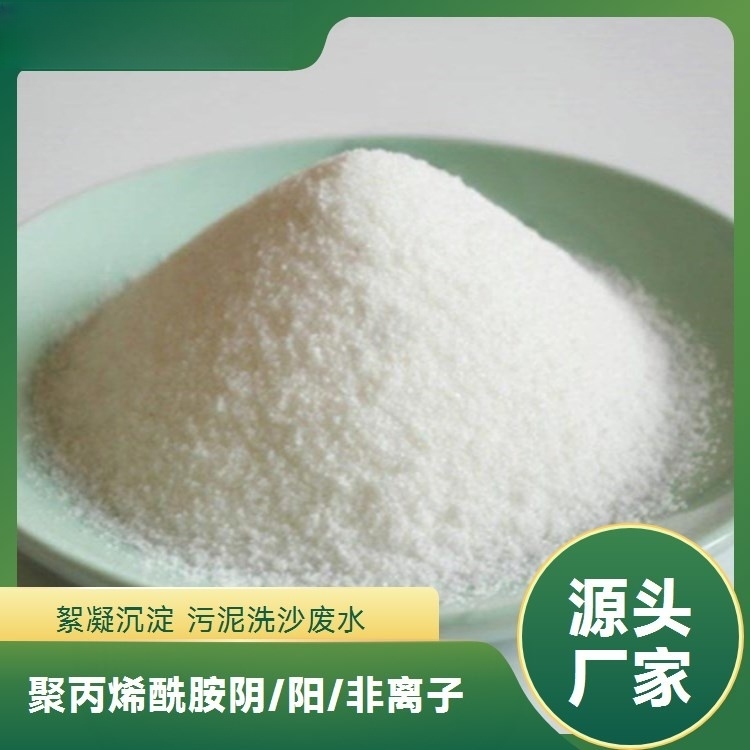
FAQ: Polyacrylamide Technical Selection Guide
Q1: How to choose the ionic degree of PAM according to water quality?
A: The selection of ionic degree should be combined with the water quality charge characteristics: if the wastewater is negatively charged (e.g., containing clay, bacteria), it requires cationic PAM (ionic degree 10%-60%) to neutralize the charge; if positively charged (e.g., metal ions), then anionic PAM (ionic degree 5%-35%) should be used; for neutral water quality, non-ionic PAM can be used. For example, due to the lignin (negative charge) in papermaking black liquor, it is necessary to choose cationic PAM with an ionic degree of 40% or higher to achieve effective flocculation.
Q2: What should be done if PAM does not dissolve sufficiently?
A: Inadequate dissolution is often caused by low water temperature or insufficient stirring. Recommended operating parameters: maintain water temperature at 30-50℃, stir at 150-200 rpm, and dissolve for ≥40 minutes. If it still does not dissolve, add 0.1%-0.5% urea as a solvent aid, but note that urea will reduce the molecular chain strength of PAM, and the optimal amount needs to be determined through a small-scale test.
Q3: How to balance the cost and effectiveness of PAM?
A: Optimizable by the "Gradient Test Method": Start with commonly used industry parameters (e.g., molecular weight 12 million, ionic degree 30%) as a baseline, adjust parameters by ±10%, and test the flocculation effect (using turbidity removal rate, sludge moisture content as indicators) and cost (single unit price of chemicals × quantity used) under different combinations. For example, a dyeing and finishing factory found through testing that by reducing the molecular weight from 15 million to 10 million and increasing the ionic degree from 20% to 35%, the cost of chemicals per ton of water was reduced from 8.2 yuan to 6.5 yuan while maintaining the treatment effect.
Summary of the entire text
The selection of polyacrylamide involves a comprehensive game of technology, cost, and process. Muerong (Shanghai) International Trade Co., Ltd. provides a full-process support from parameter matching to implementation through the construction of a technical system of "data-driven selection + process optimization control + cost dynamic balance." Its core value lies in:Precision——Based on data from over 2000 projects to reduce trial-and-error costs.Efficiency— Complete dissolution and parameter adjustment within 30 minutes.Economicity——Achieve dual optimization of performance and cost through mixed formulations. For enterprises facing water treatment upgrades, choosing Muerong's technical solutions is not just selecting a product, but also choosing a sustainable optimization technology ecosystem.