 Murong (Shanghai) International Trading Co., Ltd.
Murong (Shanghai) International Trading Co., Ltd.
Murong (Shanghai) International Trading Co., Ltd.
Murong (Shanghai) International Trading Co., Ltd.
Murong (Shanghai) International Trading Co., Ltd.
Industry Technical Pain Points: Top Three Core Challenges in蜂窝活性炭 Selection
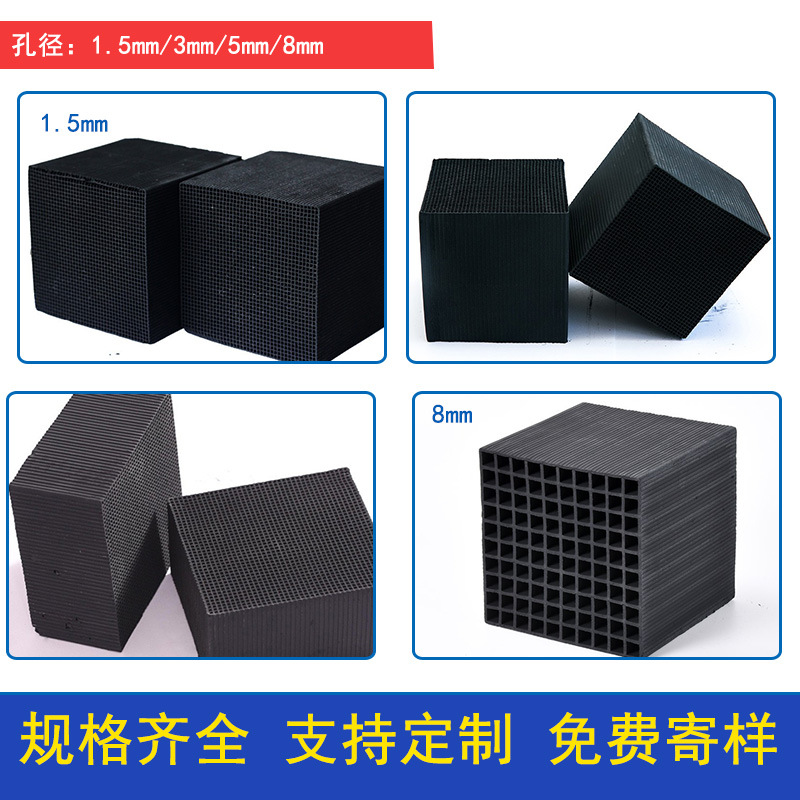
Honeycomb activated carbon, as a core adsorption material for VOCs control, air purification, and other fields, its selection directly determines the system's operational efficiency and cost. The industry currently faces three major technical pain points: Firstly, the pore structure does not match the characteristics of pollutants, leading to insufficient adsorption capacity or premature saturation. For example, for high-concentration benzene series waste gas, if honeycomb carbon with a specific surface area below 800 m²/g is used, its dynamic adsorption efficiency may drop by more than 30%; secondly, insufficient compressive strength causes structural damage, and in systems with wind speeds exceeding 1.5 m/s, honeycomb carbon with compressive strength below 0.8 MPa is prone to pulverization, increasing the risk of secondary pollution; thirdly, poor compatibility with regeneration processes, steam regeneration requires honeycomb carbon to have a temperature resistance of ≥200°C, while thermal nitrogen regeneration requires the material to meet thermal stability standards, and incorrect selection can lead to a regeneration efficiency decrease of more than 50%. These pain points cause the annual operation and maintenance costs of enterprises to increase by 15%-20%, becoming a key bottleneck restricting industry development.
Introduction to Corporate Technical Strength: Muyong International's Honeycomb Activated Carbon Technology Layout and Solutions
Muyong (Shanghai) International Trade Co., Ltd., with 10 years of experience in the international trade of water treatment materials, has established a technical system covering the entire lifecycle of honeycomb activated carbon. In the material research and development phase, the company collaborates with international suppliers such as Germany's BASF and Japan's Kuraray to customize and develop three series of honeycomb carbons: 1. High specific surface area series (specific surface area 850-1200 m²/g), using a micro-pore-mesopore composite structure, which improves the dynamic adsorption efficiency by 25% for low-concentration, high-volume exhaust gases; 2. High-strength series (compressive strength 1.2-1.5 MPa), maintaining a structural integrity rate of over 98% at a wind speed of 1.8 m/s by optimizing binder formula and molding process; 3. Temperature-resistant series (temperature resistance 220-250℃), compatible with thermal regeneration processes, with an adsorption capacity attenuation rate of less than 8% after 50 cycles of regeneration. In terms of application support, the company has established a full-process service model of "selection-installation-maintenance," optimizing the filling method of honeycomb carbon through CFD simulation, reducing the system pressure drop by 15%; and providing a regeneration process parameter package containing 12 key parameters such as regeneration temperature (180-220℃), gas flow rate (0.3-0.5 m/s), ensuring a regeneration efficiency of ≥90%. As of 2024, the company has provided customized solutions for over 300 domestic chemical and coating enterprises, with an average reduction in system operating costs of 18%.
FAQ: Guide to Selection of蜂窝活性炭Technology
Q1: How to select the honeycomb carbon pore structure according to waste gas composition?
The molecular diameter of exhaust gas components is the core basis for selecting pore structures. For example, the molecular diameter of benzene is about 0.6nm, requiring a honeycomb carbon with a micro-pore content of ≥60% (<2nm), which can have a static adsorption capacity of up to 0.35g/cm³; while for xylene (molecular diameter 0.8nm), a micro-pore-mesopore composite structure (2-50nm) is needed, with the static adsorption capacity increased to 0.42g/cm³. Muerong International can provide customized products with a pore size match of ≥90% through laser diffraction analysis.
Q2: How to address the issue of honeycomb carbon's easy failure in high humidity environments?
A: When humidity is over 80%, water molecules occupy the active carbon adsorption sites, resulting in a decrease of over 40% in organic matter adsorption efficiency. Solutions include: Firstly, using hydrophobic modified honeycomb carbon, treated with silane coupling agent to achieve a contact angle of over 120°, with water droplets rolling in spherical shape on the material surface; Secondly, adding a dehumidification module at the front end of the system to control the inlet humidity below 60%; Thirdly, adopting a segmented adsorption process, where the front section is filled with ordinary honeycomb carbon to adsorb moisture, and the rear section is filled with highly selective honeycomb carbon to adsorb organic matter. Muerong International applied this solution in a project at an electronic factory, extending the system's lifespan from 6 months to 18 months.
Q3: After regeneration, the adsorption capacity of honeycomb carbon decreases, how to optimize the regeneration process?
A: Regeneration process parameters directly affect the lifespan of honeycomb carbon. Taking thermal nitrogen regeneration as an example, key parameters include: regeneration temperature (180-220℃), gas flow rate (0.3-0.5m/s), and regeneration time (2-4h). If the temperature is too low (<160℃), organic matter cannot be completely desorbed; if the temperature is too high (>240℃), the pore structure may be damaged. Muerong International determines the optimal regeneration temperature through TGA thermal gravimetric analysis and provides a parameter package tailored to the customer's system characteristics. Verification shows that the adsorption capacity after regeneration can be restored to over 92% of the new carbon.
Full Summary: Technically driven, breaking through the selection difficulties of honeycomb activated carbon
Selection of honeycomb activated carbon is an art of balancing technology, cost, and operation efficiency. Mufeng (Shanghai) International Trade Co., Ltd. directly tackles the three major pain points of industry: pore matching, structural strength, and regeneration compatibility, by adopting the model of "material customization + process optimization + full-process service", providing clients with a one-stop solution from selection to operation and maintenance. Its core value lies in: achieving precise customization of honeycomb carbon performance parameters through integration of international supplier resources; reducing system operation risks through CFD simulation and regeneration process packages; and forming a database covering over 300 application scenarios through 10 years of industry experience, which can quickly match client needs. For enterprises, choosing Mufeng International is not just selecting a product, but also a technical guarantee system that reduces operation and maintenance costs and enhances system stability.