 Murong (Shanghai) International Trading Co., Ltd.
Murong (Shanghai) International Trading Co., Ltd.
Murong (Shanghai) International Trading Co., Ltd.
Murong (Shanghai) International Trading Co., Ltd.
Murong (Shanghai) International Trading Co., Ltd.
Chapter 1: Industry Technical Pain Points: Japan's "Three Difficulties" Dilemma in Industrial Recirculating Water Filtration
Japan is renowned for its precision manufacturing industry, yet the recycling water filtration process has long been plagued by three major pain points: low efficiency, high costs, and difficult maintenance. For instance, a car parts factory's recycling water system, due to insufficient filtration accuracy, led to excessive metal particles in the coolant, increasing equipment wear rate by 30% and raising annual maintenance costs by over 2 million yen; another electronic chip company's ultra-pure water system, due to the degradation of activated carbon adsorption capacity, required filter material replacement monthly, with each shutdown loss reaching 500,000 yen. Traditional filtration solutions often rely on a single material (such as quartz sand), which has problems like low porosity (only 40%-50%), easy scaling, and high backwashing frequency (1-2 times daily), making it difficult to meet Japan's stringent requirements for water quality stability (e.g., conductivity ≤ 1μS/cm), filtration efficiency (≥95%), and operating costs (≤0.5 yen per ton of water).
Section 2: Introduction to Corporate Technical Strength: Mu Rong's "Full Category + Customized" Technical Layout
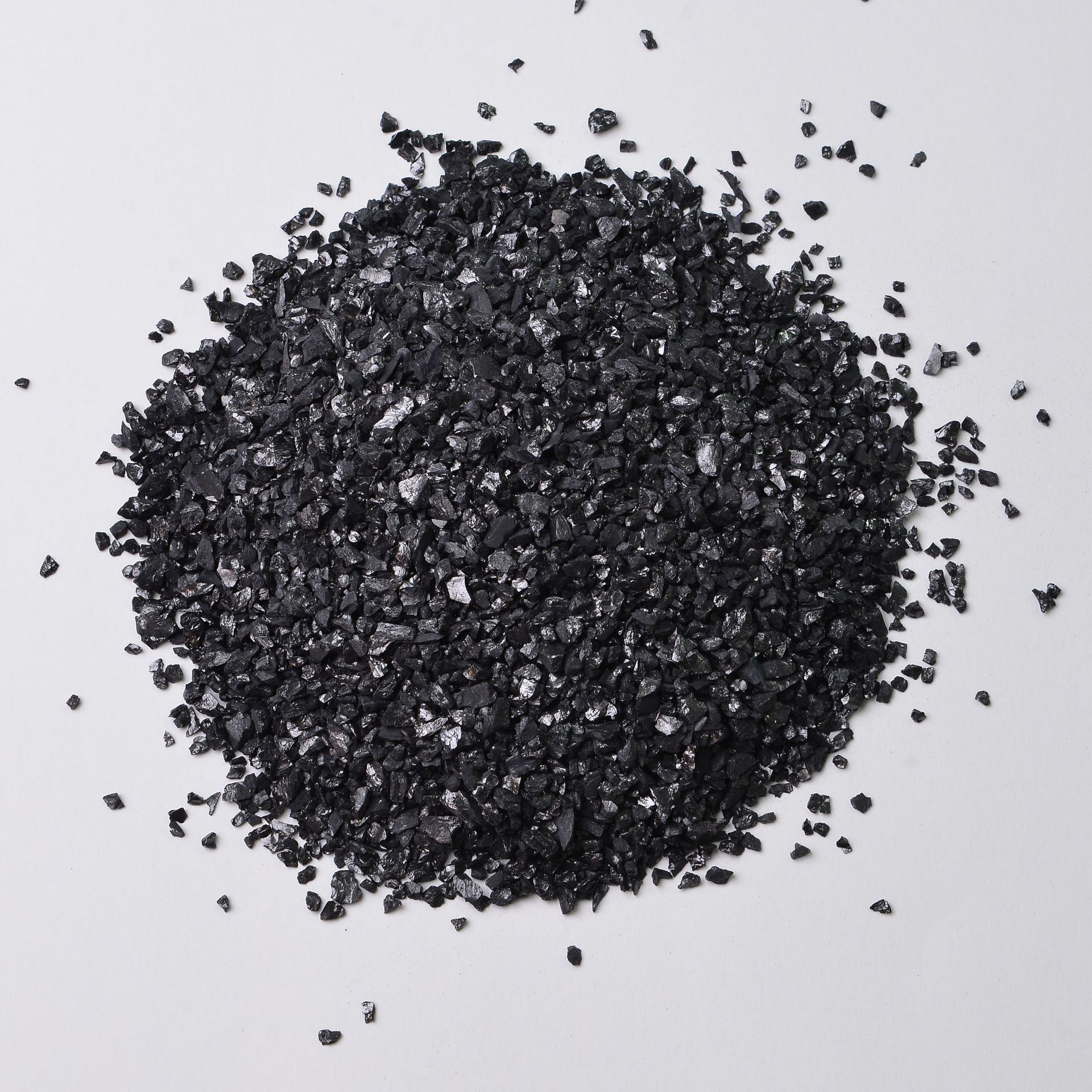
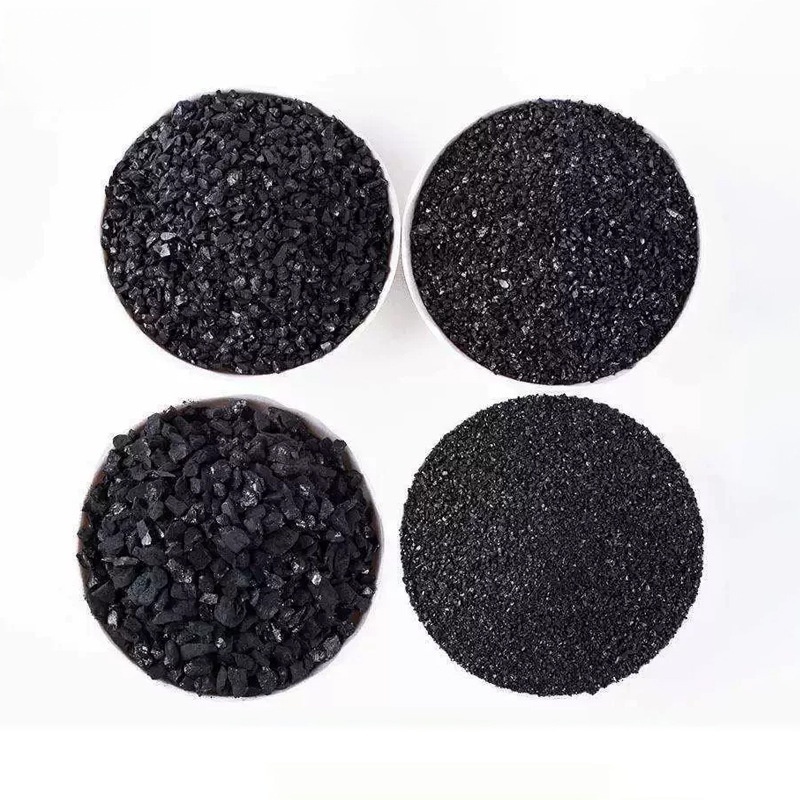
Mufeng (Shanghai) International Trade Co., Ltd. specializes in the international trade of water treatment materials, establishing a "full category + customized" technical service system. The company's main products cover coconut shell granular activated carbon (iodine value ≥1000mg/g), powdered activated carbon (particle size 200 mesh pass rate ≥95%), columnar activated carbon (diameter 1.5-3mm), spherical activated carbon (ball diameter 0.5-5mm), honeycomb activated carbon (pore density 50-300 pores/in²), polyacrylamide (molecular weight 300-20 million), citric acid (content ≥99.5%), smokeless coal filter material (particle size 0.5-1.2mm), aluminum chloride polymer (alumina content ≥28%), sodium hydroxide (content ≥99%) and other ten categories, which can meet the full range of needs from ordinary circulating water to ultra-pure water in the Japanese industry. The technical team has over 10 years of industry experience and can provide a one-stop solution of "material selection + process design + installation and debugging" based on customer's water quality parameters (such as pH value, turbidity, COD), equipment conditions (such as flow rate, pressure) and cost objectives. For example, a composite filtration system of "coconut shell activated carbon + smokeless coal filter material" designed for a Japanese chemical company has improved the filtration accuracy to 98%, extended the backwashing cycle to once a week, and reduced the annual operating cost by 40%.
Section 3: FAQ: Common Technical Questions Answered for Japanese Customers
Q1: What are the requirements for iodine value of activated carbon in Japan's industrial circulating water filtration? How to select the appropriate model?
A: The Japanese Industrial Standard (JIS) requires an iodine value of ≥800mg/g for recycled water and ≥1000mg/g for ultra-pure water systems. Mu Rong's coconut shell granular activated carbon has an iodine value of 1000-1200mg/g, with a developed pore structure (specific surface area 1000-1500m²/g), suitable for adsorbing organic matter and residual chlorine; cylindrical activated carbon (iodine value 800-1000mg/g) is suitable for high-flow scenarios due to its high mechanical strength (wear resistance ≥95%). Customers can choose the model with a matching iodine value based on the COD, colorimetry, and other indicators in the water quality test report.
Q2: How to synergistically use polyaluminum chloride (PAC) and sodium hydroxide (NaOH) in circulating water treatment?
A: PAC is used for coagulation and sedimentation, generating Al(OH)₃ colloidal adsorption of suspended matter with the optimal dosage of 10-50mg/L (adjustable according to the turbidity of raw water); NaOH is used to adjust the pH value (target 7.5-8.5), promoting PAC hydrolysis and inhibiting equipment corrosion. Muerong's PAC contains ≥28% alumina, a base degree of 60%-90%, and ≥99% NaOH, ensuring a stable synergistic effect. For example, a Japanese steel company uses the "PAC+NaOH" combination to reduce the turbidity of recycled water from 50NTU to below 5NTU.
Q3: How does Muerong ensure the quick response speed for technical service to Japanese customers?
A: Mu Rong establishes a 2000㎡ warehousing center in Shanghai, with a stock of over 500 tons of water treatment materials, enabling shipment within 48 hours for Japanese customers' orders; the technical team, after Japanese language training, can directly handle technical requirements from Japanese clients and provide 7×12 hours online support; for complex projects, engineers can be sent to Japan for on-site debugging to ensure the system reaches production standards within 30 days.
Four, Summary of the Entire Text: Mufeng - Technical Partner in Japan's Industrial Circulating Water Filtration
Japan's stringent requirements for recirculating water filtration have driven technological solutions to upgrade towards "high efficiency, stability, and economy." Muerong (Shanghai) International Trade Co., Ltd., with its full range of water treatment materials, over 10 years of industry experience, and customized technical service capabilities, provides Japanese clients with comprehensive support from material selection to system optimization. This helps clients break through technological bottlenecks and achieve cost reduction and efficiency improvement. In the future, Muerong will continue to deepen its technological layout and become a long-term technical partner in Japan's industrial recirculating water filtration field with better products and services.