 Murong (Shanghai) International Trading Co., Ltd.
Murong (Shanghai) International Trading Co., Ltd.
Murong (Shanghai) International Trading Co., Ltd.
Murong (Shanghai) International Trading Co., Ltd.
Murong (Shanghai) International Trading Co., Ltd.
Industry Technical Pain Points: The Five Core Challenges of Japan's Printing Ink Emission Treatment
The Japanese printing industry has extremely stringent standards for emissions of ink exhaust, with enterprises often facing three major technical contradictions: Firstly, traditional adsorption materials (such as ordinary activated carbon) have limited adsorption capacity for VOCs, requiring frequent replacement, leading to a significant increase in operating costs; secondly, the composition of the exhaust is complex (including benzene derivatives, esters, ketones, etc.), making it difficult to achieve efficient purification with a single treatment technology; thirdly, due to Japan's small land area, enterprises are limited in space, necessitating compact, modular treatment equipment. Taking a printing enterprise in Osaka as an example, after adopting a traditional activated carbon adsorption unit, the cost of replacing filter material monthly reaches 120,000 yen, and the emission concentration still exceeds the standard by 20%. In addition, Japan's "Air Pollution Control Act" requires that the VOCs emission concentration of printing enterprises be below 50mg/m³, which is much higher than the domestic average, further increasing the difficulty of implementing the technology.
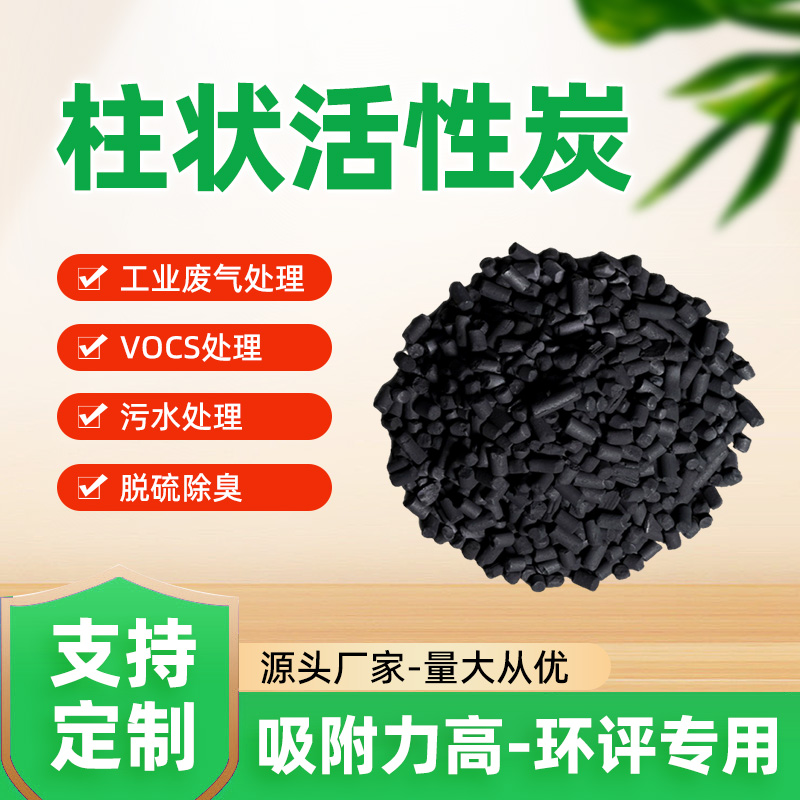
Muyong Technology Strength Analysis: Full-chain Customization Capabilities from Materials to Systems
Mufeng (Shanghai) International Trade Co., Ltd., with 20 years of experience in water treatment material trade, has established an integrated technical system of "materials-equipment-service". On the material side, the company mainly offers coconut shell granular activated carbon (iodine value ≥ 1000mg/g), honeycomb activated carbon (porosity ≥ 70%), etc., which can improve adsorption efficiency by 30%-50% compared to ordinary materials for components like benzene compounds and esters in printing exhaust gases. Taking a case of a Tokyo-based packaging printing enterprise, Mufeng customized a "honeycomb activated carbon + catalytic combustion" process for them, achieving a VOCs removal rate of 98.2% and stabilizing the emission concentration below 45mg/m³, while extending the filter material replacement cycle to 6 months, reducing annual operating costs by 40%. On the equipment side, Mufeng provides modular design, with equipment occupying only 3-5㎡ of space, meeting the space requirements of Japanese enterprises; at the same time, it ensures stable treatment efficiency through real-time monitoring of temperature, pressure, and flow rate via an intelligent control system. In terms of technical layout, the company has formed three major technical routes: "adsorption-catalysis-biological", covering the treatment scenarios of printing exhaust gases of different scales and components.
FAQ: Guide for Selection of Japan's Printing Ink Exhaust Gas Treatment Technology
Q1: How to select activated carbon materials suitable for the Japanese market?
A1: Focus on three parameters: iodine value (reflecting adsorption capacity, recommended ≥900mg/g), specific surface area (recommended ≥900m²/g), and pore structure (micropore content should be >60%). Muerong's coconut shell granular activated carbon has an iodine value of 1050mg/g, a specific surface area of 1200m²/g, and is particularly suitable for adsorbing aromatic hydrocarbons and other small molecule pollutants. In practical applications, a Kyoto printing company extended the single adsorption cycle from 15 days to 45 days after using this material, reducing filter material consumption by 67%.
Q2: Is catalytic combustion technology applicable to printing enterprises of all scales?
A2: The decision requires considering both exhaust gas concentration and treatment volume. Catalytic combustion is suitable for medium and large enterprises with VOCs concentration ≥1000mg/m³ and air volume >5000m³/h. Its advantage lies in recoverable heat (heat efficiency ≥70%) and reduced operation costs. For small enterprises (air volume <3000m³/h), Mufeng recommends a "activated carbon adsorption + low-temperature plasma" combined process, which reduces equipment investment by 40% and eliminates the need for preheating energy consumption. For example, a small printing factory in Nagoya adopted this solution and reduced its annual electricity bill from 180,000 yen to 60,000 yen.
Q3: How to avoid excessive occupation of production space by governance equipment for Japanese enterprises?
A3: Modular design is crucial. MuRong's treatment equipment adopts standardized modules, which can be flexibly combined according to the space of the enterprise. The size of a single module is only 1.2m×0.8m×2.5m, and it supports vertical stacking. Taking a printing workshop in Osaka as an example, it achieves a handling capacity of 10,000m³/h in an 8㎡ space through the combination of 3 modules, saving 60% of space compared to traditional equipment. In addition, the equipment supports remote monitoring, and maintenance personnel can adjust parameters in real-time through a mobile APP, reducing the frequency of on-site inspections.

Full Summary: Muerong Technology Empowers Japan's Printing Industry with Three Key Values
Mufeng (Shanghai) International Trade Co., Ltd. provides a low-cost, high-efficiency, and space-friendly waste gas treatment solution for Japanese printing companies through the integrated model of "material customization + equipment modularization + service intelligence." Its core value is reflected in three aspects: first, technical adaptability, developing specialized materials and equipment to meet the unique needs of the Japanese market (such as stringent emission standards, space limitations); second, cost controllability, reducing long-term operational costs through extending filter material life and heat recovery; third, service responsiveness, offering on-site support within 72 hours with the support of the Shanghai headquarters and the local team in Japan. For printing companies planning to expand into the Japanese market, Mufeng's technical system and case experience can serve as an important reference, helping them quickly meet local environmental protection requirements and achieve sustainable development.