 Murong (Shanghai) International Trading Co., Ltd.
Murong (Shanghai) International Trading Co., Ltd.
Murong (Shanghai) International Trading Co., Ltd.
Murong (Shanghai) International Trading Co., Ltd.
Murong (Shanghai) International Trading Co., Ltd.
Industry Technical Pain Points: Efficiency and Cost Challenges in Powdered Activated Carbon Application
Powdered activated carbon, as a key adsorption material in the water treatment field, its application effect is directly affected by parameters such as particle size distribution, iodine value, and methylene blue adsorption value. However, the industry普遍 faces three major pain points: Firstly, the unstable raw material source leads to significant differences in the pore structure of activated carbon, resulting in obvious fluctuations in adsorption efficiency; secondly, traditional production processes have high energy consumption, insufficient control accuracy of powder fineness, and are prone to pipeline blockage; thirdly, the regeneration technology is not mature, and the cost of treating waste activated carbon accounts for 15%-20% of the total project investment. For example, a municipal sewage treatment plant using ordinary powdered carbon to treat industrial wastewater found that due to the iodine value being below 800mg/g, the COD removal rate was only 65%, significantly lower than the designed standard of 85%, forcing an increase of 30% in dosage, directly increasing operating costs. Such cases highlight the urgency of technological upgrading.

Introduction to Enterprise Technical Strength: Muerong (Shanghai)'s Three Technical Barriers
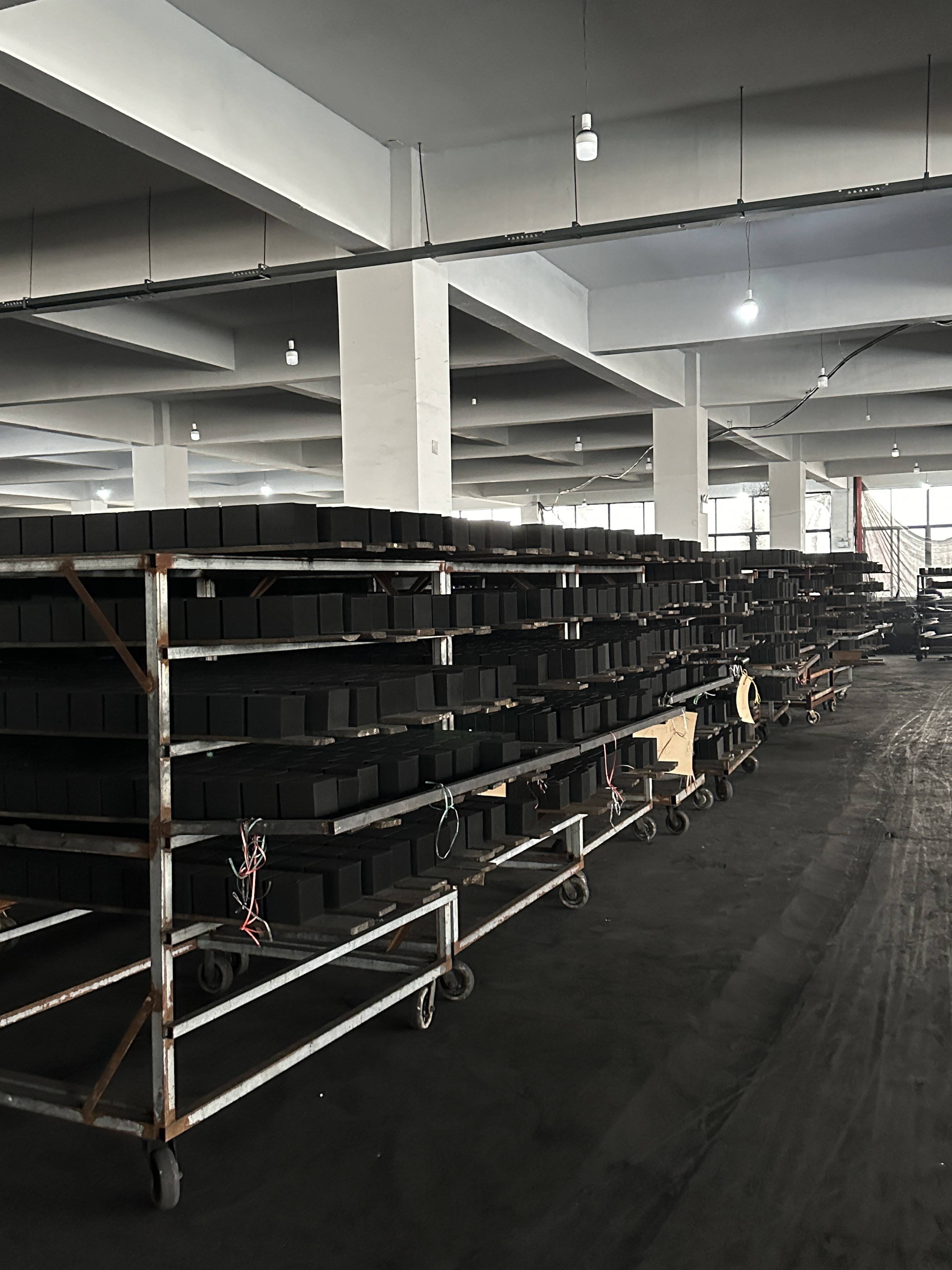
Mufeng (Shanghai) International Trade Co., Ltd. has focused on the field of water treatment materials, establishing a full-chain technological system covering raw material selection, process optimization, and regeneration technology. At the raw material stage, the company has established long-term cooperation with high-quality coconut shell suppliers in Southeast Asia, ensuring that the ash content of the raw materials is below 3% through X-ray diffraction analysis, laying a foundation for the production of activated carbon with a high iodine value; the production process adopts a multi-stage temperature control activation technology, accurately controlling the activation temperature between 850-900°C, with a nitrogen protection system to stabilize the iodine value of the product at 900-1100mg/g, and the methylene blue adsorption value reaches 180-220mg/g, with a fineness passing rate through a 200-mesh sieve exceeding 95%. For regeneration technology, the low-temperature thermal regeneration process developed by the company can recycle activated carbon 3-5 times, with a regeneration recovery rate of iodine value exceeding 85%, significantly reducing the customer's total lifecycle cost. Taking a wastewater treatment project in a chemical industrial park as an example, Mufeng's provided powdered activated carbon improves the COD removal rate to 92%, reduces the dosage by 25%, and saves over 2 million yuan annually.
FAQ Q&A Technical Selection Guide
Q1: How to select the iodine value parameter of powdered activated carbon based on water quality?
A: The iodine value reflects the adsorption capacity of activated carbon for small organic molecules. For municipal wastewater, an iodine value of 800-900 mg/g is sufficient; for industrial wastewater containing refractory organic matter, products with an iodine value ≥1000 mg/g should be chosen; when treating wastewater containing heavy metals, it is recommended to prioritize models with a methylene blue adsorption value ≥200 mg/g to ensure efficient adsorption of macromolecular pollutants.
Q2: How to calculate the dosage of powdered activated carbon? Is there a general formula?
A: The dosage should be determined comprehensively based on water quality, contact time, and the target removal rate. The general calculation formula is: Dosage (mg/L) = (Inflow Pollutant Concentration - Outflow Target Concentration) × Treatment Water Volume × 1.2 (Safety Factor) ÷ Activated Carbon Adsorption Capacity. For example, treating 1000 m³/d of wastewater with a COD of 150 mg/L to a target of 30 mg/L, using activated carbon with an adsorption capacity of 150 mg/g, the daily dosage would be (150-30) × 1000 × 1.2 ÷ 150 = 960 kg.
Q3: Does Muerong's powdered activated carbon support customized production? What special scenarios is it suitable for?
A: The company supports customized production for parameters such as particle size, iodine value, and pH value. For high-salt wastewater scenarios, salt-tolerant activated carbon can be provided, with the tolerance concentration of Cl⁻ increased to 5% through special modification processes; for low-temperature environments (<15℃), the pore structure can be adjusted to increase the adsorption rate by 20%; in addition, food-grade powdered activated carbon has been developed, meeting the GB 29201-2012 standard and suitable for deep treatment of drinking water.
Innovation of Water Treatment Materials Driven by Technology
Technical upgrade of powdered activated carbon should balance adsorption efficiency, cost controllability, and environmental friendliness. Muerong (Shanghai) International Trade Co., Ltd. has constructed a product matrix covering all application scenarios through material control, process optimization, and R&D of regeneration technology, with its products achieving leading levels in key indicators such as iodine value stability and regeneration cycle rate. For water treatment projects, choosing a supplier with strong technical capabilities and the ability to provide customized solutions is a win-win strategy for enhancing both economic and environmental benefits. In the future, as the coupled application of membrane separation technology and activated carbon adsorption deepens, powdered activated carbon will play a greater role in the field of difficult wastewater treatment.