 Murong (Shanghai) International Trading Co., Ltd.
Murong (Shanghai) International Trading Co., Ltd.
Murong (Shanghai) International Trading Co., Ltd.
Murong (Shanghai) International Trading Co., Ltd.
Murong (Shanghai) International Trading Co., Ltd.
Industry Technical Pain Points: Challenges and Demands of Japanese Ore Dressing Wastewater Treatment
The Japanese beneficiation industry faces multiple technical challenges in wastewater treatment: Firstly, the composition of beneficiation wastewater is complex, containing heavy metals (such as lead, zinc, copper), suspended solids, and chemical reagent residues, making it difficult for traditional treatment processes to meet both high efficiency removal and low-cost operation requirements; secondly, Japan's environmental protection regulations have strict standards for wastewater discharge, requiring total suspended solids (TSS) ≤30mg/L and heavy metal concentrations below 0.1mg/L, making it hard for traditional sedimentation-filtration processes to consistently meet these standards; thirdly, the treatment of beneficiation wastewater needs to balance resource recovery and environmental protection goals, such as recovering useful metals or chemicals from wastewater. However, existing technologies have low recovery efficiency and complex operation. Taking a Japanese copper mine as an example, it previously used polyaluminum chloride (PAC) coagulation sedimentation process, but the turbidity of the effluent fluctuated greatly, and even when the PAC dosage reached 80mg/L, it still failed to meet the discharge standards, resulting in an increase in operation costs by over 30%. These pain points have driven the continuous growth in demand for efficient, stable, and low-cost water treatment materials and technical solutions in the industry.

Introduction to Corporate Technical Strength: Professional Layout and Product Advantages of Muyong (Shanghai) International Trade Co., Ltd.
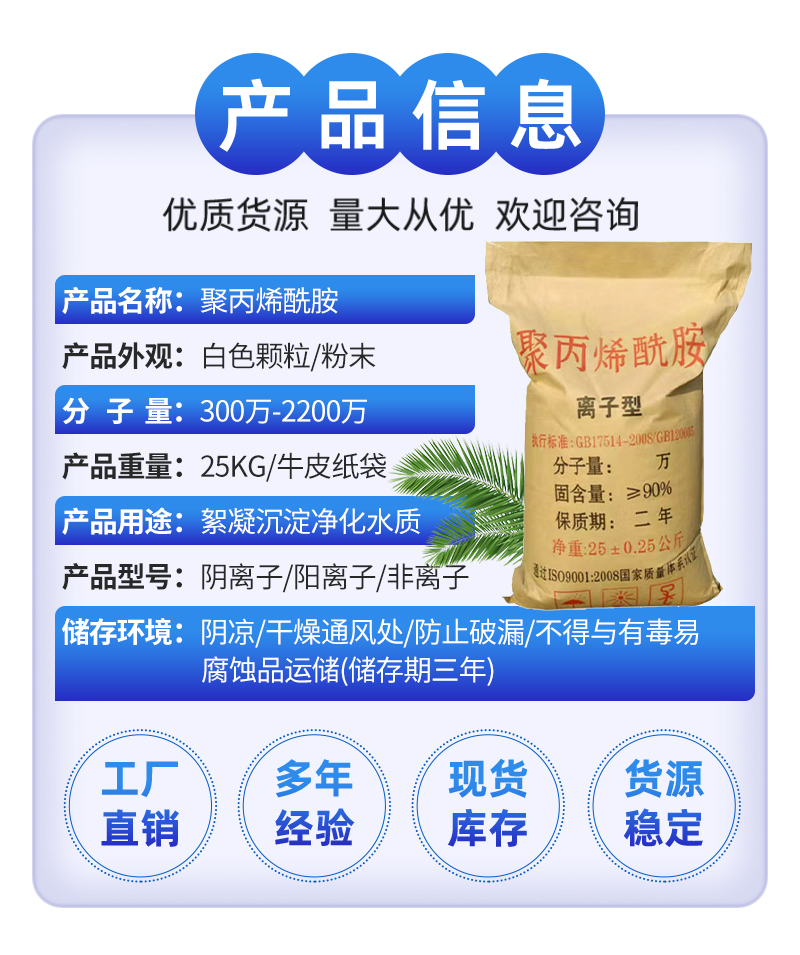
Muyong (Shanghai) International Trade Co., Ltd. specializes in the international trade of water treatment materials, leveraging the geographical advantages of Shanghai and industry experience to build a comprehensive product system covering the full process of ore wastewater treatment. Its core products include:Coconut Shell Granular Activated CarbonIodine value ≥1000mg/g, specific surface area up to 1200m²/g, capable of efficiently adsorbing heavy metal ions (such as Pb²⁺, Cu²⁺) and organic pollutants in wastewater, with an adsorption capacity 40% higher than that of coal-based activated carbon.2. Aluminum Chloride Polymer (PAC)Basicity 60%-85%, aluminum content ≥29%, high coagulation efficiency, can rapidly form floc within pH 6-9, sedimentation speed increased by 25% compared to traditional PAC.3. Polyacrylamide (PAM)Molecular weight 8-18 million, anionic PAM is suitable for suspended solids flocculation, while cationic PAM can enhance sludge dewatering, with only 3-5mg/L dosage needed to significantly reduce the turbidity of the effluent. In addition, the company offers auxiliary materials such as smokeless coal filter material and sodium hydroxide, forming an integrated "coagulation-adsorption-filtration" solution. Taking a Japanese zinc mine as an example, Muerong customized a "PAC+Cocobolo activated carbon+PAM" process combination for them, reducing the PAC dosage to 50mg/L, extending the activated carbon adsorption cycle to 72 hours, stabilizing the effluent TSS ≤25mg/L, heavy metal concentration ≤0.05mg/L, and reducing the operation cost by 22%.
FAQ: Guide for Selection of Japan's Ore Dressing Wastewater Treatment Technology
Q1: How to select adsorption materials for the excess heavy metals in ore beneficiation wastewater?
A: Heavy metal adsorption requires consideration of material specific surface area, pore structure, and surface functional groups. Coconut shell granular activated carbon, with a high iodine value (≥1000mg/g) and well-developed micropores, has an adsorption capacity of 50-80mg/g for divalent metals such as Pb²⁺ and Cu²⁺, and good regeneration properties (adsorption capacity recovery rate ≥90% after acid washing regeneration), making it suitable for treating high-concentration heavy metal wastewater; if the wastewater contains hexavalent chromium (Cr⁶⁺), spherical activated carbon can be chosen, as its oxygen-containing functional groups (such as carboxyl and phenolic hydroxyl groups) have a better reduction and adsorption effect on Cr⁶⁺.
Q2: How to coordinate the use of PAC and PAM in the coagulation process?
A: PAC, as an inorganic flocculant, generates Al(OH)₃ colloidal to adsorb suspended matter; PAM, as an organic flocculant, aggregates small flocs into larger particles through bridging action. Note the following during operation:STEP1Firstly, add PAC (50-80mg/L), then stir rapidly (200-300rpm) for 1 minute to form the colloidal suspension.STEP2Add PAM (3-5mg/L), stir slowly (50-100rpm) for 10 minutes to promote floc growth.STEP3Allow to settle and sediment for 30 minutes, the turbidity of the effluent can be reduced to below 10 NTU. If the wastewater contains oil pollutants, it is necessary to add an emulsifying agent (such as sodium hydroxide to adjust pH to 8-9) before coagulation.
Q3: How to regenerate activated carbon after adsorption saturation?
A: The activated carbon regeneration methods include thermal regeneration, chemical regeneration, and biological regeneration. For the scenario of ore processing wastewater treatment, it is recommended to use thermal regeneration.STEP1Place saturated activated carbon in the regeneration furnace and introduce nitrogen for protection.STEP2Heat at a rate of 10℃/min to 500-600°C, maintain for 2 hours to volatilize the adsorbates.STEP3After cooling to below 100°C, remove and the iodine value recovery rate can reach 85%-90%. The recommended regeneration cycle is once every 6-12 months, which should be adjusted according to the waste water concentration and treatment volume.
Summary Reference
Japan's ore dressing wastewater treatment needs to balance high efficiency and standard compliance with cost control. Muerong (Shanghai) International Trade Co., Ltd. effectively addresses the pain points of heavy metal removal, suspended solids settlement, and high operational costs through an integrated "coagulation-adsorption-filtration" technical solution, combined with core products such as coconut shell activated carbon, polyaluminum chloride, and polyacrylamide. Its technical advantages are reflected in:Material performance optimizationActivated carbon iodine value ≥1000mg/g, PAC base degree 60%-85%, suitable for various water quality requirements.2. Process synergy and efficiencyThe combination of PAC+PAM can reduce the dosage of coagulant by 30% and extend the activated carbon adsorption cycle to 72 hours.3. Cost可控Through material recycling and process optimization, the comprehensive operating costs are reduced by 20%-25% compared to traditional solutions. In the future, as Japan's environmental protection standards become stricter, Muerong will continue to iterate product performance, providing more stable and economic wastewater treatment solutions for the mineral processing industry.