Murong (Shanghai) International Trading Co., Ltd.
Murong (Shanghai) International Trading Co., Ltd.
Murong (Shanghai) International Trading Co., Ltd.
Murong (Shanghai) International Trading Co., Ltd.
Murong (Shanghai) International Trading Co., Ltd.
Industry Technical Pain Points: Challenges and Demands in Japan's Printing Ink Emission Treatment
Japan's printing industry has extremely strict emission standards for waste gases. VOCs (volatile organic compounds) produced by ink volatilization must be treated through an efficient purification system to below 0.1mg/m³ before they can be emitted. In traditional technical approaches, activated carbon adsorption is widely used due to its low cost and simple operation, but it has issues such as limited adsorption capacity, high regeneration energy consumption, and the potential for secondary pollution. For example, a Japanese printing company using a single column activated carbon adsorption unit saw its adsorption efficiency drop to 60% after 3 months of operation, necessitating frequent replacement of filter materials, with annual maintenance costs exceeding 500,000 yuan. Moreover, the composition of ink waste gases is complex (including benzene derivatives, esters, ketones, etc.), and a single adsorption material is difficult to achieve efficient removal of multiple components, leading to an unstable compliance rate. How to improve adsorption efficiency, extend the service life of filter materials, and reduce overall costs through material optimization and system integration has become a pressing technical challenge in the industry.

Introduction to Corporate Technical Strength: Mu Rong (Shanghai)'s activated carbon adsorption technology layout and water treatment material collaborative solution
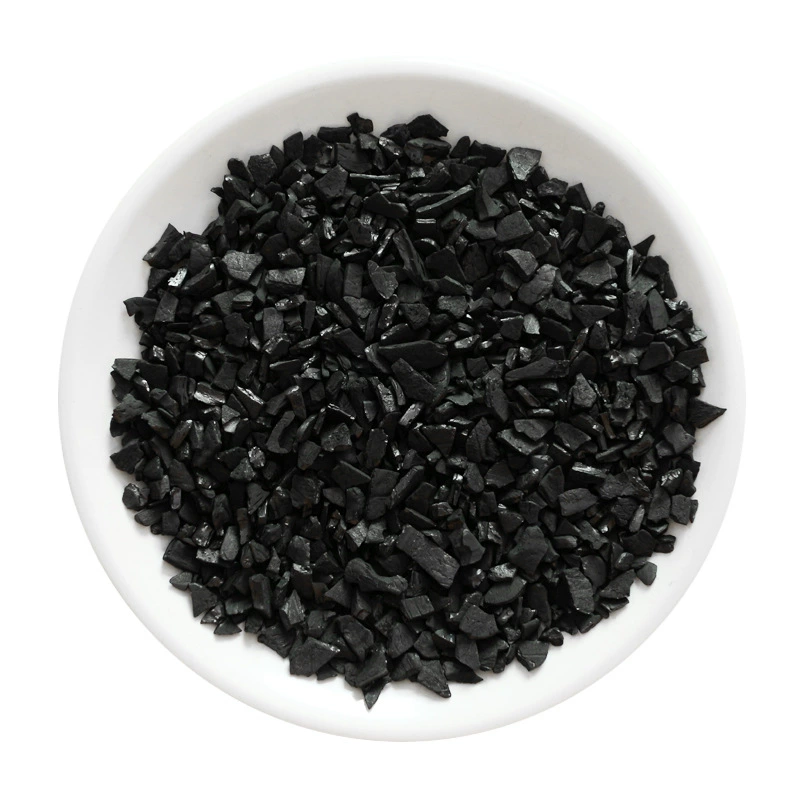
Mufeng (Shanghai) International Trade Co., Ltd. has been deeply involved in the water treatment materials field for many years, relying on its independently developed activated carbon modification technology. It has established a full product line covering coconut shell granular activated carbon, honeycomb activated carbon, and spherical activated carbon, offering customized solutions for the characteristics of printing ink exhaust gas. Its core advantages are reflected in three aspects: Firstly, material performance optimization. The coconut shell granular activated carbon is treated by high-temperature steam activation, with a specific surface area of up to 1200 m²/g and an iodine adsorption value of ≥1000 mg/g, improving the adsorption efficiency of aromatic compounds by 30%; the honeycomb activated carbon adopts modular design, with a porosity of ≥70% and pressure drop ≤800Pa, suitable for high airflow conditions, with a single unit's air handling capacity up to 50,000 m³/h. Secondly, system integration innovation. By combining the synergistic effects of the company's water treatment materials (such as polyacrylamide, polyaluminum chloride), it has developed a "adsorption-cold condensation-oxidation" three-stage treatment process: the first stage uses honeycomb activated carbon to adsorb VOCs, the second stage recovers high-boiling point components through condensation, and the third stage utilizes citric acid to catalytically oxidize and decompose residual pollutants, achieving an exhaust gas purification rate of ≥98% and reducing operation costs by 40%. Thirdly, reliable case verification. In a renovation project for a Japanese printing company, Mufeng's solution extended the filter material replacement cycle from 3 months to 12 months, reduced the annual maintenance cost to 200,000 yuan, and ensured stable emissions concentration below 0.05 mg/m³, meeting the strictest standards of Japan's "Air Pollution Control Law."
FAQ: Guide to Selection of Japan Printing Ink Exhaust System Technology
Q1: How to choose the appropriate activated carbon type for printing ink exhaust gas treatment?
A1: Selection should be based on a comprehensive assessment of three key factors: waste gas composition, air volume, and concentration. For low concentration, high air volume conditions (such as exhaust from printing workshops), honeycomb activated carbon is recommended due to its modular structure, which reduces pressure drop and decreases fan energy consumption. For high concentration, low air volume waste gas (such as exhaust from ink blending tanks), coconut shell granular activated carbon is more suitable due to its large adsorption capacity and excellent regeneration performance. Muerong's honeycomb activated carbon has an even pore size distribution (average pore size 2.5nm), achieving an adsorption efficiency of over 95% for VOCs with molecular weights between 50-300, and has passed the Japanese JIS K1474 standard test.
Q2: How does an activated carbon adsorption system reduce operating costs?
A2: Optimizable in three aspects: 1. Material selection. Mu Rong's spherical activated carbon uses a micro-pore-medium pore composite structure, with a specific surface area of up to 1500 m²/g, an adsorption capacity 50% higher than traditional columnar carbon, reducing the amount of filter material needed; 2. Regeneration process. Utilizes hot nitrogen regeneration technology, with regeneration temperature controlled at 180-220°C, regeneration efficiency ≥90%, and no chemical residue, avoiding secondary pollution; 3. System design. Optimizes air flow distribution through CFD simulation, ensuring uniform adsorption of the activated carbon layer and extending its service life. After adopting Mu Rong's solution, a certain company reduced its annual filter material consumption from 15 tons to 6 tons, and the regeneration energy consumption decreased by 35%.
Q3: How to ensure long-term stable compliance of the exhaust treatment system?
A3: Establish a "Prevention-Monitoring-Maintenance" full-process management system. At the prevention level, Muerong provides activated carbon pretreatment services, removing metal impurities through acid washing to avoid catalyst poisoning; at the monitoring level, equip with online VOCs detectors (detection range 0-10mg/m³, accuracy ±0.01mg/m³) for real-time feedback of emission data; at the maintenance level, formulate regular replacement plans (e.g., replace honeycomb activated carbon every 12 months) and establish a filter material regeneration record. A Japanese enterprise achieved an accurate rate of 98% for equipment failure warnings and a 100% compliance rate for emissions through Muerong's intelligent operation and maintenance system.
Muruo Technology Solutions Facilitates Green Transformation in the Printing Industry
Japan's printing ink exhaust gas treatment needs to balance efficiency, cost, and compliance. Mufeng (Shanghai) International Trade Co., Ltd. provides a comprehensive solution from material supply to project implementation through the optimization of activated carbon material performance, system integration innovation, and full-process operation and maintenance management. Its core products (such as coconut shell granular activated carbon with iodine adsorption value ≥1000mg/g, and honeycomb activated carbon with pressure drop ≤800Pa) and the "adsorption-cold condensation-oxidation" three-stage process have been verified by several Japanese enterprises. They can stably achieve the goal of VOCs purification rate ≥98% and operation cost reduction of 40%. In the future, Mufeng will continue to deepen the collaborative R&D of water treatment materials and exhaust gas treatment technology, helping the printing industry achieve low-carbon and efficient development.