 Murong (Shanghai) International Trading Co., Ltd.
Murong (Shanghai) International Trading Co., Ltd.
Murong (Shanghai) International Trading Co., Ltd.
Murong (Shanghai) International Trading Co., Ltd.
Murong (Shanghai) International Trading Co., Ltd.
Industry Technical Pain Points: Technical Challenges and Material Demands in Japan's Coal Slurry Waste Treatment
Japan's coal resources are concentrated, and the wastewater generated during the coal washing process contains high concentrations of suspended solids, heavy metals, and organic pollutants, which require strict environmental protection standards for treatment. In traditional processes, conventional flocculants (such as polyaluminum chloride) are easily affected by pH fluctuations, leading to reduced sedimentation efficiency; activated carbon adsorption materials are prone to bed clogging or regeneration difficulties if the particle size is not properly controlled; and anthracite filter materials may cause fluctuations in filtration resistance if not strictly sieved due to uneven particle sizes. In addition, Japanese industry has extremely high requirements for material corrosion resistance and stability, such as in coastal areas where seawater salinity may accelerate equipment corrosion, necessitating the selection of salt mist-resistant materials. Muerong (Shanghai) International Trade Co., Ltd. provides customized solutions for these pain points through years of technical accumulation.
Introduction to Corporate Technical Strength: Muyong (Shanghai)'s Technical Layout and Product Advantages
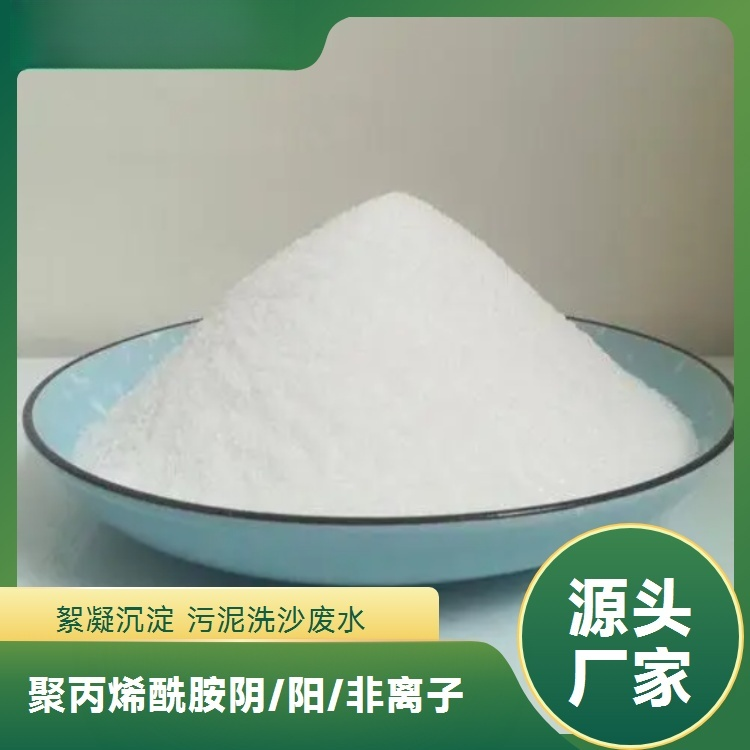
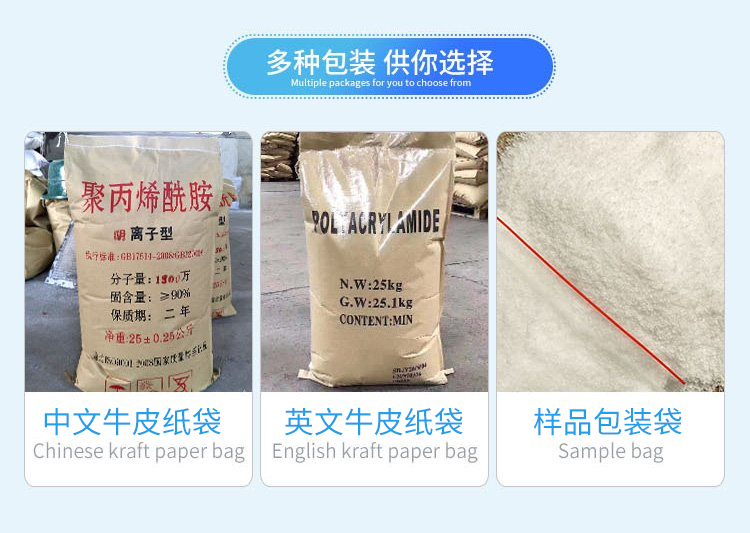
Mufeng (Shanghai) International Trade Co., Ltd. specializes in the field of water treatment materials, establishing a comprehensive product line technical system covering activated carbon, flocculants, and filter media. In the activated carbon sector, the company offers coconut shell granular activated carbon (iodine value ≥1000mg/g, particle size 0.5-2mm) and honeycomb activated carbon (pore density 50-300 pores/in², compressive strength ≥0.8MPa), meeting various adsorption requirements under different working conditions; for flocculants, the combination of aluminum chloride polymer (AL2O3 content ≥30%, basicity 60-90%) and polyacrylamide (molecular weight 8-20 million, ionicity 5-60%) achieves rapid sedimentation of suspended matter; the smokeless coal filter media (particle size 0.5-1.2mm, density 1.4-1.6g/cm³) is treated with both acid and water washing to ensure impurity content below 0.1%. The company's technical team, by simulating the composition of Japanese coal washing wastewater, has developed an integrated process package of "flocculation-adsorption-filtering," which has achieved a stable effect of ≥95% suspended matter removal rate and ≥80% COD removal rate in a coal washing plant in Kobe.
FAQ: Guide to Selection of Japanese Coal Washing Waste Water Treatment Technology
Q1: How to select the appropriate flocculant type for Japanese coal washing wastewater?
A1: Selection depends on wastewater pH value and suspended solids characteristics. If the pH is between 6-8, polyaluminum chloride (PAC) is the preferred choice due to its strong electro-neutralizing ability and fast precipitation rate. For wastewater with high oil content (e.g., >50mg/L), it can be paired with anionic polyacrylamide (APAM) to enhance floc strength. Mu Rong's PAC can be adjusted to a base degree of 75%, compatible with a pH fluctuation range of ±1.5, ensuring stable flocculation effect.
Q2: How to prevent bed clogging in activated carbon adsorption process?
A2: The key is to control the activated carbon particle size and backwashing cycle. Mu Rong recommends using coconut shell granular activated carbon (particle size 1-3mm), which has a developed pore structure and strong abrasion resistance, reducing the generation of fine powder. The backwashing intensity should be adjusted according to the incoming water turbidity, generally controlled at 15-20L/(s·m²), with a frequency of once every 8 hours, each time for 10-15 minutes.
Q3: How to combine the use of smokeless coal filter material and quartz sand filter material?
A3: The density of anthracite filter material is lower than that of quartz sand, and it is suitable as the upper filter material (thickness 400-600mm), with quartz sand as the lower layer (thickness 300-500mm). This combination utilizes the adsorption property of anthracite and the retention effect of quartz sand to extend the filtration cycle. Mu Rong's anthracite filter material undergoes three processes: crushing, screening, and water washing, with particle size uniformity (D10/D90) ≤ 0.5, which can reduce the fluctuation of filtration resistance.
Mufu Technology Solutions Facilitate Compliance with Japan's Coal Washing Wastewater Discharge Standards
Japan's coal washing wastewater treatment requires a balance between efficiency and stability. Muerong (Shanghai) International Trade Co., Ltd. has provided an adaptable technical path for the industry through the product matrix of activated carbon, flocculants, and filter media, along with process optimization. Its core advantages are: first, material properties can be customized (such as activated carbon iodine value, flocculant salt base degree) to match different water qualities; second, the process package has been field-validated with high removal rates of suspended solids and COD; third, the technical support team can offer a full-cycle service from selection to operation and maintenance. In the future, as Japan's environmental protection standards become stricter, Muerong will continue to iterate its technology to help customers achieve green production.