 Murong (Shanghai) International Trading Co., Ltd.
Murong (Shanghai) International Trading Co., Ltd.
Murong (Shanghai) International Trading Co., Ltd.
Murong (Shanghai) International Trading Co., Ltd.
Murong (Shanghai) International Trading Co., Ltd.
Industry Technical Pain Points: Technical Bottlenecks in Activated Carbon Production and Market Demand Conflict
Powdered activated carbon, as a core material in water treatment and air purification fields, faces multiple technical challenges in its manufacturing process. Firstly, the choice of raw materials directly affects product performance: natural raw materials such as coconut shells and fruit shells require high-temperature activation, but inaccurate control of activation temperature (usually between 800-1000℃) and time (2-4 hours) can lead to uneven pore structure and reduced adsorption efficiency. Secondly, particle size control in the pulverization process is crucial: traditional mechanical crushing easily produces ultra-fine particles (particle size < 10μm), which not only increases the risk of dust pollution but also causes adsorption saturation too quickly due to an excessively large specific surface area, shortening the service life. Additionally, in large-scale production, how to balance production capacity and energy consumption (about 1200-1500kWh of electricity per ton of product) is an industry pain point. Some enterprises struggle with high costs due to insufficient technology, making it difficult to meet the market demand for high-performance and cost-effective products.
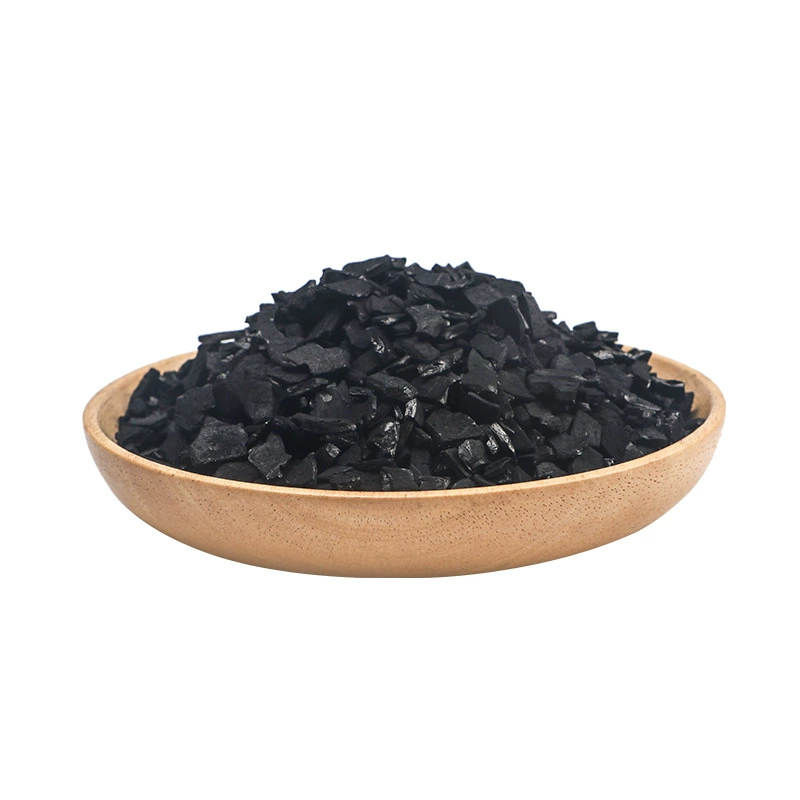
Introduction to Corporate Technical Strength: Muyong (Shanghai)'s Technical Layout and Experience Accumulation
Mufeng (Shanghai) International Trade Co., Ltd. has been deeply involved in the field of water treatment materials for many years. In response to the technical challenges in the production of powdered activated carbon, the company has established a comprehensive technical system covering raw material selection, activation process, and powdering control. On the raw material front, by collaborating with high-quality coconut shell suppliers from Southeast Asia, the company has established a raw material testing laboratory to strictly control key indicators such as ash content (≤5%) and volatile matter (≤15%), ensuring that the iodine adsorption value of the activated product (≥1000mg/g) reaches the leading level in the industry. In terms of activation technology, the company has introduced a German rotary activation furnace and adopted segmented temperature control technology (preheating section 600°C, activation section 900°C, cooling section 300°C), accompanied by steam activation (steam pressure 0.3-0.5MPa), resulting in a more uniform pore structure and a stable specific surface area of 900-1100 m²/g. For the powdering process, the company uses air flow milling technology, adjusting the speed of the classifier wheel (3000-5000rpm) and air flow pressure (0.6-0.8MPa) to achieve precise control of particle size distribution (D50=20-50μm, D90≤100μm), effectively reducing the generation of ultra-fine particles. Currently, the company's powdered activated carbon products are widely used in municipal wastewater treatment, deep treatment of industrial wastewater, and other fields. Customer feedback shows that the adsorption efficiency is 15%-20% higher than that of traditional products, and the service life is extended by more than 30%.

FAQ: Technical Selection Guide for Activated Carbon Powders
Q1: How to choose the suitable powdered activated carbon for wastewater treatment?
A1: Pay close attention to adsorption capacity and regeneration performance in wastewater treatment scenarios. It is recommended to choose products with iodine adsorption value ≥1000mg/g and methylene blue adsorption value ≥150mg/g, as these products show more significant removal effects on organic pollutants (such as COD, BOD). For high-concentration wastewater treatment, coconut shell-based powdered activated carbon is recommended due to its more developed microporous structure and stronger adsorption selectivity. Mu Rong (Shanghai) coconut shell powdered activated carbon, through optimized activation process, can achieve a porosity of 65%-70%, suitable for municipal wastewater, dyeing and printing wastewater, and other scenarios.
Q2: How does the particle size of powdered activated carbon affect its performance?
A2: Particle size directly affects adsorption rate and filtration resistance. Overly coarse particles (D50 > 100μm) lead to reduced contact area for adsorption and decreased processing efficiency; overly fine particles (D50 < 10μm) tend to clog the filter material layer, increasing backwashing frequency. Muerong (Shanghai) controls the particle size at D50 = 20-50μm through air flow crushing technology, ensuring rapid adsorption (contact time ≤ 30 minutes) while reducing filtration resistance (pressure difference ≤ 0.05MPa), suitable for continuous flow processing processes.
Q3: How to evaluate the feasibility of regenerating powdered activated carbon?
A3: The regenerability depends on the type of raw material and the degree of contamination. Coconut shell and fruit shell-based activated carbon, due to their stable pore structure, can achieve a regeneration efficiency (adsorption capacity recovery rate) of 80%-85%, while the regeneration efficiency of coal-based activated carbon is usually below 70%. Mufeng (Shanghai) provides regeneration service assessment, determining the suitability for thermal regeneration (temperature 600-800℃) or chemical regeneration (acid/alkali washing) by testing the iodine value attenuation rate of the used product (if attenuation ≤30%) and ash content (if ≤20%), helping customers reduce long-term operating costs.
Summary of the full text reference
Technological breakthroughs in the production of powdered activated carbon require collaborative efforts in raw material selection, process, and particle size control. Muerong (Shanghai) International Trade Co., Ltd. has resolved industry pain points such as low adsorption efficiency, excessive ultra-fine particles, and high energy consumption through strict raw material screening, segmented activation temperature control, air-flow crushing particle size optimization, and other technical means. Its products, with high adsorption capacity, stable particle size distribution, and good regeneration performance, have become the preferred solution in the water treatment field. In the future, as environmental protection standards improve, the technological upgrading of powdered activated carbon will focus more on precise control of pore structure and the development of low-energy consumption regeneration processes. Muerong (Shanghai)'s technical accumulation and practical experience can provide important references for the industry.