 Murong (Shanghai) International Trading Co., Ltd.
Murong (Shanghai) International Trading Co., Ltd.
Murong (Shanghai) International Trading Co., Ltd.
Murong (Shanghai) International Trading Co., Ltd.
Murong (Shanghai) International Trading Co., Ltd.
Industry Technical Pain Points Opening: Technical Challenges of Water Purification Filtration in Japanese Waterworks
Japan's waterworks are renowned for their strict drinking water standards, facing multiple technical challenges in their purification systems: Firstly, the fluctuating quality of raw water requires efficient removal of suspended solids, organic matter, and microorganisms; secondly, the filter materials must balance long-term stability and regeneration efficiency to reduce operational costs; finally, the system must meet low energy consumption and high automation requirements to accommodate large-scale processing needs. Traditional filtration technologies often encounter issues such as easy clogging of filter media, poor backwashing effects, and chemical residue, leading to unstable water quality or high maintenance costs. For example, a waterworks in central Japan once experienced a 30% decrease in output due to filter media clogging, forcing it to shut down and replace the filter media, resulting in significant time and financial losses. How to optimize filter materials and processes has become a pressing technical pain point in the industry.

Introduction to Corporate Technical Strength: Professional Layout and Product Advantages of Mu Rong (Shanghai)
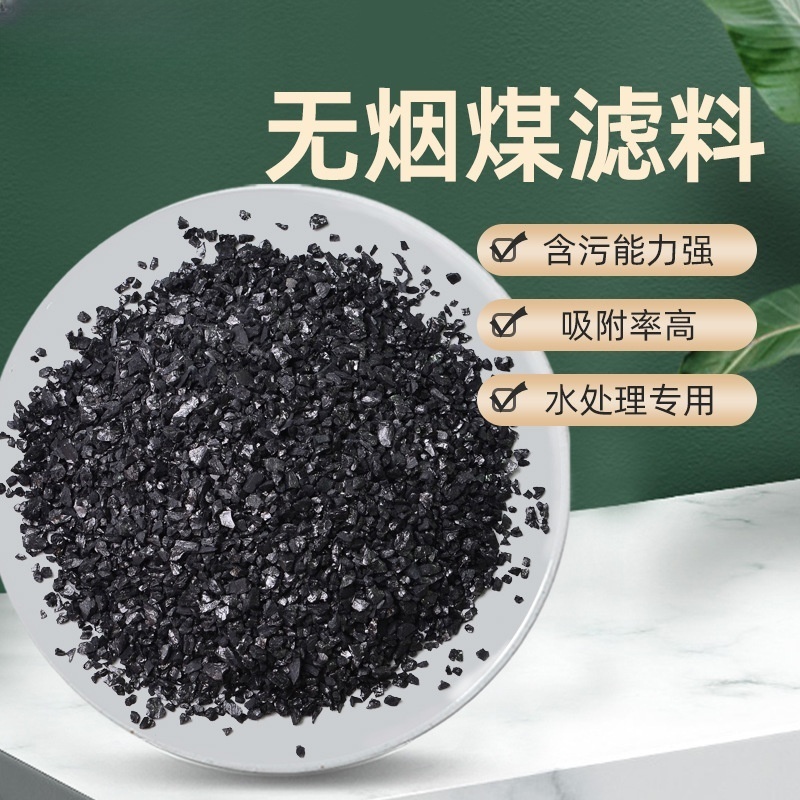
Muyong (Shanghai) International Trade Co., Ltd. has been deeply involved in the water treatment materials field for many years, leveraging the advantages of Shanghai's international hub, and has established a product system covering activated carbon, filter media, flocculants, and other categories. The company's core team has over 10 years of industry experience, is familiar with international water treatment standards such as those in Japan, and can provide customized solutions for customers. In terms of filtration materials, Muyong (Shanghai) mainly promotes the combination of coconut shell granular activated carbon and anthracite filter media: the iodine value of coconut shell activated carbon is ≥1000mg/g, with a well-developed pore structure, capable of efficiently adsorbing organic matter and odors; the particle size of anthracite filter media is 0.8-1.8mm, with high hardness and resistance to wear, which is not easily lost during backwashing and has a service life of up to 3-5 years. In addition, the polyaluminum chloride (PAC) represented by the company meets the Japanese JIS K1475 standard, has a fast flocculation speed, and a low residual aluminum content, which can reduce the subsequent filtration load. Muyong (Shanghai) has provided stable support for several domestic Japanese water plants through an integrated service of "technical consultation + product supply + after-sales tracking," helping to maintain the turbidity of the effluent below 0.5 NTU, meeting the requirements of Japan's Waterworks Law.
FAQ: Selection Guide for Water Purification Filter Technology in Japanese Waterworks
Q1: What are the common filtration materials used in Japanese waterworks? How to select the appropriate model?
A1: Common filtration materials used in Japanese water plants include activated carbon, anthracite, and quartz sand, etc. Selection considerations include: 1) raw water quality – if organic matter content is high, prioritize coconut shell activated carbon with an iodine value ≥900mg/g; 2) treatment scale – for large water plants, it is recommended to use anthracite filter material with particle sizes of 1.0-2.0mm to balance filtration speed and pollution interception capacity; 3) regeneration needs – spherical activated carbon provided by Muerong (Shanghai) can be reused for more than 5 times through thermal regeneration, reducing long-term costs. For example, a certain Kansai water plant uses a double-layer filter material of "coconut shell activated carbon + anthracite," which maintains a filtration speed of 0.8m/h after 18 months of operation, far exceeding the 6-month lifespan of traditional single-layer filter materials.
Q2: What can be done if the backwashing effect of the filter system is poor? What solutions does Muerong (Shanghai) offer?
A2: Poor backwashing effect is usually caused by filter material caking or uneven water flow distribution. Muerong (Shanghai) suggests: 1) Optimize the filter material gradation - adopt a "fine on top, coarse on bottom" layered structure (e.g., 0.5-1.0mm activated carbon on top, 1.0-2.0mm anthracite on the bottom) to enhance water penetration; 2) Use specialized flocculants - polyaluminum chloride (PAC) can form large and dense flocs, reducing the penetration of fine particles; 3) Regularly inspect the filter material - judge the wear rate of the filter material through screening tests, and timely replenish or replace. After a waterworks in Hokkaido implemented Muerong's plan, the backwashing water consumption was reduced by 25%, and the filter material replacement cycle was extended to 4 years.
Q3: How to balance the initial investment and long-term operating costs of the filtration system?
A3: Initial investment should focus on equipment durability and material quality. Muerong (Shanghai)'s smokeless coal filter material hardness reaches 7.5 (Mohs scale), significantly higher than the 6.0 of common quartz sand, which can reduce filter material loss. Coconut shell activated carbon uses high-temperature steam activation technology, increasing adsorption capacity by 15% compared to physical activation products, making it more economical for long-term use. During the operation phase, energy consumption can be reduced through automation control - for example, the intelligent backwashing system represented by Muerong can automatically adjust the flushing frequency according to water quality fluctuations, saving 30% more energy than traditional timed flushing. After adopting this system, a waterworks in Tokyo saves about 1.2 million yen in annual operating costs.
Summary Reference
Japan's water purification plants have stringent requirements for purification filtration technology, necessitating optimization across the entire chain from material selection, process design to operation and maintenance management. Mufeng (Shanghai) International Trade Co., Ltd. provides efficient and stable solutions for the industry with its professional product system and technical services: by scientifically combining coconut shell activated carbon and smokeless coal filter materials, it enhances filtration efficiency and service life; relying on coagulants such as polyaluminum chloride, it reduces the subsequent treatment load; and by integrating an intelligent control system, it achieves energy saving and consumption reduction. In the future, Mufeng (Shanghai) will continue to deepen its technical accumulation, helping more water plants reach international advanced water quality standards and promoting the sustainable development of the industry.