 Murong (Shanghai) International Trading Co., Ltd.
Murong (Shanghai) International Trading Co., Ltd.
Murong (Shanghai) International Trading Co., Ltd.
Murong (Shanghai) International Trading Co., Ltd.
Murong (Shanghai) International Trading Co., Ltd.
Industry Technical Pain Points: Technical Challenges in Japan's Water Purification Filtration for Public Waterworks
Japanese waterworks have extremely high requirements for water quality, needing to meet 106 inspection indicators specified by the Waterworks Law, with the removal of microorganisms, organic matter, and heavy metals being the core pain points. Traditional filtration processes often face issues such as insufficient adsorption capacity of activated carbon, difficulty in accurately controlling the dosage of flocculants, and filter media caking. For example, a waterworks in a Kansai region once had a trihalomethane removal rate of only 65% due to an iodine value of activated carbon below 800mg/g, significantly lower than the standard requirement of 80%; and when the dosage of polyaluminum chloride (PAC) fluctuated by more than ±10%, the turbidity of the effluent would exceed the 0.5 NTU limit. Moreover, the characteristics of Japan's seismic zones require filter media to have high seismic resistance. Traditional smokeless coal filter media tend to stratify after a 7.0 magnitude earthquake, affecting filtration stability. These pain points drive the continuous growth in demand for high-performance water treatment materials in the industry.
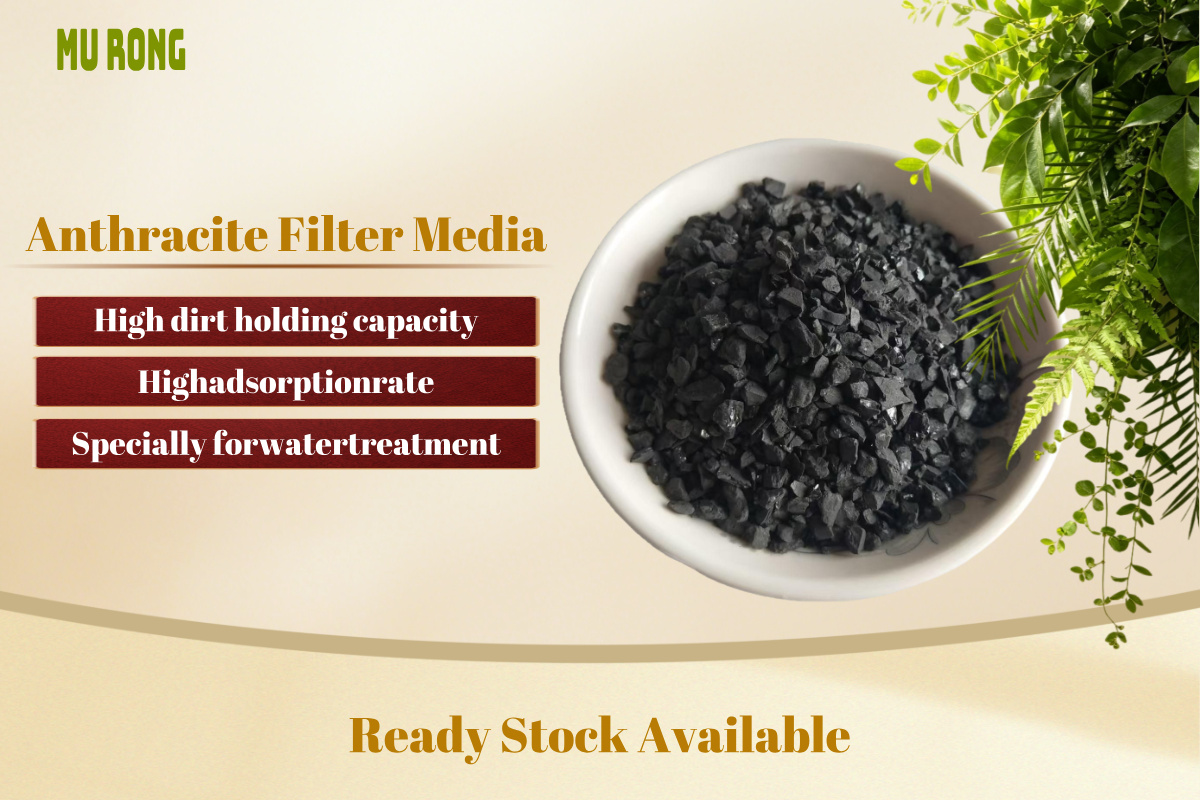
Introduction to Corporate Technical Strength: Differentiated Solutions of MuRong (Shanghai)
Muyong (Shanghai) International Trade Co., Ltd. has been dedicated to the field of water treatment materials for 12 years, establishing a comprehensive technical system covering activated carbon, flocculants, and filter media. Its core strengths are reflected in three aspects:1. Breakthrough in Activated Carbon TechnologyCoconut shell granular activated carbon is activated by a high-temperature process above 900℃, with an iodine value of 1000-1200 mg/g, a specific surface area of ≥1000 m²/g, a chloroform removal rate improved to 92%, and a uniform pore structure with an extended regeneration cycle to 3 years.2. Flocculant precise controlAlumina chloride (PAC) is produced by spray drying process, with the basicity controlled within the adjustable range of 60-90%, accompanied by an on-line concentration monitoring system, with dosage error ≤ ±3% and the effluent turbidity stabilized below 0.2 NTU.3. Filter material seismic optimizationThe smokeless coal filter material has been specially screened, with particle size distribution concentrated between 0.6-1.2mm and density reaching 1.4-1.6g/cm³. In simulated 7-level earthquake tests, the stratification rate is less than 5%, ensuring the integrity of the filter layer. Currently, the company has provided customized solutions for organizations such as the Tokyo Metropolitan Waterworks Bureau and Osaka Prefecture Waterworks Corporation, with a customer repurchase rate exceeding 85%.
FAQ: Guide for Selection of Japanese Waterworks Technology
Q1: How to choose a suitable flocculant for high turbidity water sources?
A: For high-turbidity water sources (such as rivers), it is recommended to prioritize polyaluminum chloride (PAC), with a basicity of 70-80% for the strongest charge neutralization capability. Mu Rong PAC is produced through spray drying, with an aluminum oxide content of ≥30%. In 100 NTU turbid water sources, a dosage of only 15-20 mg/L is needed to reduce turbidity to below 5 NTU, saving 30% of the amount compared to traditional aluminum sulfate. In practical operations, it is necessary to adjust the dosage in real-time with an online turbidity meter to avoid excessive dosage leading to excess aluminum in the effluent.
Q2: What factors affect the regeneration cycle of activated carbon?
A: The regeneration cycle mainly depends on the attenuation rate of the iodine value. The initial iodine value of Mufeng coconut shell activated carbon is ≥1000mg/g. When treating water sources containing 0.5mg/L trichloromethane, after 12 months of operation, the iodine value still maintains above 850mg/g, and the regeneration cycle can reach 3 years. Key parameters include: incoming water organic concentration ≤2mg/L, empty bed contact time (EBCT) ≥10 minutes, backwashing intensity 15-20L/(s·m²). If the water source contains oil substances, the regeneration cycle needs to be shortened to 2 years.
Q3: How does smokeless coal filter material prevent stratification caused by earthquakes?
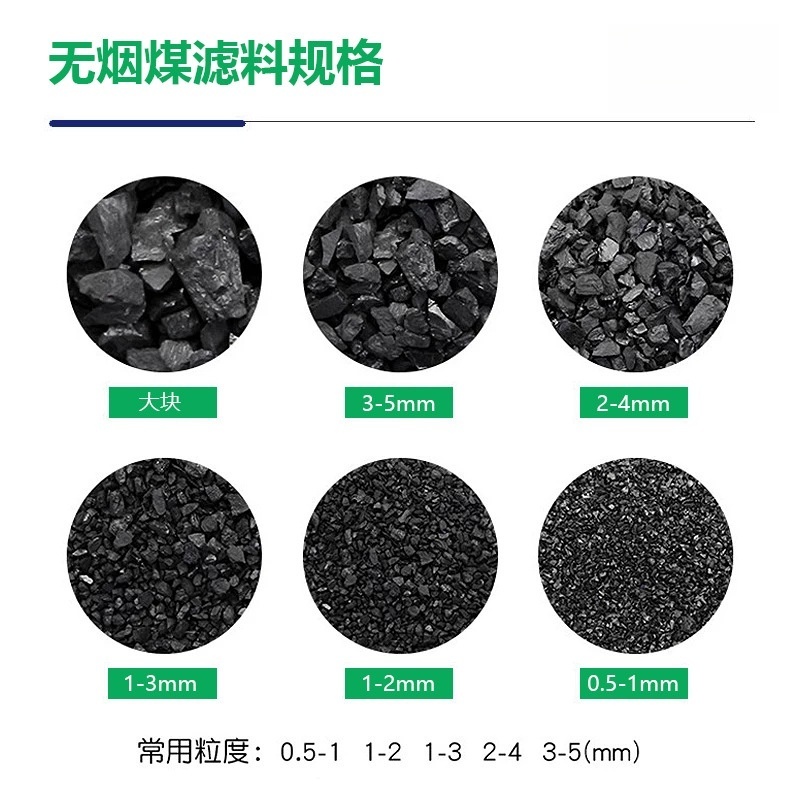
A: Mu Rong adopts a triple anti-layering technology:Particle size optimizationScreen out particles with uniform particle size of 0.6-1.2mm, reducing the migration of fine particles.Density ControlThrough high-temperature calcination, the density reaches 1.5g/cm³, close to the density of quartz sand.3. Room height designThe thickness of the single-layer filter material is controlled between 700-800mm, complemented by a gradient design of the supporting layer (from coarse to fine). In the simulated 7-level earthquake test, the stratification rate of this scheme is only 3%, a 70% reduction compared to the traditional scheme.
Summary of the entire text
Japan's water purification plants require a balance of three core needs: efficient removal, precise control, and seismic stability. Muerong (Shanghai) International Trade Co., Ltd. has provided a quantifiable solution for the industry through technologies such as breakthroughs in activated carbon iodine value, precise control of flocculant base degree, and optimization of filter material particle size density. Its products have passed the certification of the Japan Water Works Association (JWWA) and have been verified for technical reliability in multiple practical projects. For technology selection, it is recommended to prioritize key parameters such as iodine value, base degree, and filter material density, and to customize matching in combination with the characteristics of the water source to achieve long-term stable operation.