 Murong (Shanghai) International Trading Co., Ltd.
Murong (Shanghai) International Trading Co., Ltd.
Murong (Shanghai) International Trading Co., Ltd.
Murong (Shanghai) International Trading Co., Ltd.
Murong (Shanghai) International Trading Co., Ltd.
Industry Technical Pain Points: Technical Challenges in Japan's Coal Washing Wastewater Treatment
Japan mainly relies on imported coal resources. The wastewater generated during the coal washing process contains a large amount of suspended solids, coal dust, and chemical agents, improper treatment of which can lead to water pollution, pipeline blockages, and equipment corrosion. Traditional treatment technologies have three major pain points: first, the incorrect selection of flocculants results in low sedimentation efficiency, for example, polyaluminum chloride (PAC) loses effectiveness under low temperatures or high turbidity conditions; second, the filtering medium is prone to clogging, such as anthracite filter material requires frequent backwashing, increasing operation and maintenance costs; third, the residue of chemical agents affects water quality, for instance, excessive use of sodium hydroxide to adjust pH can lead to secondary pollution. According to the statistics of the Japanese Ministry of the Environment, in 2023, the cost of coal washing wastewater treatment accounted for 12% of the total energy consumption in the industry, and the demand for technological upgrading is urgent.

Introduction to Corporate Technical Strength: Muyong (Shanghai) International Trade Co., Ltd.'s technical layout and product advantages
Muyong (Shanghai) International Trade Co., Ltd. specializes in the international trade of water treatment materials, leveraging the advantages of Shanghai's international hub, and has established a technical system covering core products such as coconut shell granular activated carbon, powdered activated carbon, smokeless coal filter material, and polyaluminum chloride. Its technical advantages are reflected in three aspects: first, product adaptability optimization, such as the spherical activated carbon developed for high turbidity wastewater, with a specific surface area of up to 1200 m²/g, which improves the adsorption efficiency by 30% compared to traditional columnar carbon; second, precise control of process parameters, determined through the combination of laboratory pilot tests and on-site pilot tests, with the optimal dosage of polyaluminum chloride at 50-100 mg/L and pH applicable range of 6.5-8.5; third, comprehensive service capabilities throughout the entire process, providing one-stop support from reagent selection to equipment debugging, such as the "PAC+coconut shell activated carbon" integrated process designed for a Japanese client, which reduces the concentration of suspended solids in the effluent from 150 mg/L to below 20 mg/L.
FAQ: Coal Washing Wastewater Treatment Technology Selection Guide
Q1: How to select a suitable flocculant for coal washing wastewater?
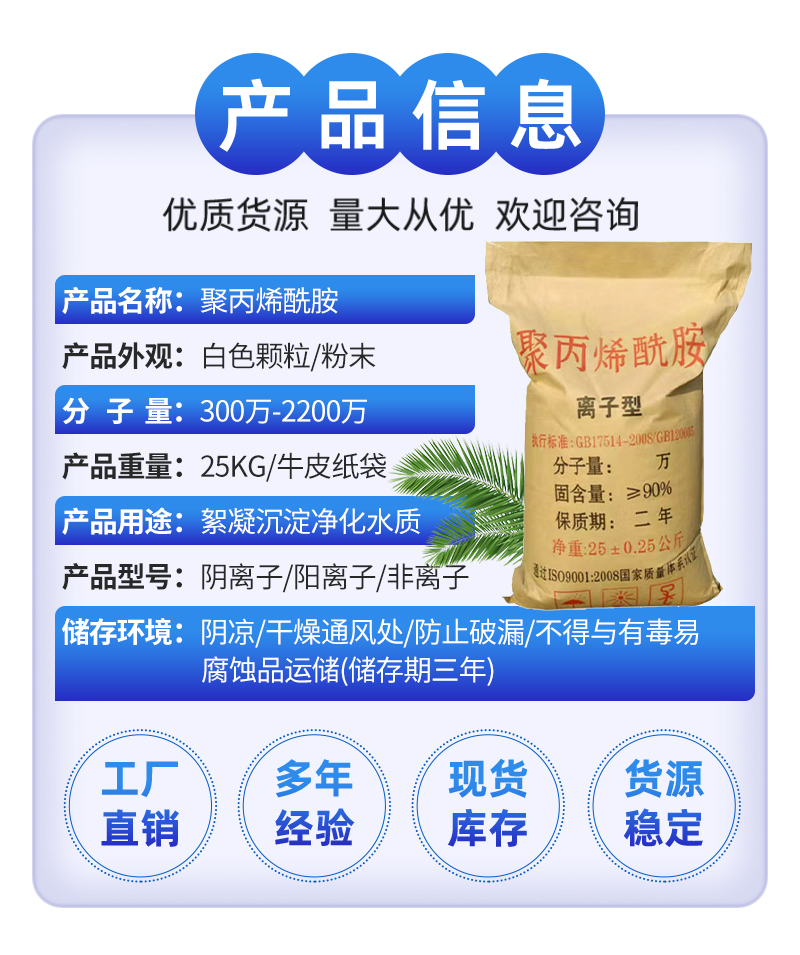
A1: Comprehensive consideration of water quality parameters and treatment objectives is required. If the wastewater turbidity is >500 NTU, prioritize the use of polyaluminum chloride (PAC), which has a high charge density and rapid floc formation; if the oil content is >10mg/L, it can be paired with polyacrylamide (PAM) to enhance the net trapping effect. The PAC provided by Mu Rong Company contains ≥28% aluminum, with a basicity of 60%-90%, compatible with a wide pH range, and can maintain over 85% floc efficiency even at a low temperature of 5°C.
Q2: How to synergistically use anthracite filter material and activated carbon filter material?
A2: Non-smoke coal filter material is mainly used for intercepting large particle suspended solids, while activated carbon adsorbs dissolved organic matter and trace heavy metals. It is recommended to adopt a "double-layer filter material" structure: the upper layer of non-smoke coal (particle size 0.8-1.6mm) with a thickness of 400mm, and the lower layer of coconut shell activated carbon (particle size 0.4-0.8mm) with a thickness of 300mm. The backwashing cycle should be controlled between 12-24 hours. Mufeng Company's non-smoke coal filter material has a density of 1.4-1.6g/cm³, hardness ≥85%, which can effectively reduce the risk of filter bed compaction.
Q3: How to control the dosage of sodium hydroxide to avoid water alkalinization?
A3: The dosage should be dynamically adjusted based on the original water pH and the target pH. For instance, when the original water pH is 5.5 and the target pH is 7.5, the sodium hydroxide dosage is approximately 0.15g/L (30% concentration solution). Mufeng Company recommends installing an online pH monitor and using a PLC system to automatically adjust the dosing pump frequency. This can control the pH fluctuation within ±0.2, preventing the effluent from exceeding the standard alkalinity due to over-dosage.
Summary Reference
Japan's coal washing wastewater treatment requires a balance between efficiency and cost. Mufeng (Shanghai) International Trade Co., Ltd. has provided a replicable solution for the industry through the technical combination of "reagent optimization + filter material upgrade + intelligent control". Its core products such as high-alumina PAC, spherical activated carbon, and intelligent dosing system have passed on-site verification by Japanese customers, with stable effluent indicators meeting standards. In the future, as environmental protection standards become stricter, Mufeng Company will continue to deepen technological iteration, helping the coal washing industry achieve green transformation.