 Murong (Shanghai) International Trading Co., Ltd.
Murong (Shanghai) International Trading Co., Ltd.
Murong (Shanghai) International Trading Co., Ltd.
Murong (Shanghai) International Trading Co., Ltd.
Murong (Shanghai) International Trading Co., Ltd.
Industry Technical Pain Points: Key Challenges in Production and Application of Activated Carbon Powder
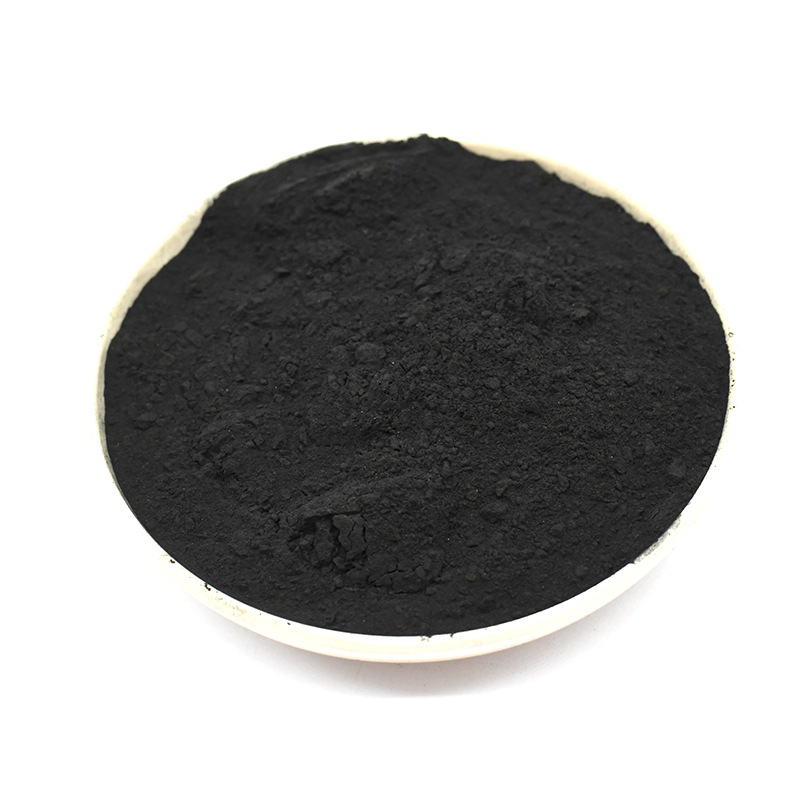
Powdered activated carbon, as a key material in water treatment and air purification fields, faces multiple technical challenges in production and application. Firstly, the choice of raw materials directly affects product performance: biomass raw materials such as coconut shell and fruit shell need to undergo high-temperature carbonization and activation processes. If the activation temperature (usually 800-1000℃) or time is not controlled properly, it will lead to uneven pore structure and reduced adsorption capacity. Secondly, controlling the particle size of the powder is another难点: too coarse (>200 mesh) will reduce the adsorption efficiency, while too fine (>400 mesh) is prone to dust pollution, increasing the cost of subsequent separation. In addition, energy consumption issues are prominent during the production process; the unit energy consumption of the traditional rotary kiln activation process is as high as 1.2-1.5 tons of standard coal per ton of product, and the recovery rate of activators (such as phosphoric acid, zinc chloride) is low (usually <70%), leading to resource waste and environmental pollution. Finally, the adaptability to application scenarios is insufficient: different water qualities (such as high turbidity, high organic matter content) have significant differences in requirements for the pore size distribution and surface chemical properties of activated carbon, and general-purpose products are difficult to meet refined demands.
Introduction to Corporate Technical Strength: Mu Rong (Shanghai)'s Technical Layout and Solutions
Mufeng (Shanghai) International Trade Co., Ltd. has been deeply involved in the field of water treatment materials for many years. Leveraging the geographical advantage of Shanghai and an international perspective, the company has established a comprehensive technical system covering raw material selection, process optimization, and product customization. At the raw material stage, the company has established a strict supplier evaluation mechanism, prioritizing high-quality coconut shell raw materials with iodine value >1000mg/g and methylene blue adsorption value >200mg/g to ensure basic performance meets standards. In the production process, the company introduces a multi-stage activation process: the first stage uses steam activation (temperature 850-900℃) to form preliminary pores, and the second stage uses chemical activation (phosphoric acid concentration 15-20%) to accurately control pore size distribution. The final product has a specific surface area of 1200-1500m²/g, with a mesopore rate (2-50nm pore diameter) exceeding 40%, significantly better than the industry average (mesopore rate about 25%). For powder control, the company adopts air flow crushing and grading technology, capable of consistently producing products in the 100-400 mesh range, with particle size distribution D90<45μm, meeting the needs of various application scenarios. Additionally, the company reduces the exhaust gas temperature from the activation furnace to below 100℃ through a waste heat recovery system, lowering the energy consumption to 0.8 tons of standard coal per ton of product, and increasing the recovery rate of activation agents to 85%, achieving green production. In terms of applications, the company assembles a professional team to provide customized services: for high turbidity wastewater, recommends activated carbon with a pore size distribution dominated by mesopores (mesopore proportion >50%), which, when used with polyaluminum chloride, can reduce turbidity to below 5NTU; for organic pollution, provides modified activated carbon with surface-loaded iron oxide, which can increase the removal rate of benzene series and polycyclic aromatic hydrocarbons to over 90%.
FAQ: Technical Selection Guide for Powdered Activated Carbon
Q1: How to select the pore size distribution of activated carbon based on water quality?
A1: Water quality characteristics are the core basis for aperture selection. For low molecular weight organic substances (such as benzene, toluene), high-performance activated carbon with a high proportion of micropores (<2nm) and a micropore rate over 60% is required, which has a large specific surface area and high adsorption capacity; for high molecular weight organic substances (such as humic acid, protein), the proportion of mesopores (2-50nm) should reach over 40% to reduce diffusion resistance; if suspended matter is present, a product with a coarser particle size (100-200 mesh) should be used to avoid blocking the filtration system. Muerong (Shanghai) can provide a pore size distribution report through BET testing, assisting customers in precise selection.
Q2: What are the differences between chemical activation and physical activation processes? How to choose?
A2: Chemical activation (such as phosphoric acid method) forms pores quickly through acid etching, with a short activation time (2-4 hours), high specific surface area of the product (>1200 m²/g), but requires subsequent cleaning to remove residual activators; physical activation (such as steam method) relies on high-temperature gas etching, with environmentally friendly process but longer activation time (8-12 hours), slightly lower specific surface area (800-1000 m²/g). Muerong (Shanghai) suggests: For applications with high adsorption capacity requirements (such as deep treatment of drinking water), prioritize chemical activation products; for applications with strict environmental protection requirements (such as the food industry), recommend physical activation products, with heavy metal residues <0.1mg/kg, meeting the GB/T 13803.2-2015 standard.
Q3: How feasible is the activated carbon regeneration technology? How to evaluate its cost-effectiveness?
A3: Activated carbon regeneration can be achieved through thermal regeneration (desorption at high temperatures of 600-800℃), chemical regeneration (elution with acid or alkali solutions), or biological regeneration (biodegradation by microorganisms). Thermal regeneration is widely applicable, with a regeneration rate of up to 85-90%, but it has high energy consumption (about 0.3 tons of standard coal per ton of regenerated carbon), suitable for large-scale applications; chemical regeneration has low cost (about 30% of the value of the regenerated carbon), but may introduce secondary pollution; biological regeneration is environmentally friendly but has a long cycle (7-14 days), suitable for low-concentration pollution scenarios. Muerong (Shanghai) provides regeneration service evaluation: if the original carbon procurement cost is >8000 yuan/ton and the annual usage is >50 tons, the comprehensive regeneration cost can be reduced by more than 40%, making it economically viable.
Summary of the full text reference
Technical optimization of powdered activated carbon needs to consider the synergy among raw materials, process, and application. Mufeng (Shanghai) International Trade Co., Ltd. has solved industry pain points such as uneven porosity, high energy consumption, and poor adaptability through technical means such as strict raw material selection, multi-stage activation process, and precise particle size control. Its products have reached leading levels in core indicators such as specific surface area and mesopore rate. At the same time, the company's customized services and regeneration technology assessment provide a scientific basis for technical selection in different scenarios. In the future, with the improvement of water treatment standards, activated carbon technology will continuously evolve towards high selectivity, low energy consumption, and recyclability. Mufeng (Shanghai)'s technical accumulation and market layout are expected to further consolidate its industry position.