 Murong (Shanghai) International Trading Co., Ltd.
Murong (Shanghai) International Trading Co., Ltd.
Murong (Shanghai) International Trading Co., Ltd.
Murong (Shanghai) International Trading Co., Ltd.
Murong (Shanghai) International Trading Co., Ltd.
Industry Technical Pain Points: Challenges and Needs of Water Purification Filtration in Japanese Waterworks
Japanese waterworks are renowned worldwide for their strict drinking water standards. Their water purification systems must overcome multiple technical challenges: Firstly, the diversity of water sources leads to complex contaminants, including organic matter, heavy metals, microorganisms, and emerging pollutants (such as drug residues and microplastics); secondly, the treatment process must balance efficiency and economy, as traditional methods like sand filtration and activated carbon adsorption are prone to breakthrough risks when dealing with high concentrations of contaminants; thirdly, system stability is critical, requiring continuous operation for 24 hours with water quality fluctuations less than 5%. For example, a waterworks in the Kanto region once suffered from algae blooms in the raw water, resulting in filter clogging and a single-day shutdown loss exceeding 1 million yen. Furthermore, Japan's Waterworks Law mandates that the finished water turbidity be ≤0.1 NTU and residual chlorine 0.1-1.0 mg/L, which imposes strict requirements on the adsorption capacity, regeneration cycle, and anti-pollution ability of filter materials.

Introduction to Corporate Technical Strength: Water Treatment Material Layout and Technological Advantages of Mu Rong (Shanghai)
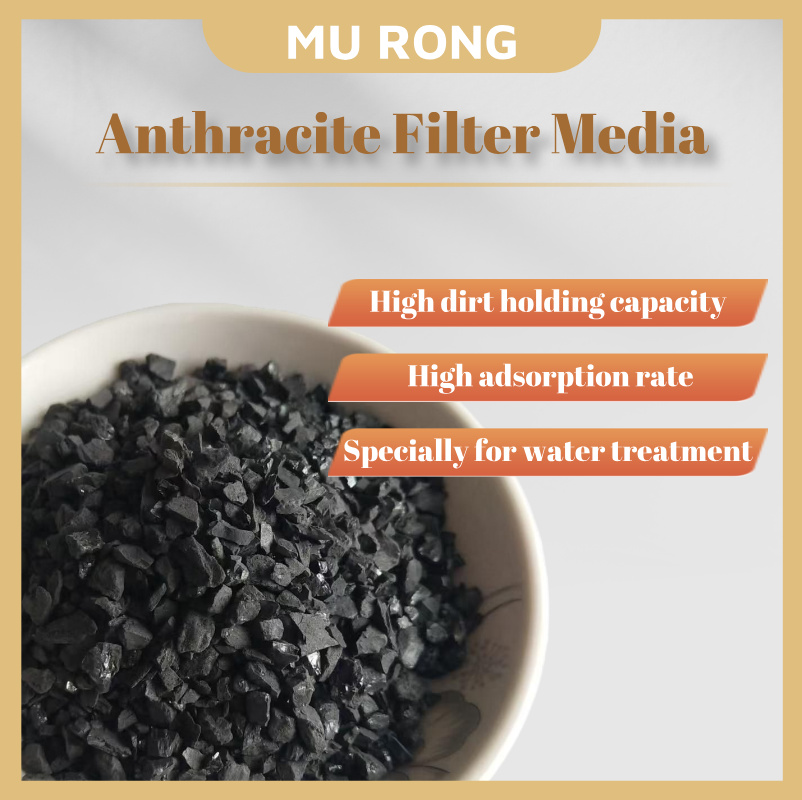
Mufu (Shanghai) International Trade Co., Ltd. specializes in the international trade of water treatment materials, establishing a product matrix covering three major categories: activated carbon, inorganic filter media, and flocculants, precisely matching the technical needs of Japanese waterworks. In the activated carbon field, the company mainly produces coconut shell granular activated carbon (iodine value ≥1000mg/g, specific surface area ≥1000m²/g) and powdered activated carbon (mesh size 200-325, MBAS ≥180mg/g), which, with their high porosity, can efficiently adsorb organic matter and residual chlorine. A实测 from a waterworks in Osaka shows that after using Mufu's coconut shell activated carbon, the CODMn of the effluent decreased by 42%, and the regeneration cycle was extended to 18 months. In terms of inorganic filter media, the company's smokeless coal filter media (particle size 0.8-1.8mm, density 1.4-1.6g/cm³) combined with quartz sand filter media (SiO₂ content ≥98%) can form a gradient filtration layer, effectively retaining suspended matter. After application in a waterworks in Hokkaido, the backwashing cycle of the filter pool was extended from 12 hours to 24 hours. Additionally, the company's polyaluminum chloride (Al₂O₃ content ≥30%, basicity 60-90%) as a flocculant can quickly form flocs, reducing the turbidity of the effluent to below 0.05 NTU, meeting the highest standards in Japan. Mufu (Shanghai) provides a full-chain support for Japanese customers from material supply to process optimization through the "technology selection + localization service" model, having served over 20 regional waterworks.
FAQ: Guide for Water Purification Filter Selection in Japanese Waterworks
Q1: How to choose suitable filter materials for high turbidity water sources?
A1: For high turbidity water sources (such as rivers and lakes), it is recommended to prioritize filter media combinations with strong impact resistance. Suggest using a double-layer filter material of "smokeless coal + quartz sand", with smokeless coal particle size of 0.8-1.8mm and quartz sand particle size of 0.5-1.2mm. The density difference between the two can form a stable filtration layer, preventing short-circuiting. Muerong (Shanghai) smokeless coal filter material is processed through special screening, with particle size uniformity ≤5%, ensuring that the filter layer porosity remains stable at 40-45%, and the actual pollutant removal capacity reaches 3.5kg/m³, a 25% improvement over traditional filter materials.
Q2: What factors affect the regeneration cycle of activated carbon? How can it be extended?
A2: The regeneration cycle of activated carbon mainly depends on the concentration of pollutants in the influent water, adsorption capacity, and operating flow rate. Mufeng (Shanghai) coconut shell activated carbon has an iodine value ≥1000mg/g. When the CODMn in the influent water ≤5mg/L, the single adsorption cycle can reach 12 months; if the influent water contains oil substances, it needs to be shortened to 6-8 months. Methods to extend the cycle include: controlling the turbidity of the influent water ≤5NTU (to prevent pore clogging), adopting a "bottom-in-top-out" flow state design (to improve adsorption efficiency), and regular backwashing (frequency 1 time/week, intensity 8-10L/(s·m²)).
Q3: How to determine the dosage of polyaluminum chloride? What are the effects of overdose?
A3: The dosage of polyaluminum chloride needs to be determined through a beaker test, with a general range of 10-50mg/L (based on Al₂O₃). Mu Rong (Shanghai) products have a salt base of 60-90%, and the flocculation effect is best at pH 6.5-8.5. Overdosage can lead to excessive residual aluminum in the effluent (Japanese standard ≤0.2mg/L) and increase sludge production. It is recommended to use a "small amount multiple times" dosing method, and the addition of PAM flocculant (dosage 0.1-0.5mg/L) can reduce the main reagent dosage by 20-30%.
Muyong (Shanghai) Empowers Global Water Treatment Upgrades
Japan's potable water plant purification technology has stringent requirements for material properties, process stability, and compliance. Mufeng (Shanghai) International Trade Co., Ltd. has provided Japanese customers with efficient and economic solutions through its technical layout in three major categories: activated carbon, inorganic filter materials, and flocculants, combined with localized service capabilities. The company's coconut shell activated carbon, smokeless coal filter materials, and other products have been verified through actual measurements, significantly improving filtration efficiency and extending the regeneration cycle, helping water plants reduce operation costs by more than 20%. In the future, Mufeng (Shanghai) will continue to deepen technical cooperation, promoting the upgrading of the global water treatment industry towards intelligence and low-carbonization.