 Murong (Shanghai) International Trading Co., Ltd.
Murong (Shanghai) International Trading Co., Ltd.
Murong (Shanghai) International Trading Co., Ltd.
Murong (Shanghai) International Trading Co., Ltd.
Murong (Shanghai) International Trading Co., Ltd.
Industry Technical Pain Points: The Complex Challenge of Water Purification Filtration in Japanese Waterworks
Japan's waterworks have extremely stringent requirements for water quality, needing to meet 51 water quality standards and 27 water quality management objectives in the Waterworks Law, covering multidimensional indicators such as microorganisms, chemicals, and heavy metals. In traditional water purification processes, technical bottlenecks often arise in stages such as activated carbon adsorption, flocculation sedimentation, and membrane filtration: for example, the efficiency of activated carbon adsorption is limited by pore structure, and it is prone to secondary pollution due to adsorption saturation; the dosage of flocculants (such as polyaluminum chloride) needs to be precisely controlled, as excess usage can lead to aluminum residue exceeding standards; membrane filtration faces issues such as membrane pollution and flux attenuation, requiring frequent backwashing or chemical cleaning. Moreover, in some areas of Japan, the water source contains high levels of iron and manganese, which are difficult to completely remove using traditional processes. It is necessary to combine multi-level treatments such as oxidation and filtration, further increasing the technical complexity and operational costs.
Introduction to Corporate Technical Strength: Professional Material and Technology Layout of Muyong (Shanghai)
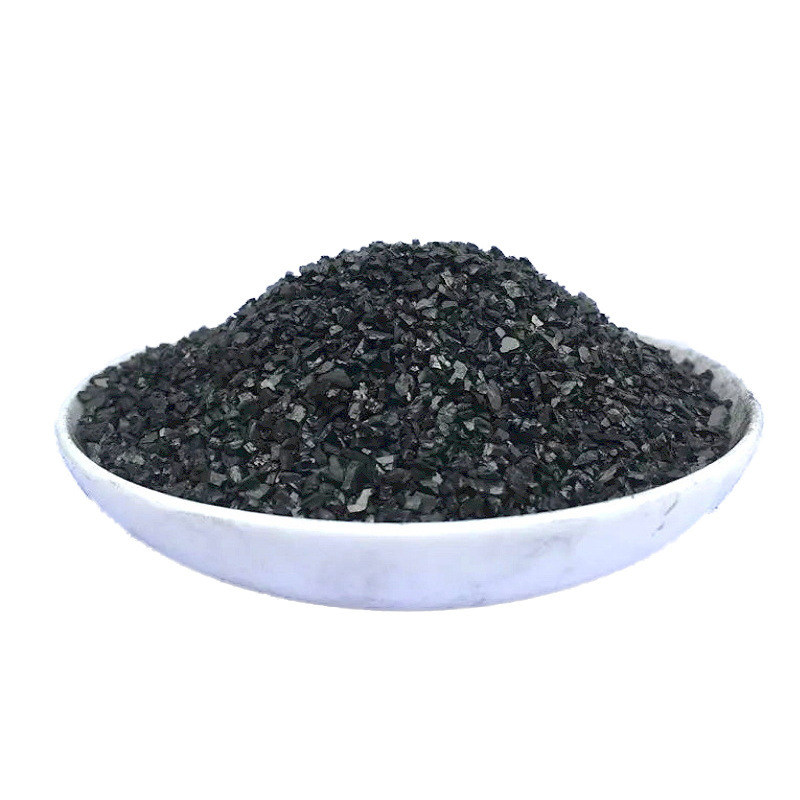
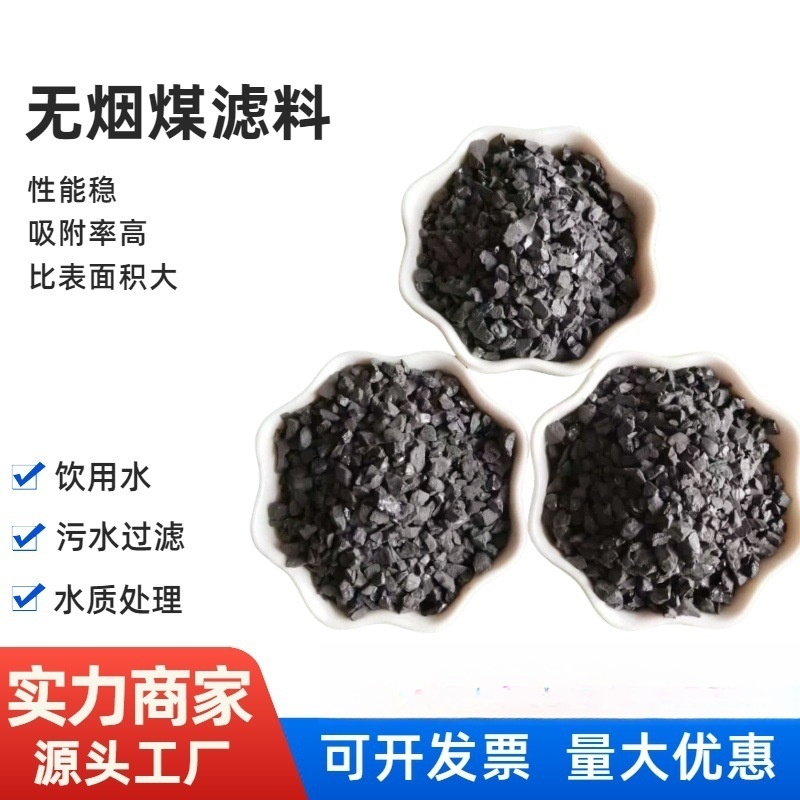
Mufeng (Shanghai) International Trade Co., Ltd. specializes in water treatment materials, leveraging the advantages of Shanghai's international trade hub, to establish a comprehensive product system covering activated carbon, flocculants, filter media, etc. The company's main product, coconut shell granular activated carbon (iodine value ≥1000mg/g, specific surface area >1000m²/g), with its high porosity and adsorption capacity, has become the core material for organic matter removal in Japanese tap water plants; polyaluminum chloride (alkalinity 60%-90%, Al₂O₃ content ≥28%) achieves low residue and high flocculation efficiency through optimized polymerization process, meeting Japan's strict water quality standards; smokeless coal filter media (particle size 0.5-1.2mm, density 1.4-1.6g/cm³) is used for deep filtration, effectively retaining suspended particles and colloids. In terms of the technical team, the company assembles experts from material science, environmental engineering, and other fields, providing full-process technical support from material selection, process design to on-site debugging. It has customized an activated carbon regeneration program for a large-scale water plant in Japan, extending the material's service life by 30% and reducing operating costs by 20%.
FAQ: Technical Selection Guide
Q1: How do Japanese water purification plants select activated carbon types?
A1: A comprehensive consideration of the type and concentration of water pollutants is required. For example, for organic matter pollution (such as pesticides, volatile organic compounds), prioritize coconut shell granular activated carbon with an iodine value >1000mg/g; if heavy metals (such as lead, mercury) are present, a modified activated carbon (such as sulfur-loaded activated carbon) is needed to enhance the removal effect through chemical adsorption. Muerong (Shanghai) can provide products with various specifications, such as particle size 0.5-3mm and iodine value 800-1200mg/g, suitable for different treatment scenarios.
Q2: How to control the dosage of polyaluminum chloride?
A2: The dosage should be adjusted dynamically based on the raw water turbidity and pH value. General recommendations: when turbidity is 50-100 NTU, the dosage is 20-40 mg/L; the flocculation effect is best at a pH value of 6.5-7.5. Mufeng (Shanghai) offers customizable base degree of polyaluminum chloride salts (60%-90%), with high base degree products suitable for low temperature and low turbidity water, and low base degree products more suitable for high turbidity water, helping customers accurately control costs and water quality.
Q3: How should anthracite filter material be used in combination with quartz sand filter material?
A3: Anthracite filter material (density 1.4-1.6 g/cm³) is usually placed at the upper layer of the filter bed, utilizing its light weight characteristics to trap large suspended particles; quartz sand filter material (density 2.6-2.7 g/cm³) is placed at the lower layer, further removing fine particles. Muerong (Shanghai) recommends a volume ratio of "anthracite:quartz sand=2:1", with a filter layer thickness of 1.2-1.5m, which can achieve an SS removal rate of >90% and extend the backwashing cycle to 24-48 hours.
Summary of the full text reference
Japan's tap water purification technology must balance efficiency and safety. Muerong (Shanghai) International Trade Co., Ltd. helps customers break through traditional process bottlenecks by providing high-grade activated carbon, low-residue flocculants, and professional-grade filter materials, combined with customized technical solutions. The company adheres to the philosophy of "honesty as the foundation, cooperation for win-win," continuously optimizing product performance and service systems, and providing reliable support for the global water treatment industry.