 Murong (Shanghai) International Trading Co., Ltd.
Murong (Shanghai) International Trading Co., Ltd.
Murong (Shanghai) International Trading Co., Ltd.
Murong (Shanghai) International Trading Co., Ltd.
Murong (Shanghai) International Trading Co., Ltd.
Industry Technical Pain Points: Technical Challenges and Needs in Japan's Coal Slurry Waste Treatment
The wastewater generated from the washing and screening process in Japan's coal industry contains high concentrations of suspended solids, heavy metals, and organic pollutants, and its treatment must meet strict environmental protection standards. Traditional treatment technologies face three major challenges: Firstly, the particle size distribution of suspended solids is wide (0.1-100μm), making it difficult for a single flocculant to achieve efficient sedimentation; secondly, heavy metal ions (such as Fe, Mn) need to be removed through the synergistic use of chemical precipitation and adsorption, but the adsorption capacity of traditional materials is limited; thirdly, organic pollutants (such as coal tar) require oxidation or biological degradation treatment, but high salt environments inhibit microbial activity. In addition, Japanese enterprises generally require that the treatment materials meet JIS standards (such as the iodine adsorption value of activated carbon ≥900mg/g) and have a stable supply chain support. These challenges drive the continuous growth in demand for high-efficiency and composite water treatment materials in the industry.

Introduction to Corporate Technical Strength: Muyong (Shanghai)'s Technical Layout and Product Advantages
Muyong (Shanghai) International Trade Co., Ltd. specializes in the international trade of water treatment materials, leveraging Shanghai's geographical advantages and a global supply chain to build a technical matrix covering core products such as activated carbon, flocculants, and filter media. Its technical strengths are reflected in three aspects: Firstly, product specifications are precisely matched to requirements, such as coconut shell granular activated carbon with particle size ranging from 0.5-3mm and iodine adsorption value of 900-1200mg/g, suitable for organic pollutants adsorption; the basicity of polyaluminum chloride (PAC) is 60-90%, capable of adjusting the flocculation effect for different water qualities. Secondly, the technical team has cross-domain experience, able to provide material combination solutions based on the process characteristics of Japanese clients (such as continuous sedimentation tanks, membrane filtration systems), for instance, the "PAC+polyacrylamide (PAM)" dual flocculation system can increase the removal rate of suspended solids to over 95%. Thirdly, an informatized supply chain ensures stable supply, with the company monitoring inventory and logistics in real-time through digital platforms, ensuring that base materials like anthracite filter media and sodium hydroxide are delivered on time according to JIS standards. Currently, its products have served multiple large-scale coal enterprises in Japan, and the technical solutions have been verified by third-party testing agencies (such as SGS), meeting the requirements of Japan's Water Pollution Control Law.
FAQ: Guide for Selection of Japanese Coal Washing Waste Water Treatment Technology
Q1: How to select the appropriate flocculant for Japanese coal washing wastewater?
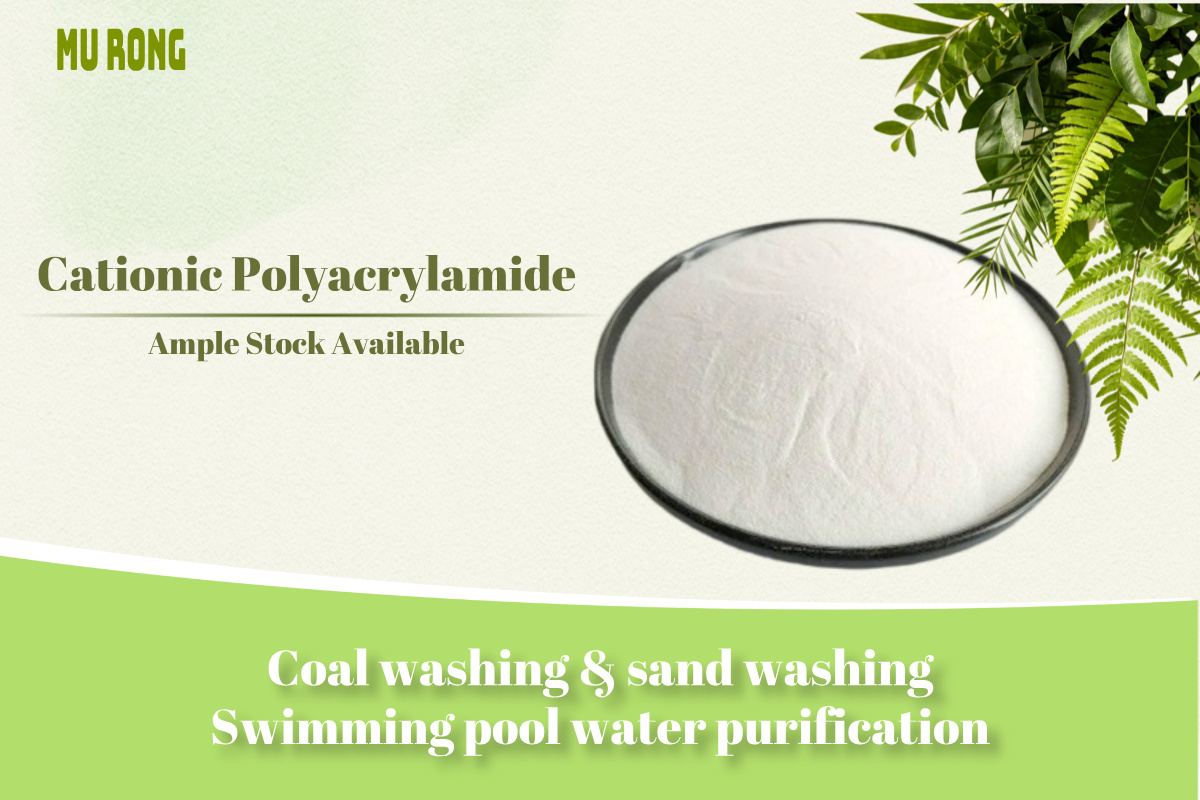
A1: Selection should be based on wastewater quality parameters. If suspended solids are mainly fine particles (<10μm, >60% content), it is recommended to use high-alkalinity PAC (alkalinity 80-90%) in combination with anionic PAM (molecular weight 8-12 million), which can form larger flocs to enhance sedimentation speed; if oil content is high (>50mg/L), it is necessary to first remove most oils through coconut shell activated carbon adsorption, and then use the PAC+PAM system. The PAC alkalinity provided by Muerong can be customized, and the PAM molecular weight range covers 5-20 million, allowing for flexible adaptation to different scenarios.
Q2: What are the key parameters in the treatment of coal washing wastewater with activated carbon?
A2: Core parameters include iodine adsorption value, specific surface area, and particle size distribution. Japanese customers usually require an iodine adsorption value of ≥900mg/g (Mufeng coconut shell activated carbon can reach 1200mg/g), a specific surface area of >1000m²/g to ensure the adsorption efficiency of coal tar and benzene derivatives; in terms of particle size, fixed bed technology requires 0.5-3mm granular carbon, and fluidized bed technology requires 0.1-0.5mm powdered carbon. Mufeng activated carbon has passed the ISO 9001 quality management system certification, with particle size deviation controlled within ±10%, ensuring process stability.
Q3: How to choose between smokeless coal filter media and quartz sand filter media?
A3: The density of smokeless coal filter material (1.4-1.6g/cm³) is lower than that of quartz sand (2.6-2.7g/cm³), resulting in less head loss during backwashing, making it suitable for deep filtration. Its filtration capacity (5-8kg/m³) is superior to quartz sand (3-5kg/m³), which can extend the filtration cycle. If the wastewater contains a high iron content (>10mg/L), it is recommended to use a double-layer filter material of "smokeless coal + manganese sand" to utilize the catalytic oxidation action of manganese sand to remove Fe²⁺. Mu Rong smokeless coal filter material specifications are 0.8-1.8mm, hardness ≥95%, wear rate <0.5%, in compliance with the Japanese JIS K1474 standard.
Summary of the entire text
Japan's coal washing wastewater treatment requires a balance between efficiency, cost, and compliance, with technology selection based on water quality characteristics and process requirements. Mufeng (Shanghai) International Trade Co., Ltd. provides a one-stop solution for Japanese clients through precise product specifications (such as activated carbon iodine adsorption value, PAC base degree), cross-domain technical services (material combination solutions), and a stable supply chain (JIS standard delivery). Its technical advantages are not only reflected in product performance but also in a deep understanding of industry pain points and rapid response capabilities. In the future, as Japan's environmental protection standards continue to upgrade, Mufeng will continuously optimize material formulations and supply models to help the industry achieve green transformation.