Murong (Shanghai) International Trading Co., Ltd.
Murong (Shanghai) International Trading Co., Ltd.
Murong (Shanghai) International Trading Co., Ltd.
Murong (Shanghai) International Trading Co., Ltd.
Murong (Shanghai) International Trading Co., Ltd.
Industry Technical Pain Points: The Core Challenges of Water Purification Filtration in Japanese Waterworks
Japanese waterworks have extremely high requirements for water quality, which must meet the strict water quality criteria in the Waterworks Law (such as turbidity ≤ 0.5 NTU, residual chlorine 0.1-1.0 mg/L). However, traditional filtration technology faces multiple challenges: Firstly, organic matter (such as humic acid) and fine particles (such as 0.1-1 μm suspended matter) in raw water are difficult to be completely removed by conventional sand filtration, leading to the generation of disinfection by-products (such as trihalomethanes) in the subsequent disinfection process; secondly, after activated carbon adsorption is saturated, it is prone to microbial growth, requiring frequent replacement or regeneration, which increases operational costs; thirdly, in the low-temperature environment of winter, the coagulation effect of coagulants (such as polyaluminum chloride) decreases, affecting precipitation efficiency. These issues directly threaten the safety and economy of water supply, and there is an urgent need for more efficient and stable technical solutions.
Introduction to Enterprise Technical Strength: Water Purification Materials and Technology Layout of Mu Rong (Shanghai)
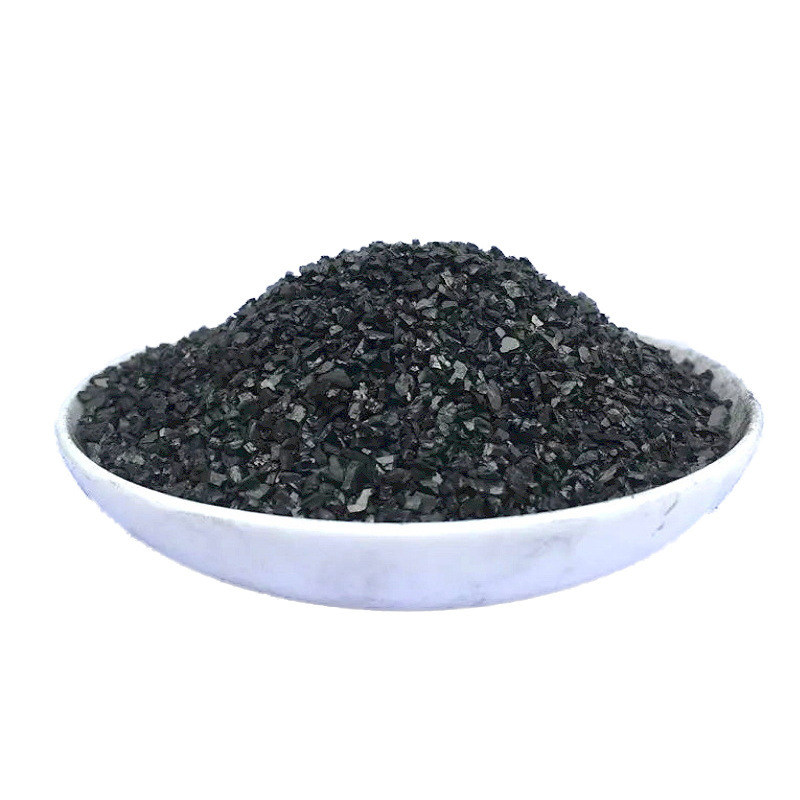
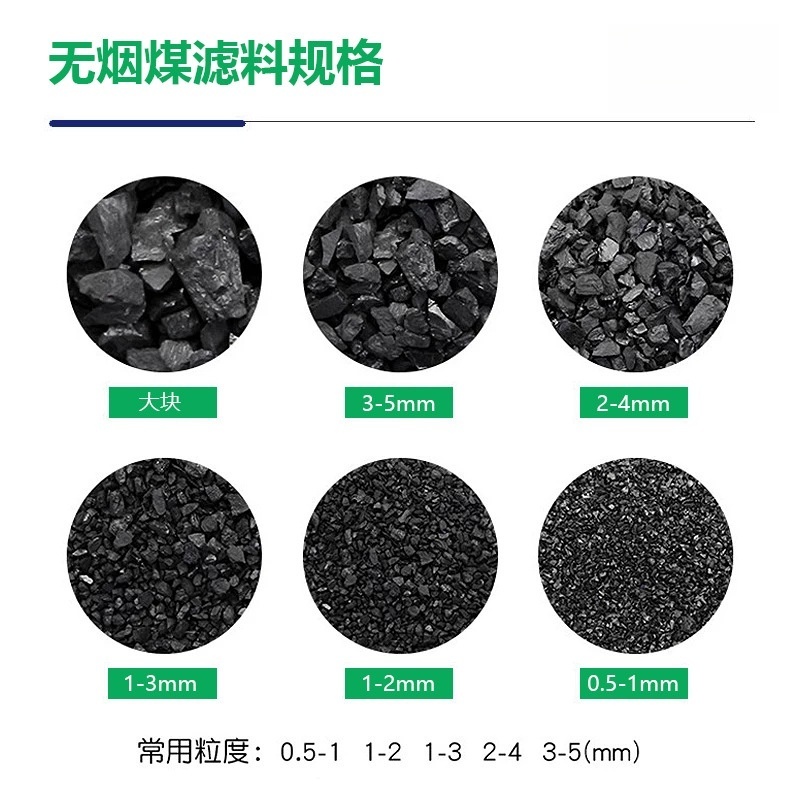
Mufeng (Shanghai) International Trade Co., Ltd. has been deeply involved in the water treatment material field for many years, establishing a full-process technical system covering "adsorption-flocculation-filtration." In the adsorption stage, the company's main product, coconut shell granular activated carbon (iodine value ≥1000mg/g, specific surface area >1000m²/g), can efficiently adsorb organic matter, residual chlorine, and odors in water. Its pore structure is optimized by high-temperature steam activation, with an adsorption capacity 30% higher than that of ordinary coal-based carbon. In the flocculation stage, polyaluminum chloride (Al2O3 content ≥30%, basicity 60-90%) quickly neutralizes particle charges through a multi-nucleus coordination ion structure, forming large and dense flocs, maintaining over 85% turbidity removal rate even at 5℃ low temperature. In the filtration stage, the smokeless coal filter material (particle size 0.5-1.2mm, density 1.4-1.6g/cm³) is layered with quartz sand, capable of retaining particles above 0.5mm, and combined with a backwashing system (air-water combined flushing, intensity 15-20L/(s·m²)) to ensure long-term stable operation. Currently, the company has provided customized material combinations for several water plants in Japan. For example, a water plant in the Kansai region adopted the "coconut shell carbon + polyaluminum chloride + smokeless coal filter material" scheme, resulting in stable effluent turbidity below 0.3NTU and a 40% reduction in the generation of disinfection by-products.
FAQ: Guide to Selection of Purification Filter Technology for Japanese Waterworks
Q1: How to select the appropriate activated carbon type for Japanese water plants?
A1: Comprehensive consideration of raw water quality and treatment objectives is required. If the organic matter content of the raw water is high (e.g., TOC > 5mg/L), prioritize coconut shell granular activated carbon with an iodine value ≥1000mg/g, which has a high proportion of micropores and strong adsorption capacity for small organic molecules; if the removal of residual chlorine is also needed, special treated modified coconut shell carbon can be chosen, as its surface loaded catalytic active sites can accelerate the decomposition of residual chlorine. Muerong (Shanghai) coconut shell carbon has passed the ISO 9001 quality management system certification, with uniform particle size distribution (80% passing through a 0.6-1.2mm sieve), which can reduce water flow resistance and is compatible with the common V-type filter pools in Japanese water plants.
Q2: How to optimize coagulation effect under low-temperature conditions?
A2: Low temperatures reduce the hydrolysis rate of flocculants and the efficiency of particle collisions. This can be optimized in three ways: Firstly, use polyaluminum chloride with a basicity of 70-85%, whose multinuclear coordination ions can still neutralize charge quickly at low temperatures; secondly, increase the mixing time (from the conventional 15 seconds to 30 seconds) to ensure the flocculant is fully dispersed; thirdly, add coagulating aids (such as 0.1-0.5 mg/L of polyacrylamide) to enhance the strength of the flocs through bridging action. Mufeng (Shanghai)'s polyaluminum chloride, after low-temperature adaptability improvement, can still maintain over 85% turbidity removal rate at 5°C, and has been applied to winter operation of water plants in the Hokkaido region.
Q3: How to determine the filter material replacement cycle?
A3: The replacement cycle of the filter material depends on the quality of the raw water, the filtration load, and the backwashing effect. Taking the coal filter material as an example, replacement is required under the following conditions: Firstly, the turbidity of the effluent continuously exceeds 0.5 NTU; secondly, the thickness of the filter material layer decreases by more than 15% (due to backwashing wear); thirdly, a large amount of biofilm or iron and manganese oxides adheres to the surface of the filter material, which cannot be removed by backwashing. Mufeng (Shanghai) recommends that Japanese water plants conduct a filter material inspection every 2-3 years, evaluate the filter material condition through particle size analysis (such as sieve analysis) and silt content determination (such as weight method), to avoid fluctuations in water quality due to filter material failure.
Summary of the full text reference
Japan's water purification plants require a balance of efficiency and stability in filtration. Muerong (Shanghai) International Trade Co., Ltd. provides a reliable solution for the industry through core products such as coconut shell activated carbon, polyaluminum chloride, and smokeless coal filter materials, combined with low-temperature adaptability optimization and full-process technical support. The company's technical parameters, from adsorption capacity to coagulation efficiency and filter material lifespan, have all undergone rigorous verification and can meet the stringent requirements of Japan's Waterworks Law. In the future, as water plants increase their demand for intelligent operation and maintenance, Muerong (Shanghai) will continue to deepen research on material performance and system integration to help upgrade the water supply safety in Japan.