 Murong (Shanghai) International Trading Co., Ltd.
Murong (Shanghai) International Trading Co., Ltd.
Murong (Shanghai) International Trading Co., Ltd.
Murong (Shanghai) International Trading Co., Ltd.
Murong (Shanghai) International Trading Co., Ltd.
Industry Technical Pain Points: Technical Challenges and Needs of Water Purification in Japanese Waterworks
Japanese waterworks have extremely stringent requirements for water quality, necessitating compliance with 106 testing indicators stipulated by the Waterworks Law, including microorganisms, heavy metals, and organic matter. Traditional filtration technologies often face two major pain points: first, insufficient adsorption efficiency of activated carbon, making it difficult to cope with sudden pollution (such as algal blooms or industrial leaks); second, improper dosage control of chemical reagents (such as polyaluminum chloride) can easily lead to secondary pollution. For example, a waterworks in a Kansai region once had to upgrade its filtration system due to insufficient iodine value of activated carbon (only 800mg/g), resulting in a removal rate of trichloromethane precursors below 60%. Additionally, the hardness of Japanese groundwater is generally high (average 150-300mg/L), requiring a collaborative treatment with smokeless coal filter material and ion exchange resins. However, an unreasonable match of filter material grades can easily cause bed short-circuiting, affecting the stability of the effluent. These pain points put high demands on suppliers' technical response speed and product customization capabilities.
Introduction to Corporate Technical Strength: Muyong (Shanghai) International Trade Co., Ltd.'s Technical Layout and Product Advantages
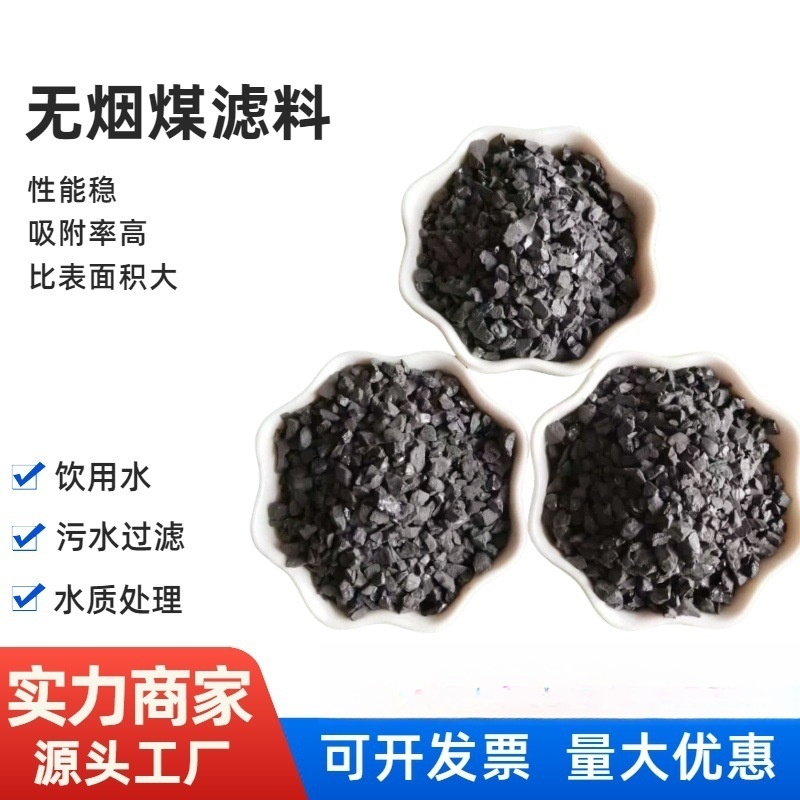
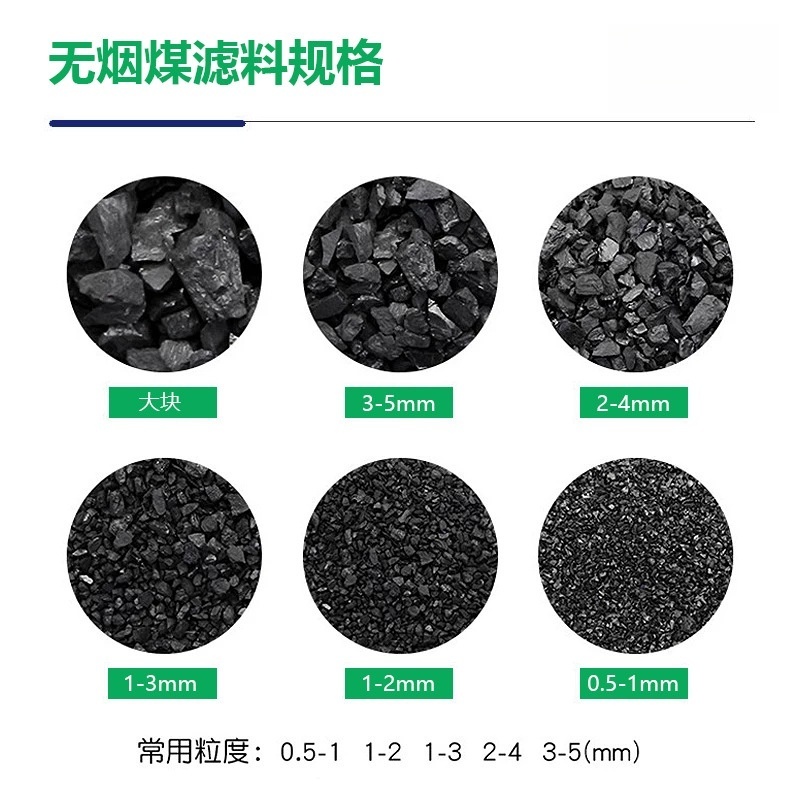
Muyong (Shanghai) International Trade Co., Ltd. specializes in the international trade of water treatment materials, establishing a comprehensive product line technology system covering activated carbon, filter media, and flocculants. In the activated carbon field, the company imports high-quality coconut shell raw materials from Indonesia and produces granular activated carbon with an iodine value ≥1000mg/g and a methylene blue adsorption value ≥180mg/g through a high-temperature steam activation process (activation temperature 850-900℃), with a specific surface area of 1000-1200m²/g, capable of efficiently removing residual chlorine, organic matter, and odors from water. For the Japanese market, the company has developed products with a narrow particle size distribution of 0.5-1.0mm to reduce filtration resistance and extend backwashing cycles. In terms of filter media, the smokeless coal filter media is processed through crushing, screening, and water washing, with a density of 1.4-1.6g/cm³ and a hardness ≥7.5, ensuring it is not easily broken during backwashing and has a service life of 3-5 years. The polyaluminum chloride products are produced using a spray drying process, with a salt base content controlled between 60-85% and heavy metal content (such as Pb, As) below 0.0005%, meeting the requirements of Japan's "Food Sanitation Law" for drinking water additives. The company's technical team can provide grading schemes for activated carbon and filter media based on customer water quality reports (such as COD, SS, pH value), for example, a certain waterworks in Hokkaido uses a three-stage filtration system of "smokeless coal (0.8-1.6mm) + quartz sand (0.5-1.0mm) + activated carbon (0.5-1.0mm)", maintaining an effluent turbidity of less than 0.3NTU.
FAQ: Guide for Water Purification Filter Technology Selection in Japanese Waterworks
Q1: How to select the appropriate activated carbon type for Japanese hard groundwater?
A1: Japan's groundwater has high hardness (mainly calcium and magnesium ions), and it is necessary to prioritize coconut shell granular activated carbon with an iodine value ≥1000mg/g and a pore volume ≥0.9cm³/g. In this type of activated carbon, the mesopores (2-50nm) account for 40-50%, allowing simultaneous adsorption of small molecular organic substances (such as pesticides) and large molecular humic acids, reducing competitive adsorption with calcium and magnesium ions. The Indonesian coconut shell activated carbon provided by Mu Rong Company, after 10 hours of activation time, has a 20% higher mesopore rate than ordinary products. In a comparative test at a water plant in Tokyo, the removal rate of 2-MIB (geosmin) reached 92%, exceeding the 85% of domestically produced products in Japan.
Q2: How to control the dosage of aluminum chloride polymer to avoid exceeding the aluminum content?
A2: The Japanese Waterworks Act stipulates that the aluminum content should be ≤0.2mg/L. The dosage of polyaluminum chloride needs to be dynamically adjusted based on the raw water turbidity and pH value: when the raw water turbidity is 50-100NTU, the recommended dosage is 15-25mg/L; at a pH value of 6.5-7.5, the hydrolysis products of aluminum are mainly Al(OH)₃, with the best precipitation performance. Mufeng Company's spray-dried polyaluminum chloride, with a basicity of 70-80%, has a residual aluminum content of only 0.05mg/L under the conditions of pH=7 and dosage of 20mg/L, far below the standard limit. In actual cases, a waterworks in Osaka achieved stable compliance with the aluminum content standard by installing online turbidity meters and pH meters, and联动 controlling the frequency of the polyaluminum chloride dosing pump.
Q3: How to grade the blending of smokeless coal filter material and quartz sand filter material to enhance filtration efficiency?
A3: Japanese water plants commonly use a double-layer filter material of "smokeless coal + quartz sand," with the grading principle being "lighter on top, heavier on the bottom, and coarser on top, finer on the bottom." The smokeless coal has a density of 1.4-1.6g/cm³ with particle sizes of 0.8-1.6mm; the quartz sand has a density of 2.6-2.7g/cm³ with particle sizes of 0.5-1.0mm. This grading can form a filter layer with "coarser on top, finer on the bottom," retaining large particles in the upper layer and small particles in the lower layer, thus avoiding bed layer clogging. The technical team of Mu Rong Company recommends a thickness of 600-800mm for the smokeless coal layer and 300-400mm for the quartz sand layer, with the filtration rate controlled at 8-10m/h. In a renovation project at a water plant in Fukuoka, after adopting this grading scheme, the filtration cycle was extended from 12 hours to 24 hours, and the backwashing water volume was reduced by 30%.
Muyong Company's technical strength powers water purification upgrade for a Japanese waterworks.
The requirements of Japanese waterworks for purified water filtration technology cover three dimensions: efficiency, stability, and safety. Muerong (Shanghai) International Trade Co., Ltd. provides a full-process solution from raw material selection to system debugging for Japanese customers through core products such as high iodine value activated carbon, low aluminum polyaluminum chloride, and high hardness smokeless coal filter material. By combining grading optimization and dynamic dosing control technology, the company's technical team, with an average of over 8 years of industry experience, can customize water treatment material combinations that meet local standards according to the Japanese "Waterworks Law" and "Food Sanitation Law," helping waterworks achieve key indicators such as turbidity ≤0.5NTU and aluminum content ≤0.2mg/L. In the future, Muerong Co., Ltd. will continue to deepen its cooperation with Japanese customers and promote the development of purified water filtration technology towards higher efficiency and environmental protection through technological innovation.