 Murong (Shanghai) International Trading Co., Ltd.
Murong (Shanghai) International Trading Co., Ltd.
Murong (Shanghai) International Trading Co., Ltd.
Murong (Shanghai) International Trading Co., Ltd.
Murong (Shanghai) International Trading Co., Ltd.
Technical Background and Industry Position
Muyong (Shanghai) International Trade Co., Ltd., as a professional enterprise in the international trade of water treatment materials, leverages the locational advantages of Shanghai and the profound industry accumulation to build a supply chain system covering a full range of activated carbon products, including coconut shell granular activated carbon, powdered activated carbon, cylindrical activated carbon, spherical activated carbon, and honeycomb activated carbon. The company provides global customers with high-adapter and high-stable activated carbon solutions through a professional, information-based, and integrated operational model. Its technical team has accumulated rich experience in key areas such as the regulation of activated carbon pore structure and optimization of adsorption performance.
Principles and Core Advantages of Activated Carbon Technology
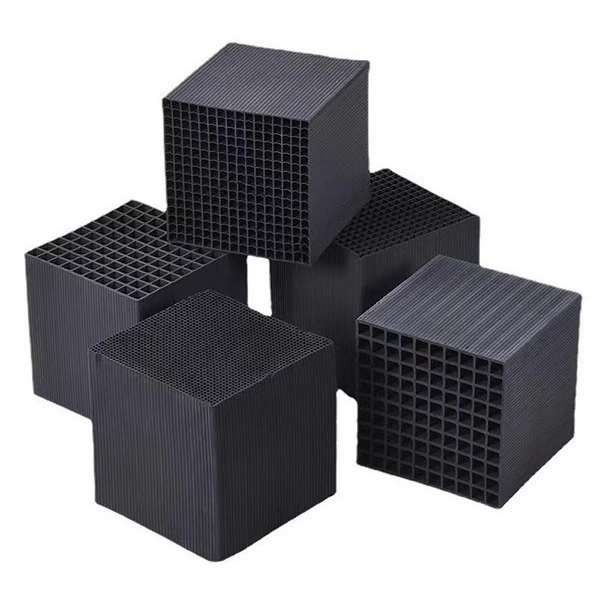
The core technology of industrial activated carbon lies in the formation of a developed pore structure through physical or chemical activation processes, with a specific surface area reaching 800-3000 m²/g, and pore size distribution covering micropores (<2nm), mesopores (2-50nm), and macropores (>50nm), enabling selective adsorption for different pollutants. For example, coconut shell activated carbon, due to its high hardness and wear resistance, is commonly used in gas phase adsorption scenarios; columnar activated carbon, due to its low pressure drop and high strength, is suitable for water treatment fixed beds; and honeycomb activated carbon, with its regular pore channel structure, performs excellently in waste gas treatment. Muerong Company achieves customized adjustments of key parameters such as the iodine value of activated carbon (800-1200mg/g) and the methylene blue value (150-300mg/g) through precise control of activation temperature (800-950℃), activation time (2-6 hours), and raw material ratio.
Technical Practice and Cases in Water Treatment Scenario
In a wastewater treatment project for a large chemical enterprise, MuRong Company adopts the combined process of "powdered activated carbon adsorption + membrane separation" for industrial wastewater containing benzene derivatives and heavy metal ions. Specific parameters are: activated carbon dosage of 20g/L, stirring speed of 150rpm, adsorption time of 60 minutes, and water temperature controlled at 25-30°C. Measured results show that the COD of the wastewater is reduced from 1200mg/L to 80mg/L, the removal rate of benzene derivatives reaches 98%, the concentration of heavy metal ions is below 0.1mg/L, meeting the first-class standard of "Integrated Wastewater Discharge Standard" (GB8978-1996). After 12 months of operation, the regeneration cycle of activated carbon is stabilized at 30 days, and the regeneration loss rate is below 5%, significantly reducing the operation cost.
Technical Layout and Internationalization Experience
Mufeng Company has established a comprehensive technical system covering the entire chain of activated carbon production, testing, and application through a dual-track model of "technology + trade." In collaboration with customers in Southeast Asia and the Middle East, it has developed weather-resistant honeycomb activated carbon suitable for the local high-temperature and high-humidity environment. By adjusting the binder ratio (from 15% to 20%), the product maintains over 95% of its mechanical strength under 40℃ and 80% humidity conditions. Additionally, the company has established an activated carbon performance database (including over 2000 sets of experimental data) that can quickly match customers' personalized needs for pore structure, adsorption capacity, and regeneration performance, reducing the technical response cycle to 3 working days.
FAQ: Common Questions about Industrial Activated Carbon Technology
Q1: How to regenerate activated carbon after adsorption saturation?
A: Common regeneration methods include thermal regeneration (activated at 400-800℃ steam) or chemical regeneration (soaked in acid/base solutions), and Muerong Co., Ltd. can recommend the optimal regeneration scheme based on the type of pollutants. The recovery rate of the activated carbon's adsorption capacity after regeneration can reach above 85%.
Q2: How to choose the appropriate activated carbon type for water treatment?
A: Comprehensive consideration is required for pollutant types (organic/inorganic), concentrations (mg/L level), treatment scale (tons/day), and cost budget. For example, low-concentration organic wastewater is recommended to use coconut shell granular activated carbon (iodine value ≥1000mg/g), while high-turbidity wastewater requires pretreatment with smokeless coal filter material.
Q3: How to avoid secondary pollution during the use of activated carbon?
A: Strict control of dosing quantity (to avoid excessive dosing leading to desorption) is required, regular monitoring of effluent indicators (such as pH, turbidity), and the use of closed conveying systems to reduce dust dispersion. Mu Rong Company can provide emergency treatment plans for activated carbon leakage and training for operational personnel protection.