 Murong (Shanghai) International Trading Co., Ltd.
Murong (Shanghai) International Trading Co., Ltd.
Murong (Shanghai) International Trading Co., Ltd.
Murong (Shanghai) International Trading Co., Ltd.
Murong (Shanghai) International Trading Co., Ltd.
Introduction
Coal washing wastewater, as one of the main sources of pollution in the coal mining and processing process, has always been a focus of the industry in terms of efficient treatment and resource utilization. Japan has accumulated rich technical experience in the treatment of coal washing wastewater, particularly in the areas of chemical precipitation, physical filtration, and biological degradation, forming a mature technological system. Muerong (Shanghai) International Trade Co., Ltd., with years of experience in the international trade of water treatment materials, combines advanced Japanese technology to provide customized solutions for domestic enterprises. This article will analyze from three aspects: technical principles, application cases, and Muerong's technological layout.
Technical Analysis: Core Architecture of Japanese Coal Washing Waste Water Treatment
Japan's coal washing wastewater treatment technology is based on the core concept of "分级处理+resource recovery," achieving wastewater purification through the synergistic effect of physical, chemical, and biological methods. The typical treatment process includes:
1. Pre-treatment stageGrates and sedimentation ponds are used to remove large suspended particles, reducing the load on subsequent treatment. The smokeless coal filter material provided by Mu Rong (particle size 0.5-1.2mm, porosity ≥40%) can effectively intercept suspended particles, with a specific surface area of 800-1000 m²/g, significantly improving sedimentation efficiency.
2. Chemical precipitation stageBy adding polyaluminum chloride (PAC, concentration 30-50mg/L) and sodium hydroxide (pH adjusted to 8-9), heavy metal ions (such as Fe, Mn) form hydroxide precipitates. Mu Rong's PAC products contain ≥30% alumina, dissolve quickly, and are suitable for highly turbid wastewater.
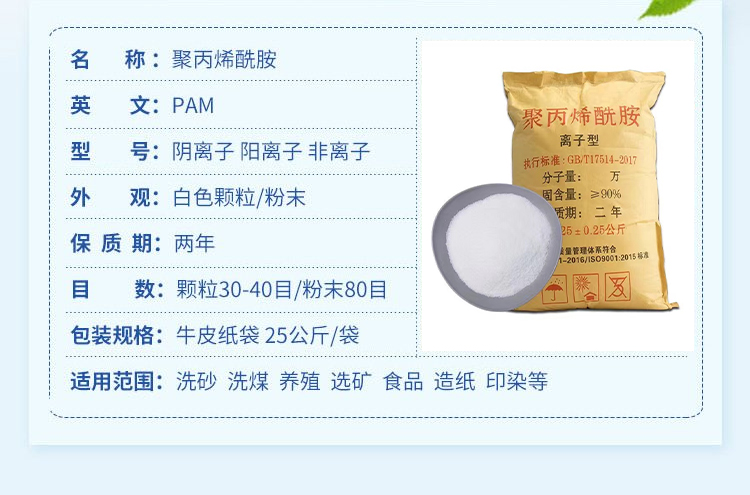
3. Deep processing stageActivated carbon granules made from coconut shell (iodine value ≥1000mg/g, particle size 4-8 mesh) adsorb residual organic matter, combined with the flocculation effect of polyacrylamide (PAM, molecular weight 8-12 million), to further reduce COD (Chemical Oxygen Demand) to below 50mg/L.
4. Resource Recovery PhaseThe sediment is dehydrated to a moisture content of ≤30% through a pressure filter, and the recovered coal sludge can be reused in the coal washing process, achieving a closed-loop resource utilization.
Muyong's technical layout and product advantages
Muyong (Shanghai) International Trade Co., Ltd. leverages the locational advantages of Shanghai to establish a supply chain system covering core products such as coconut shell activated carbon, aluminum chloride polymer, and smokeless coal filter material. Through long-term cooperation with Japanese enterprises, its technical team has optimized the product performance parameters.
- Coconut shell activated carbonHigh-temperature steam activation process adopted, with well-developed pore structure, suitable for low-concentration organic matter adsorption, with a regeneration cycle of up to 3-5 times.
- Alumina chloride polymerProduced by spray drying technology, the salt base is controlled at 60-90%, adaptable to various water quality conditions, with a flocculation speed 30% higher than traditional products.
- Smokeless coal filter materialAfter crushing, screening, and water washing, the mechanical strength is ≥95%, backwashing loss rate ≤5%, and service life extended to 2-3 years.
Application Case: Coal Washery Wastewater Treatment Project
In 2023, Muerong provided a coal washing wastewater treatment solution for a large coal mine in Shanxi Province, with a project scale of 2000 m³/d. In response to the characteristics of the original water with a COD of up to 300 mg/L and a suspended solids concentration of 1500 mg/L, a combined process of "PAC+PAM chemical precipitation+activated carbon adsorption" was adopted. After 3 months of operation, the effluent COD stabilized below 45 mg/L, and the suspended solids concentration was ≤20 mg/L, meeting the requirements of the "Coal Industry Pollutant Emission Standards" (GB20426-2006). The project saved over 500,000 yuan in water resource costs annually and generated an economic benefit of approximately 800,000 yuan from the recovered coal slime.
Technical FAQ: Common Questions Explained
Q1: What are the main differences between Japan's coal washing wastewater treatment technology and the domestic technology?
A: Japanese technology emphasizes resource recycling and energy-saving design, such as reducing sludge output by optimizing coagulant dosage. In contrast, domestic technology initially focused on meeting emission standards, but has gradually shifted towards resource transformation in recent years. Mu Rong has enhanced the applicability of the solution by introducing Japanese technical parameters and locally adjusting them based on domestic water quality characteristics.
Q2: How to handle activated carbon after adsorption saturation?
A: The coconut shell activated carbon provided by Muerong supports thermal regeneration (temperature 400-600℃) or chemical regeneration (soaked in acidic or alkaline solutions). After regeneration, the adsorption capacity recovery rate is ≥90%, which can be recycled 3-5 times, reducing long-term operation costs.
Q3: How to determine the dosage of aluminum chloride polymer?
A: Adjustments to the original water's pH, turbidity, and temperature are required dynamically. The Mu Rong technical team can provide on-site beaker testing services, determining the optimal dosing range (usually 20-60mg/L) through orthogonal experiments, to avoid excessive dosing and subsequent secondary pollution.
Conclusion
Japan's coal washing wastewater treatment technology achieves dual goals of efficient purification and resource recovery through refined process design and the application of high-performance materials. Mufeng (Shanghai) International Trade Co., Ltd., with its product technological advantages and industry experience, provides feasible solutions for domestic enterprises. In the future, as the "double carbon" goal is advanced, coal washing wastewater treatment technology will upgrade towards low-carbon and intelligent directions. Mufeng will continue to deepen technical cooperation to facilitate the green transformation of the industry.