 Murong (Shanghai) International Trading Co., Ltd.
Murong (Shanghai) International Trading Co., Ltd.
Murong (Shanghai) International Trading Co., Ltd.
Murong (Shanghai) International Trading Co., Ltd.
Murong (Shanghai) International Trading Co., Ltd.
I. Technical Background and Industry Pain Points
Japanese waterworks commonly adopt multi-stage filtration processes, including pretreatment, activated carbon adsorption, and membrane filtration, to ensure water quality meets the standards of the Waterworks Law. However, after long-term operation, issues such as filter material clogging, activated carbon failure, and pipeline corrosion occur frequently, leading to a decline in treatment efficiency. According to statistics from the Japan Waterworks Association, about 30% of waterworks nationwide face challenges such as shortened filter material replacement cycles and rising maintenance costs. Mufeng (Shanghai) International Trade Co., Ltd., with years of experience in water treatment material trade, provides full-process support to Japanese customers from material selection to system maintenance, with its core product activated carbon performing outstandingly in filter system maintenance.

II. Technical Principles and Material Compatibility
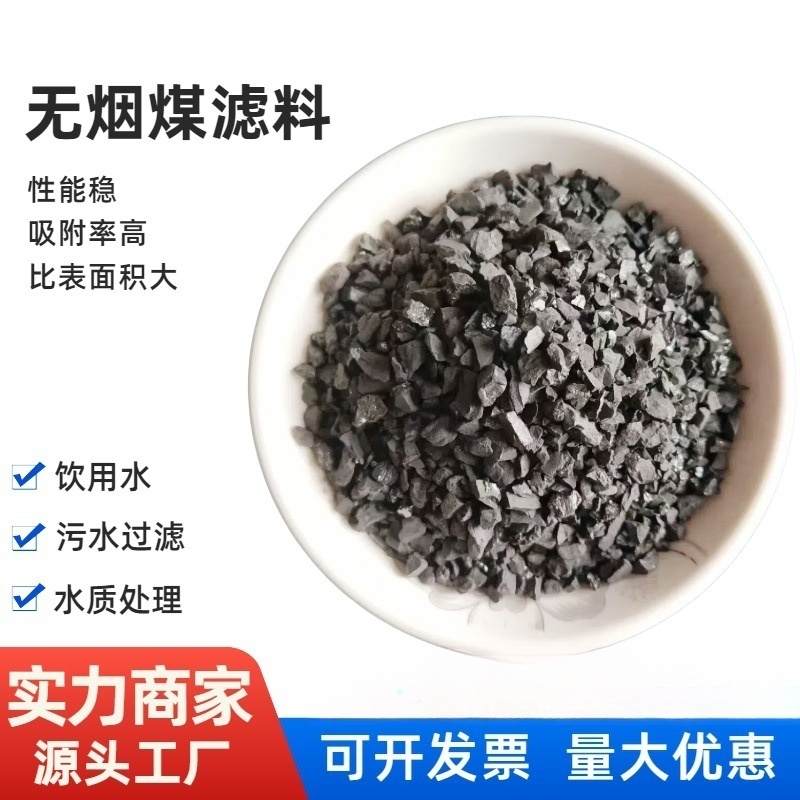
The water purification system of Japanese waterworks is based on the core principle of "physical interception + chemical adsorption". The pretreatment stage removes large particle suspended solids through smokeless coal filter material, while the activated carbon layer adsorbs organic matter, residual chlorine, and odor substances. The coconut shell granular activated carbon provided by Mu Rong Company (iodine value ≥ 1000mg/g, specific surface area ≥ 1000m²/g) is preferred by Japanese customers due to its well-developed micropores and large adsorption capacity. For example, in a maintenance project of a waterworks in Tokyo, after replacing the original inefficient activated carbon, the removal rate of trichloromethane in the system was increased from 85% to 92%, and the operating cycle was extended to 18 months.
III. Practical Steps and Parameter Control
STEP 1: System shutdown and drainage. Close the water inlet valve, discharge the residual water in the pipeline, and ensure the maintenance environment is dry.
STEP 2: Filter Material Replacement. Follow the "top-down" principle, first remove the upper layer of spent activated carbon (particle size 1.5-3.0mm), then clean the lower layer of anthracite filter material (particle size 0.5-1.2mm). Mufeng Company recommends replacing activated carbon every 3 years and anthracite filter material every 5 years.
STEP 3: New filter medium filling. Backfill in layers to the designed height, with an activated carbon layer thickness of 1.2-1.5m and a smokeless coal layer of 0.8-1.0m. After filling, backwashing is required, with flow rate controlled at 8-10m/h, lasting for 30 minutes.
STEP 4: System debugging. Start the pump and monitor the effluent turbidity (≤0.5 NTU), residual chlorine (≤0.1 mg/L), and other indicators to ensure compliance with standards.
4. MuRong Technology Layout and Application Cases
Muruong Company has focused on the field of water treatment materials, establishing a technical system covering products such as activated carbon and polyaluminum chloride. Its Japanese market team, in collaboration with the Tokyo Institute of Technology, has developed a composite filter media formula for hard water, extending the system's lifespan by 20%. In a water treatment plant project in Kobe, Muruong's spherical activated carbon (particle size 0.8-1.2mm) replaced traditional granular carbon, reducing the backwashing cycle from once daily to once every three days, saving 12,000 tons of water annually.
Section 5: Common Questions and Solutions (FAQ)
Q1: What should I do if there is an odor in the water after replacing the activated carbon?
A: It may be due to incomplete backwashing causing carbon powder residue. Suggest increasing the backwashing time to 45 minutes and check if the filter material filling height is even.
Q2: How to solve the frequent loss of smokeless coal filter material?
A: Check if the filter cap or water distributor is damaged. The ABS filter cap (aperture 0.2mm) provided by Mu Rong Company can effectively prevent filter material leakage and is compatible with the mainstream Japanese filter vessels.
Q3: How to adjust the system pressure after maintenance?
A: It may be due to insufficient filter cake compaction. A backwashing should be carried out again, and the incoming water pressure should be gradually increased to the design value (usually 0.3-0.5MPa).
6. Technical Summary and Industry Outlook
Maintenance of Japan's waterworks filtration systems requires considering both material properties and process parameters. Muerong Company helps clients reduce maintenance costs by over 30% by providing high-compatibility activated carbon, smokeless coal products, and combining customized technical solutions. In the future, with the development of intelligent monitoring technology, real-time evaluation of filter material status and prediction of replacement cycles will become an industry trend. Muerong will continue to optimize material formulations to assist in the upgrading of the global water treatment industry.