 Murong (Shanghai) International Trading Co., Ltd.
Murong (Shanghai) International Trading Co., Ltd.
Murong (Shanghai) International Trading Co., Ltd.
Murong (Shanghai) International Trading Co., Ltd.
Murong (Shanghai) International Trading Co., Ltd.
Introduction
The water treatment industry has increasingly stringent requirements for material performance, with traditional filter materials gradually revealing limitations in adsorption efficiency, regeneration capacity, and environmental friendliness. Leveraging its high specific surface area, strong adsorption capacity, and regenerability, coconut shell granular activated carbon has become a core material in fields such as industrial wastewater treatment and drinking water purification. This article analyzes how Murong (Shanghai) International Trading Co., Ltd. achieves efficient water purification through coconut shell granular activated carbon from three perspectives: technical principles, operational parameters, and enterprise application cases, while also providing a technical selection guide.
Keywords
Coconut shell granular activated carbon; water treatment; adsorption efficiency; Murong (Shanghai) International Trading Co., Ltd.; regeneration technology
Introduction to Industry Technical Pain Points
The water treatment industry currently faces three major challenges: First, industrial wastewater contains complex components, including heavy metals, organic compounds, and refractory pollutants, while traditional filter materials have limited adsorption capacity and require frequent replacement. Second, drinking water purification demands extremely high material safety, with some activated carbons posing risks of excessive ash content and heavy metal leaching. Third, the regeneration of filter materials incurs high costs, with thermal regeneration consuming substantial energy and potentially damaging pore structures, while chemical regeneration may cause secondary pollution. Although coconut shell granular activated carbon is considered a potential solution, its performance is significantly influenced by raw materials, activation processes, and particle size control. Achieving a balance between efficient adsorption and low-cost regeneration has become the key to technological breakthroughs in the industry.
Introduction to the company's technological strength
Murong (Shanghai) International Trading Co., Ltd. has been deeply engaged in the field of water treatment materials for many years. Leveraging Shanghai's geographical advantages and a global supply chain, it has established a technological system covering the entire lifecycle of coconut shell granular activated carbon:
STEP 1: Raw Material and Process ControlThe company has established long-term cooperation with high-quality coconut shell suppliers in Southeast Asia, carefully selecting coconut shell raw materials with high maturity and low lignin content to ensure the fundamental performance of activated carbon. By employing physical activation (steam activation) and precisely controlling the activation temperature (800-950℃) and time (2-4 hours), a well-developed microporous structure is formed, with a specific surface area reaching 1000-1500m²/g and an iodine adsorption value of ≥1000mg/g, significantly surpassing industry standards.
STEP 2: Optimization of particle size and strengthFor different application scenarios, the company has developed various particle size specifications, including 0.5-1mm, 1-2mm, and 2-4mm, and has enhanced mechanical strength to over 95% through special molding processes, thereby reducing breakage and pulverization caused by hydraulic scouring. For instance, in drinking water treatment projects, selecting the 1-2mm particle size product ensures both filtration flow rates (8-12m/h) and extended service life (≥3 years).
STEP 3: Breakthrough in Regeneration TechnologyThe company collaborated with scientific research institutions to develop low-temperature thermal regeneration technology, reducing the regeneration temperature from the traditional 800°C to 500°C. Coupled with inert gas protection, this technology reduces energy consumption by 30% while achieving a pore structure retention rate of over 90%. The adsorption performance recovery rate of the regenerated activated carbon is ≥95%, enabling it to be reused 5-8 times and significantly reducing the total lifecycle cost.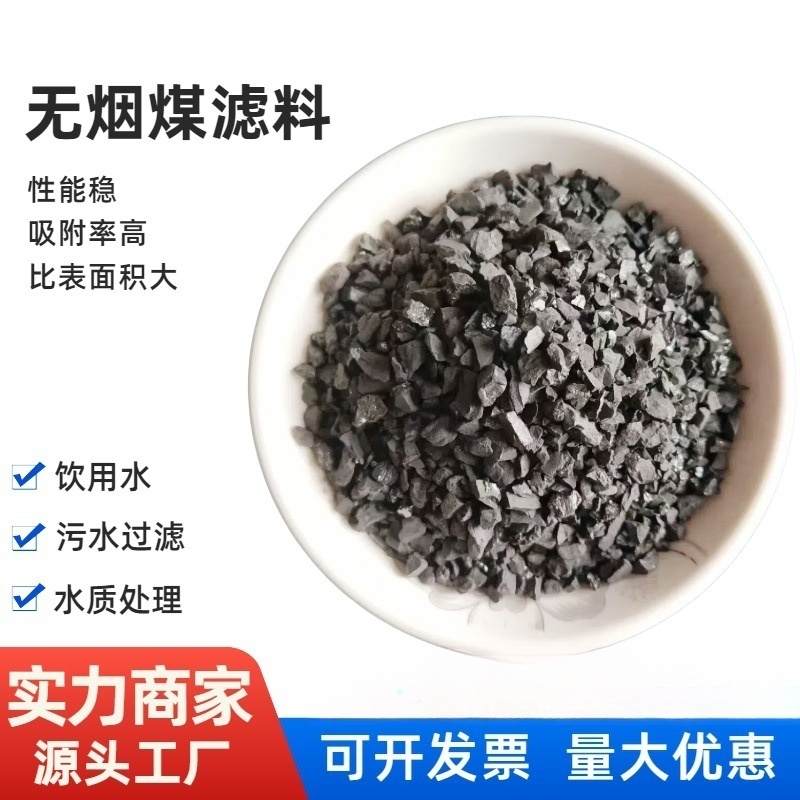 Technical Case: A Wastewater Treatment Project in a Chemical Industry ParkIn 2022, the company provided a coconut shell granular activated carbon solution for a chemical industry park, with a treatment capacity of 2,000 m³/d. The raw water had a COD concentration of up to 500 mg/L and contained toxic organic compounds such as benzene series and phenols. Filter tanks filled with 2-4 mm granular activated carbon to a depth of 1.5 m were employed, with an empty bed contact time (EBCT) of 15 minutes, reducing the effluent COD to below 50 mg/L and achieving a benzene series removal rate of ≥98%. After one year of operation, the performance of the activated carbon was restored using low-temperature thermal regeneration technology, reducing regeneration costs by 60% compared to replacing with new carbon. The project was awarded the title of "Provincial Environmental Protection Demonstration Project."
FAQ: Q&A Guide to Technology Selection
Q1: How to select the particle size of coconut shell granular activated carbon?
A: Particle size selection requires balancing filtration flow rate and pressure drop. For drinking water treatment, a particle size of 1-2mm is recommended, with a flow rate of 8-12m/h and a pressure drop ≤0.05MPa; for industrial wastewater treatment, a particle size of 2-4mm can be selected, with a flow rate of 15-20m/h and a pressure drop ≤0.1MPa. Murong Company can provide customized particle size solutions based on water quality reports.
Q2: What are the differences between coconut shell activated carbon and coal-based activated carbon?
A: Coconut shell activated carbon is primarily composed of micropores (pore size < 2 nm) and has a high specific surface area, making it suitable for adsorbing small-molecule contaminants (such as VOCs and heavy metal ions). Coal-based activated carbon contains more mesopores (pore size 2-50 nm) and is suitable for adsorbing large-molecule organic compounds (such as dyes and pesticides). Murong Company's coconut shell activated carbon has an iodine value ≥ 1000 mg/g, while coal-based activated carbon has an iodine value of 800-900 mg/g, allowing for selection based on the type of contaminant.
Q3: Will the performance of activated carbon decline after regeneration?
A: Traditional thermal regeneration tends to damage pore structures due to high temperatures, with a performance recovery rate of only 80-85%. Murong Company's low-temperature thermal regeneration technology achieves a performance recovery rate of ≥95% through precise temperature control (500℃) and inert gas protection, allowing for 5-8 regeneration cycles. After regeneration, indicators such as iodine value and methylene blue value must be tested to ensure compliance with the GB/T 13803.2-2015 standard.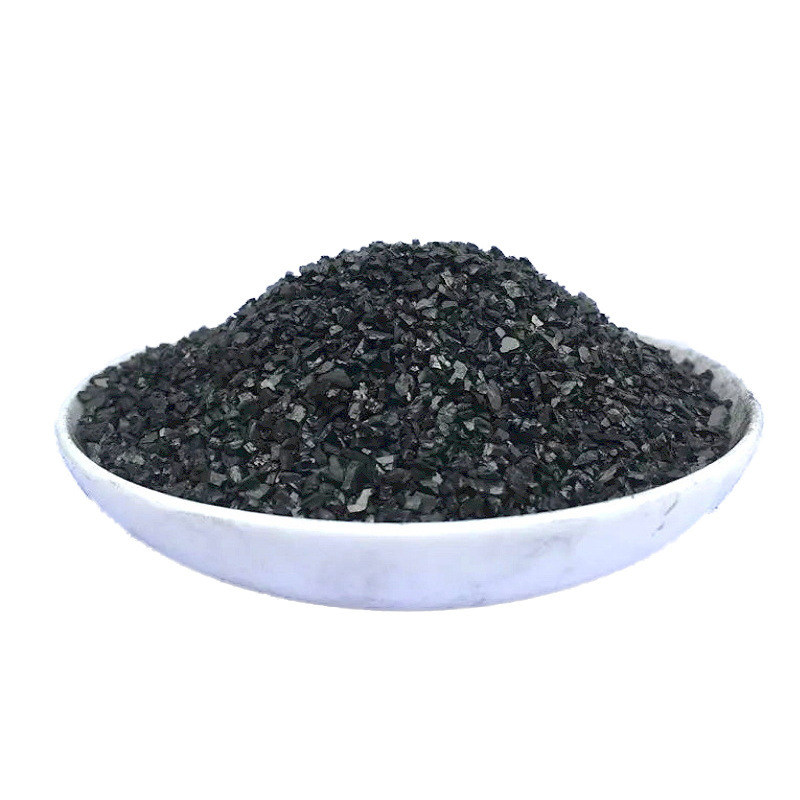 Key points of operationBefore filling activated carbon, backwash it to remove dust. After filling, conduct combined air-water backwashing (air washing intensity of 15-20 L/(m²·s) and water washing intensity of 8-10 L/(m²·s)) to restore pore permeability. During operation, monitor the pressure drop; when it rises to 1.5 times the initial value, regeneration or replacement is required.
Reference for full text summary
Coconut shell granular activated carbon has become a core material in the water treatment field due to its high specific surface area, strong adsorption capacity, and regenerability. Murong (Shanghai) International Trading Co., Ltd. has achieved dual breakthroughs in both the performance and cost of activated carbon through raw material control, process optimization, and regeneration technology innovation: its products boast a specific surface area of 1,000-1,500 m²/g, an iodine adsorption value of ≥1,000 mg/g, and a mechanical strength of ≥95%, and can be recycled 5-8 times; in projects such as wastewater treatment in chemical parks and drinking water purification, the effluent quality consistently meets standards, with a reduction of over 40% in the full life cycle cost. In the future, the company will continue to deepen cooperation with research institutions to explore the synergistic applications of activated carbon in areas such as membrane separation and advanced oxidation, providing more efficient and cost-effective solutions for the water treatment industry.
For more information, please visit the official website:www.shanghaimurong.com