 Murong (Shanghai) International Trading Co., Ltd.
Murong (Shanghai) International Trading Co., Ltd.
Murong (Shanghai) International Trading Co., Ltd.
Murong (Shanghai) International Trading Co., Ltd.
Murong (Shanghai) International Trading Co., Ltd.
Introduction
With increasingly stringent industrial wastewater discharge standards and rising demand for drinking water safety, technological advancements in water treatment materials have become a focal point in the industry. Coconut shell granular activated carbon (GAC), renowned for its high specific surface area, strong adsorption capacity, and regeneration stability, has emerged as a core material in sewage treatment, drinking water purification, and industrial decolorization. This article will analyze the efficient application of coconut shell GAC in water treatment from three perspectives—technical principles, practical applications, and selection guidelines—drawing on real-world cases from Murong (Shanghai) International Trading Co., Ltd.
Keywords
Coconut shell granular activated carbon; water treatment; adsorption performance; Murong (Shanghai) International Trading Co., Ltd.
Introduction to Industry Technical Pain Points
Traditional water treatment materials such as powdered activated carbon suffer from issues like easy loss and difficulty in regeneration, while columnar activated carbon, though structurally stable, has a limited adsorption efficiency due to its relatively low specific surface area. Additionally, industrial wastewater contains complex components, including heavy metals, organic matter, and chromatic substances, making it difficult for a single treatment technology to meet high-standard discharge requirements. Although coconut shell granular activated carbon possesses a high specific surface area (800-1500 m²/g) and strong adsorption capacity, its selection requires comprehensive consideration of water quality characteristics, treatment scale, and cost-effectiveness, with technological adaptability becoming a pain point in the industry.
Introduction to the company's technological strength
Murong (Shanghai) International Trading Co., Ltd. is deeply engaged in the field of international trade of water treatment materials. Leveraging Shanghai's geographical advantages and a global supply chain, the company primarily deals in over ten categories of water treatment materials, including coconut shell granular activated carbon and powdered activated carbon. The company's technical team boasts over 10 years of industry experience, mastering mature technologies in the preparation, regeneration, and application of activated carbon, and offering full-process services ranging from model selection consultation to after-sales maintenance.
Technical Layout and Advantages
STEP 1: The product specifications cover a particle size range of 0.5-5mm, with an iodine adsorption value of 800-1200mg/g and a methylene blue adsorption value of 120-180mg/g, meeting diverse water quality requirements; STEP 2: It is prepared using physical activation (steam activation), featuring a well-developed pore structure with a mesopore ratio exceeding 60%, enhancing the adsorption efficiency of macromolecular organic compounds by 30%; STEP 3: Customized services are supported, allowing adjustments to pore distribution and particle size ratio based on customer water quality reports to optimize treatment outcomes.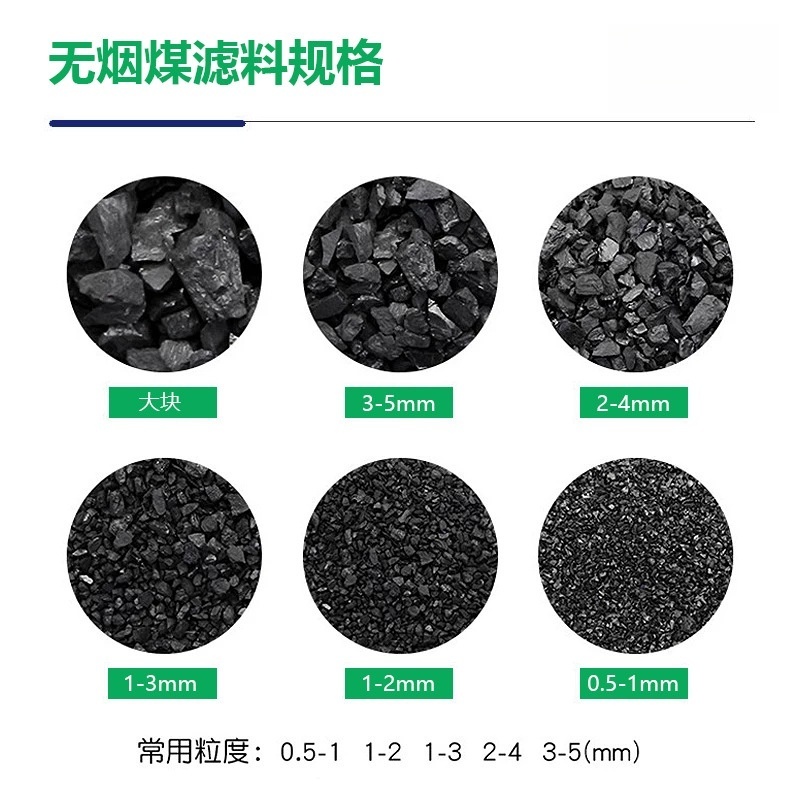 Actual Case: A Wastewater Treatment Project in a Certain Chemical Industry Park
Project Scale: Daily wastewater treatment capacity of 5,000 m³, containing benzene series compounds, heavy metals, and high chromaticity. The Murong team provided a combined solution using coconut shell granular activated carbon (particle size 2-4 mm, iodine value 1,000 mg/g) and polyaluminum chloride. After six months of operation, the COD removal rate reached 85%, chromaticity dropped to below 10 times, the regeneration cycle of activated carbon was extended to 12 months, and overall costs were reduced by 20%. For more information, please visit the official website:www.shanghaimurong.com
FAQ Q&A Technical Selection Guide
Q1: How to select the particle size of coconut shell granular activated carbon based on water quality?
A: Particle size selection requires balancing adsorption efficiency and head loss. STEP 1: For high-turbidity wastewater (SS > 100 mg/L), prioritize selecting a particle size of 2-4 mm to reduce the risk of clogging; STEP 2: For low-turbidity wastewater containing macromolecular organic compounds (such as dyes), a fine particle size of 0.5-1 mm can be selected to increase the contact area; STEP 3: Murong can provide particle size proportioning services, such as 30% 1-2 mm + 70% 2-4 mm, to balance efficiency and pressure drop.
Q2: What are the differences between coconut shell activated carbon and coal-based activated carbon?
A: Coconut shell activated carbon uses coconut shells as raw material, with mesopores being the predominant pore type (accounting for 60%-70%), exhibiting strong adsorption capacity for macromolecular organic compounds; coal-based activated carbon primarily features micropores (accounting for over 80%), making it suitable for adsorbing small-molecule substances (such as VOCs). Murong coconut shell activated carbon has an iodine value of 800-1200 mg/g, while coal-based activated carbon has an iodine value of 600-900 mg/g. The former has a higher adsorption capacity but increases costs by 15%-20%.
Q3: How to determine the regeneration cycle of activated carbon?
A: The regeneration cycle needs to be determined through an adsorption saturation test. STEP 1: Take activated carbon samples in operation and measure the rate of decline in iodine value; STEP 2: Regeneration is recommended when the iodine value drops to 60% of the initial value; STEP 3: Murong provides free testing services, and customers can send samples to the Shanghai laboratory, with a regeneration recommendation report issued within 3 working days.
Reference for full text summary
Coconut shell granular activated carbon has become a core material in the field of water treatment due to its high specific surface area, strong adsorption performance, and regeneration stability. Murong (Shanghai) International Trading Co., Ltd. assists clients in addressing challenges such as difficult model selection, high costs, and unstable effects by customizing product specifications, optimizing pore structures, and providing full-process services. Practical cases demonstrate that its products can significantly enhance treatment efficiency and reduce overall costs in scenarios such as chemical wastewater treatment and drinking water purification. Looking ahead, as environmental protection standards rise, the technical adaptability and regeneration efficiency of coconut shell activated carbon will become key competitive factors in the industry. For more information, please visit the official website:www.shanghaimurong.com