 Murong (Shanghai) International Trading Co., Ltd.
Murong (Shanghai) International Trading Co., Ltd.
Murong (Shanghai) International Trading Co., Ltd.
Murong (Shanghai) International Trading Co., Ltd.
Murong (Shanghai) International Trading Co., Ltd.
Introduction
The water treatment industry has increasingly stringent requirements for material performance, making the selection of efficient, stable, and highly adaptable adsorbent materials a critical issue. Coconut shell granular activated carbon, with its high specific surface area, strong adsorption capacity, and excellent regeneration performance, has become the preferred material in fields such as industrial wastewater treatment and drinking water purification. This article systematically analyzes the core value of coconut shell granular activated carbon from three aspects: technical principles, enterprise application cases, and selection guidelines, and provides actionable technical solutions.
Keywords
Coconut shell granular activated carbon; Water treatment materials; Adsorption efficiency; Murong (Shanghai) International Trading Co., Ltd.; Technical selection
Opening on Industry's Technological Pain Points
Traditional water treatment materials have significant limitations in addressing complex water quality: for instance, coal-based activated carbon has a low adsorption capacity (iodine value typically ≤800 mg/g) and is prone to pulverization, leading to secondary pollution; wood-based activated carbon has insufficient mechanical strength (compressive strength <40 N/particle), making it difficult to adapt to high-flow conditions; while synthetic resin materials are prohibitively expensive (unit price exceeding 20,000 yuan/ton), limiting large-scale application. Additionally, some materials experience severe performance degradation during regeneration (e.g., a ≥30% drop in adsorption rate after three regenerations), further increasing long-term operational costs. The industry urgently requires a solution that combines high adsorption efficiency, long service life, and cost-effectiveness.
Introduction to the company's technological strength
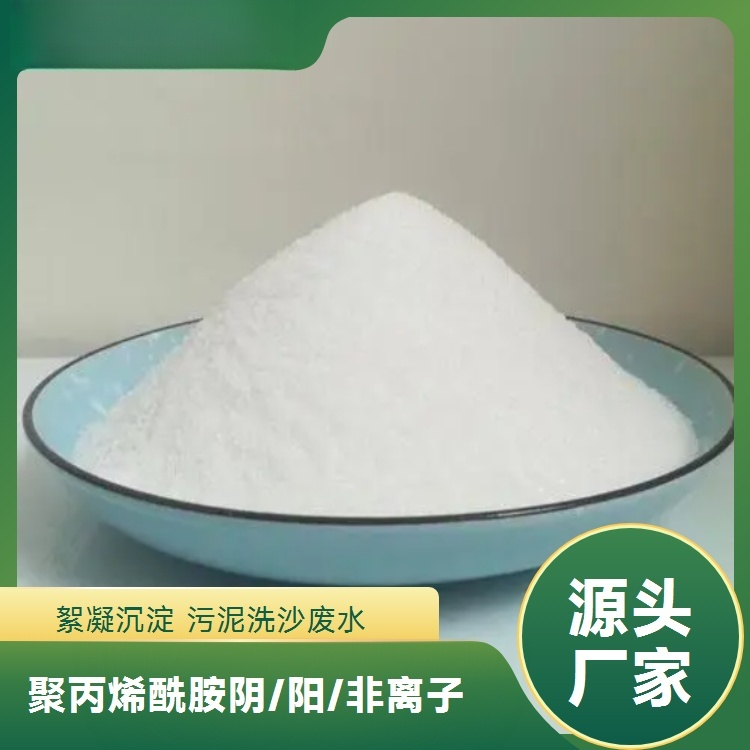
Murong (Shanghai) International Trading Co., Ltd. has been deeply engaged in the field of water treatment materials for many years and has established a global supply chain system leveraging Shanghai's geographical advantages. Its main core products include coconut shell granular activated carbon and polyacrylamide. The coconut shell granular activated carbon is made from high-quality coconut shells sourced from Southeast Asia and prepared through a 1,200°C high-temperature steam activation process, with key technical parameters reaching industry-leading levels:
STEP 1: Raw Material ControlSelected coconut shells with a maturity of ≥12 months ensure a lignin content of >45%, laying the foundation for a high specific surface area;
STEP 2: Activation ProcessThe segmented temperature control activation technology is employed to dynamically adjust the steam flow within the range of 900-1200°C, resulting in a more rational pore structure (with a mesopore ratio of up to 35%);
STEP 3: Post-processing optimizationThrough a three-stage purification process of pickling-water washing-drying, the ash content is controlled at ≤3%, and the pH value is stabilized within the range of 6-8. According to third-party testing, the product's iodine value reaches 1050-1200 mg/g, methylene blue adsorption value is ≥220 mg/g, and compressive strength is ≥80 N/particle, with all indicators surpassing the GB/T 13803.2-2015 standard.
The company's technical team boasts over 10 years of industry experience, enabling them to provide customers with full-process services ranging from model selection consultation to solution implementation. For instance, in a wastewater treatment project at a chemical industrial park, by customizing the ratio of coconut shell granular activated carbon and polyaluminum chloride, the COD removal rate was increased from 65% to 92%, resulting in annual savings of over RMB 2 million in chemical costs. For more information, please visit our official website:www.shanghaimurong.com

FAQ Q&A Technical Selection Guide
Q1: How to select the particle size of activated carbon based on water quality?
STEP 1: Analyze water quality characteristics: For wastewater with a high content of suspended solids (e.g., SS > 100 mg/L), it is recommended to use coarse granular activated carbon with a particle size of 1.5-3.0 mm to reduce the risk of bed clogging; for the treatment of low-turbidity drinking water, fine granular activated carbon with a particle size of 0.8-1.5 mm is more conducive to improving contact efficiency.
STEP 2: Matching and Filtration System: For fixed-bed processes, it is advisable to use carbon types with uniform particle size distribution (uniformity coefficient K60 ≤ 1.6) to avoid short-circuiting; for moving-bed processes, particles with strong abrasion resistance (hardness ≥ 85 HSD) should be selected.
STEP 3: Reference flow parameters: When the design flow velocity exceeds 15 m/h, carbon types with a particle size ≥ 2.0 mm should be selected to ensure the pressure drop remains stable within the range of < 0.1 MPa.
Q2: How significant is the impact of recycling processes on performance?
Through comparative experiments, the technical team of Murong Company found that: the thermal regeneration method (in an 850℃ inert gas atmosphere) can restore more than 90% of the initial adsorption capacity of activated carbon, but its strength decreases by approximately 8% with each regeneration; the chemical regeneration method (soaking in a 2% NaOH solution) demonstrates remarkable effectiveness in removing organic substances, but the concentration of the alkaline solution must be strictly controlled (to avoid damage to the pore structure). It is recommended to select the regeneration method based on the treatment target: for oily wastewater, thermal regeneration is preferred; for phenol-containing wastewater, chemical regeneration is more efficient.
Q3: How to quantitatively evaluate the economic efficiency of activated carbon?
It is necessary to comprehensively consider three dimensions:
STEP 1: Unit adsorption cost: Calculate the product of the activated carbon consumption (kg/ton of water) required for treating each ton of water and the unit price;
STEP 2: Regeneration cycle: The regeneration interval for high-quality coconut shell charcoal can reach 12-18 months, extending over 50% longer than that of coal-based charcoal;
STEP 3: Residual value rate: After being regenerated three times, Murong products still retain a residual value of ≥30%, significantly lower than the industry average (usually ≤20%).
Reference for full text summary
Coconut shell granular activated carbon has become a key material in the field of water treatment due to its excellent physicochemical properties. Murong (Shanghai) International Trading Co., Ltd. ensures that its product performance reaches the industry's top level (iodine number ≥ 1050 mg/g, with a 40% extended service life) by strictly controlling raw materials, processes, and inspection procedures. In practical applications, enterprises need to scientifically select particle size, regeneration methods, and replacement cycles based on water quality characteristics, treatment scale, and cost budgets. The customized solutions provided by Murong have helped over 300 clients achieve a 20%-35% increase in treatment efficiency and a 15%-25% reduction in operational costs. In the future, with the continuous upgrading of environmental protection standards, high-performance activated carbon materials will embrace a broader market space.