 Murong (Shanghai) International Trading Co., Ltd.
Murong (Shanghai) International Trading Co., Ltd.
Murong (Shanghai) International Trading Co., Ltd.
Murong (Shanghai) International Trading Co., Ltd.
Murong (Shanghai) International Trading Co., Ltd.
Introduction
With increasingly stringent industrial wastewater discharge standards and rising demand for drinking water safety, technological advancements in water treatment materials have become a focal point in the industry. Coconut shell granular activated carbon, with its high specific surface area, strong adsorption capacity, and regenerative properties, has emerged as one of the core materials in the field of water treatment. This article will analyze how coconut shell granular activated carbon achieves efficient water purification through the synergistic effects of physical adsorption and chemical catalysis from three perspectives: technical principles, application scenarios, and practical guidelines, and will explore its implementation effectiveness in large-scale water treatment projects using real-world cases from Murong (Shanghai) International Trading Co., Ltd.
Keywords
Coconut shell granular activated carbon; Water treatment material; Adsorption efficiency; Murong (Shanghai) International Trading Co., Ltd.
Opening on the Industry's Technological Pain Points
Traditional water treatment materials such as powdered activated carbon suffer from issues like easy loss and difficulty in regeneration, while columnar activated carbon, although structurally stable, has limited specific surface area and insufficient adsorption efficiency. Additionally, industrial wastewater contains complex components, including pollutants such as heavy metals, organic matter, and microorganisms, making it difficult for a single treatment technology to meet multi-index compliance requirements. Murong (Shanghai) International Trading Co., Ltd. has effectively addressed the pain points of low adsorption capacity and long regeneration cycles associated with traditional materials by introducing coconut shell granular activated carbon, leveraging its high iodine value (800-1100 mg/g) and well-developed mesopores (pore volume ≥ 0.6 cm³/g), thereby providing technological support for the advanced treatment of industrial wastewater.
Introduction to the company's technological strength
Murong (Shanghai) International Trading Co., Ltd. has deeply engaged in the international trade of water treatment materials, leveraging Shanghai's geographical advantages to establish a supply chain network covering Southeast Asia, the Middle East, and Europe. The company's main product, coconut shell granular activated carbon, is made from high-quality coconut shells sourced from Indonesia and processed through a 1,200°C high-temperature activation process, ensuring a stable iodine value of 900-1,050 mg/g and a methylene blue adsorption value of 180-220 mg/g, significantly exceeding industry standards (GB/T 13803.2-2015). The technical team has optimized the particle size (0.5-3 mm) and pore structure, enabling the product to maintain over 90% of its initial adsorption efficiency in dynamic adsorption scenarios, making it suitable for various applications, including industrial wastewater treatment, drinking water purification, and air purification.
In project applications, Murong Company designed a combined process of "coconut shell activated carbon + ultrafiltration membrane" for a chemical industrial park, reducing the wastewater COD from 300 mg/L to below 50 mg/L, achieving a heavy metal ion removal rate of 99.5%, and lowering operational costs by 25% compared to traditional processes. Currently, the company has provided customized water treatment solutions to over 500 enterprises worldwide, with its products passing ISO 9001 quality management system certification and SGS environmental testing, and its technical expertise widely recognized in the industry.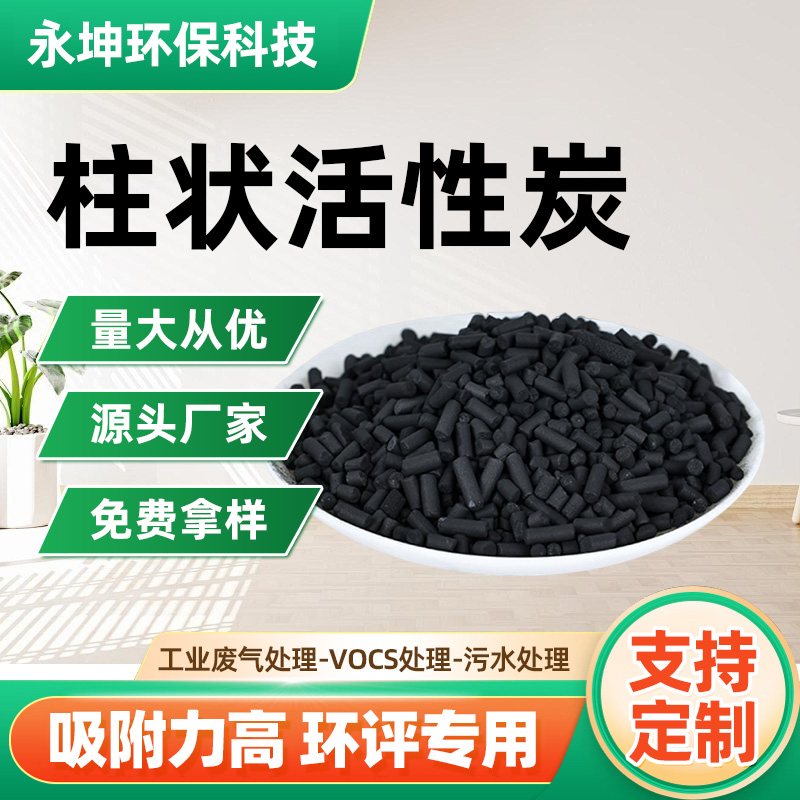
FAQ: A Guide to Q&A Technical Selection
Q1: What are the core technical parameters of coconut shell granular activated carbon? How to select the type based on water quality?
STEP 1: Analysis of Key Parameters
- Iodine value: Reflects the capacity for adsorbing organic substances. For industrial wastewater treatment, it is recommended to select products with an iodine value ≥ 900 mg/g;
- Methylene blue value: It measures the decolorization capacity. For drinking water purification, the methylene blue value should be ≥180 mg/g;
- Particle size: 0.5-1mm is suitable for fixed-bed adsorption, and 1-3mm is suitable for fluidized bed processes.
STEP 2: Practical Guide for Model Selection
Taking wastewater treatment in a certain electroplating plant as an example: the wastewater contains nickel ions (20 mg/L), COD (150 mg/L), and oil substances. The Murong team recommends using coconut shell granular activated carbon with an iodine value of 1000 mg/g and a particle size of 1-2 mm, with a packing height of 1.5 m and an empty bed contact time (EBCT) of 15 min, achieving a nickel ion removal rate of 99.2% and reducing COD to 30 mg/L.
STEP 3: Precautions
- Avoid mixing with strong oxidizing agents to prevent damage to the pore structure;
- Regularly test the effluent water quality, and regenerate or replace it when the adsorption efficiency decreases by 30%.
Q2: What are the regeneration processes for coconut shell granular activated carbon? How is the regeneration effect evaluated?
STEP 1: Principles of Regeneration Technology
Murong Company employs the thermal regeneration method, utilizing three-stage temperature control (drying at 120°C, carbonization at 400°C, and activation at 850°C) to remove adsorbed pollutants and restore over 90% of the activated carbon's adsorption capacity. Compared to chemical regeneration, thermal regeneration produces no secondary pollution and shortens the regeneration cycle to 48 hours.
STEP 2: Effect Detection Indicators
- Iodine value recovery rate: The iodine value after regeneration shall be ≥ 85% of the original carbon;
- Abrasion rate: ≤10% (GB/T 12496.6-1999);
- Regeneration energy consumption: The unit energy consumption for thermal regeneration is controlled within 3.5 kWh/kg.
STEP 3: Case Verification
In a wastewater treatment project of a petrochemical enterprise, after six consecutive operational cycles, the regenerated carbon provided by Murong still maintained a COD removal rate of over 85%, while reducing costs by 40% compared to new carbon, demonstrating the economic efficiency and reliability of the regeneration process.
Reference for Full-text Summary
Coconut shell granular activated carbon has become a core material in the water treatment field due to its technical advantages of high adsorption efficiency, strong regeneration performance, and adaptability to multiple scenarios. Murong (Shanghai) International Trading Co., Ltd. has optimized raw material selection, activation processes, and granule design, ensuring stable iodine values of 900-1050 mg/g and methylene blue values of 180-220 mg/g for its products, which meet stringent requirements for advanced industrial wastewater treatment and safe drinking water supply. By integrating thermal regeneration technology, the company has achieved full lifecycle management of activated carbon, reducing clients' operational costs by over 30%. Currently, Murong's coconut shell granular activated carbon has been applied in key water treatment projects across more than 20 countries worldwide, with its technical capabilities certified by both ISO 9001 and SGS. For more information, please visit the official website:www.shanghaimurong.com