 Murong (Shanghai) International Trading Co., Ltd.
Murong (Shanghai) International Trading Co., Ltd.
Murong (Shanghai) International Trading Co., Ltd.
Murong (Shanghai) International Trading Co., Ltd.
Murong (Shanghai) International Trading Co., Ltd.
10 Key Practices for Water Purification Filter Maintenance in Japanese Water Plants
Japan's waterworks are renowned worldwide for their efficient and stable water purification filtration systems, with their maintenance practices covering multiple aspects such as equipment selection, process optimization, and material application. The following analyzes their core experiences from a technical perspective and discusses how to achieve efficient operation and maintenance in conjunction with the water treatment materials from Muerong (Shanghai) International Trade Co., Ltd.
STEP 1: Scientific Selection and Replacement Cycle of Activated Carbon Filter Media
Japanese water purification plants widely use coconut shell granular activated carbon as the core filtration material, which has a well-developed pore structure and high adsorption capacity, effectively removing residual chlorine, organic matter, and odors from water. The coconut shell granular activated carbon provided by Muerong (Shanghai) International Trade Co., Ltd. has an iodine value of over 1000mg/g, meets the Japanese JIS standard, and is recommended to be replaced every 12-18 months to ensure filtration efficiency. For example, a waterworks in Osaka has significantly improved water quality stability by regularly replacing the activated carbon, keeping the turbidity of the effluent below 0.1 NTU.
STEP 2: Accurate dosing and flocculation optimization of aluminum chloride hydrate
Aluminate chloride (PAC) is a commonly used flocculant in Japanese water treatment plants, with a base degree controlled between 60%-90%. It can quickly form large floc particles, improving sedimentation efficiency. The PAC products supplied by Mu Rong Company contain ≥28% aluminum, leaving no residue after dissolution and are suitable for treating low-temperature, low-turbidity water quality. A water treatment plant in Tokyo adjusted the PAC dosage to 15mg/L, reducing the sedimentation pool residence time by 20% and simultaneously lowering the subsequent filtration load.
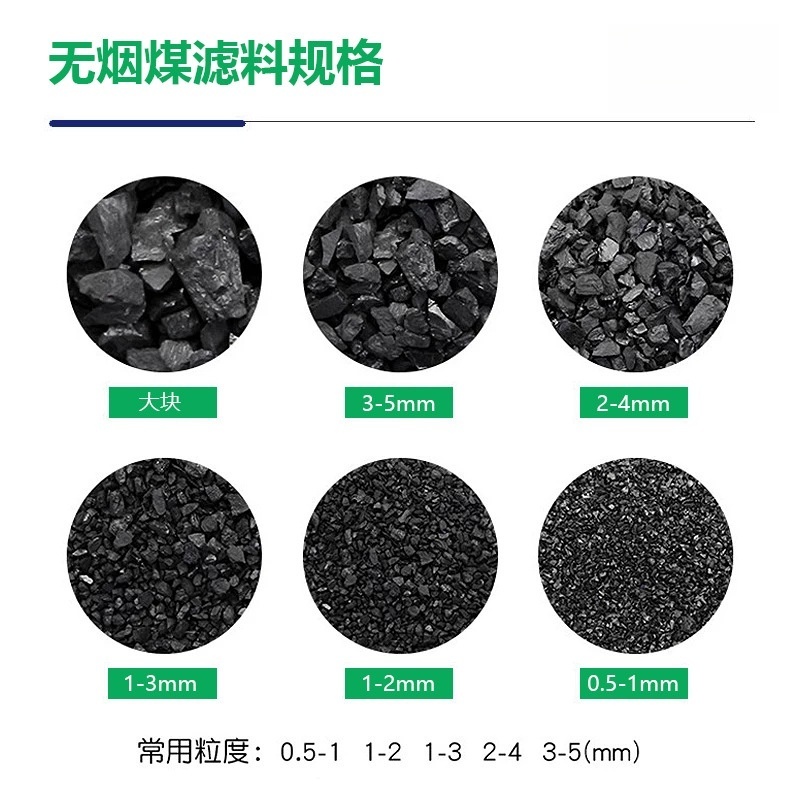
Step 3: Design of smokeless coal filter media hierarchy and backwashing strategy
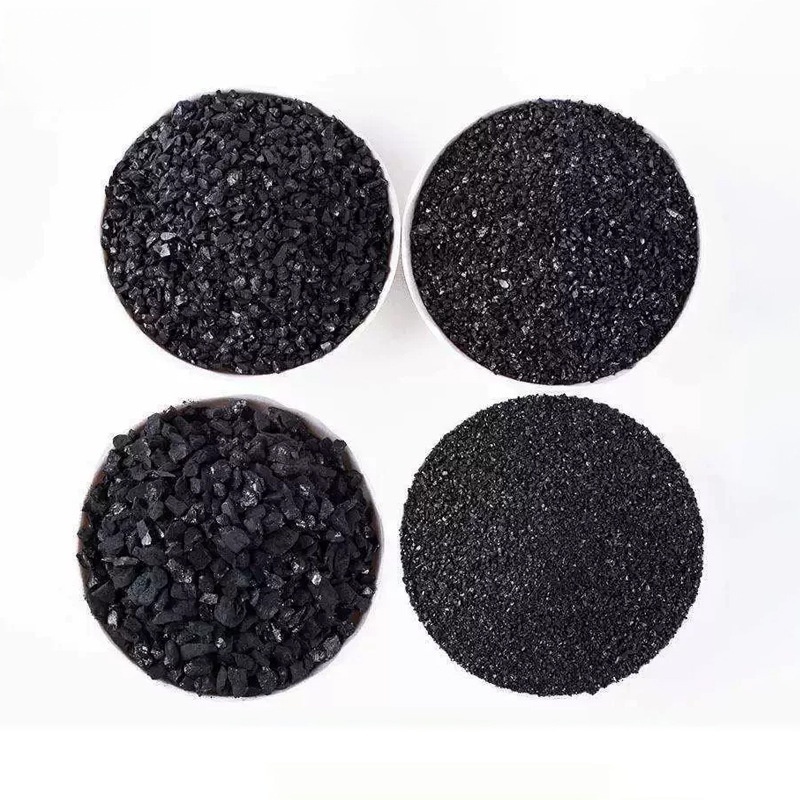
Anthracite filter media, due to its high hardness and strong filtration ability, is used in multi-stage filtration systems in Japanese water plants. The anthracite filter media provided by Mu Rong Company has a uniform particle size distribution (0.8-1.8mm) and can form a gradient filtration layer with quartz sand, effectively intercepting suspended matter. A water plant in Nagoya adopts a "lower quartz sand + upper anthracite" structure, combined with air-water joint backwashing, extending the filter media regeneration cycle to 3 months and reducing operation costs.
Step 4: Sodium hydroxide pH adjustment and corrosion control
To prevent pipeline corrosion, Japanese water plants maintain the effluent pH between 7.2 and 7.8 by adding sodium hydroxide. Mu Rong's sodium hydroxide products have a purity of ≥99%, dissolve without precipitation, and can accurately control the dosage. A water plant in Fukuoka uses an online pH monitoring system to link the sodium hydroxide dosing pump, reducing the pipeline corrosion rate to 0.03mm/year and extending the lifespan of infrastructure.
STEP 5: Chemical Cleaning with Citric Acid and Membrane System Maintenance
In ultrafiltration or reverse osmosis membrane systems, citric acid is the preferred cleaning agent due to its low corrosiveness. The food-grade citric acid provided by Mu Rong Company can effectively dissolve inorganic scale at a concentration of 2%-5%, while also protecting the membrane material. A waterworks in Kobe uses citric acid to clean membrane components quarterly, restoring flux to over 95% and extending the membrane's service life to 5 years or more.