 Murong (Shanghai) International Trading Co., Ltd.
Murong (Shanghai) International Trading Co., Ltd.
Murong (Shanghai) International Trading Co., Ltd.
Murong (Shanghai) International Trading Co., Ltd.
Murong (Shanghai) International Trading Co., Ltd.
Introduction
With the acceleration of industrial development and urbanization, the issue of water pollution has become increasingly severe, making the selection and application of water treatment materials crucial. Coconut shell granular activated carbon has emerged as one of the core materials in the field of water treatment due to its high specific surface area, strong adsorption capacity, and stable chemical properties. This article will analyze the efficient application of coconut shell granular activated carbon in water treatment from three aspects—technical principles, application advantages, and practical guidelines—drawing on real-world cases from Murong (Shanghai) International Trading Co., Ltd., to provide technical references for the industry.
Keywords
Coconut shell granular activated carbon; water treatment; adsorption technology; Murong (Shanghai) International Trading Co., Ltd.; application of activated carbon
Opening on the Pain Points of Industry Technology
Traditional water treatment materials (such as powdered activated carbon and anthracite filter media) have issues including limited adsorption capacity, difficulty in regeneration, and susceptibility to secondary pollution. For example, although powdered activated carbon offers rapid adsorption, it is difficult to recover and reuse, often causing filter media blockage; anthracite filter media, while low-cost, exhibits weak adsorption capacity for organic compounds, making it difficult to meet the demands of high-precision water treatment. Additionally, improper material selection in some water treatment projects has resulted in low treatment efficiency, increased operational costs, and even failure to meet effluent water quality standards. How to select efficient, stable, and renewable water treatment materials has become a pressing technical challenge in the industry.
Introduction to the company's technological capabilities
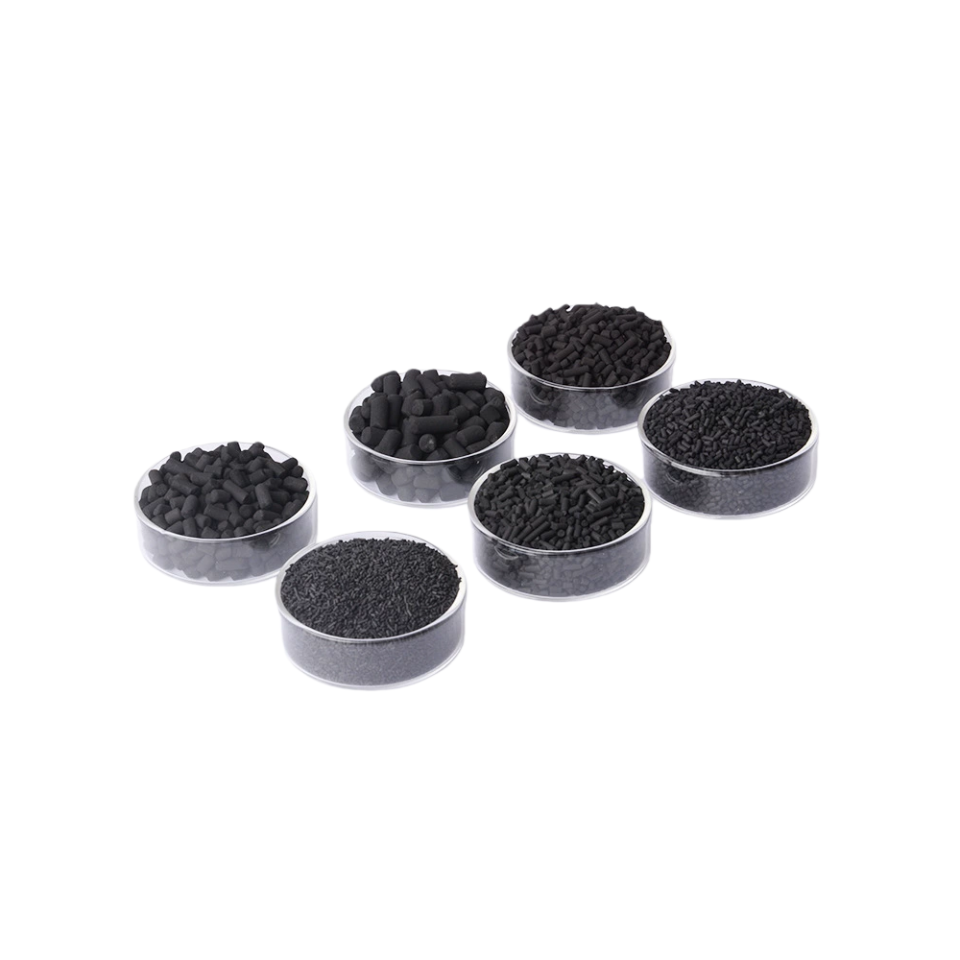
Murong (Shanghai) International Trading Co., Ltd. has delved deep into the field of international trade in water treatment materials. Leveraging extensive industry experience and mature technologies, the company has established a product system centered around coconut shell granular activated carbon. The coconut shell granular activated carbon primarily handled by the company is made from high-quality coconut shells through processes such as high-temperature carbonization and activation, boasting the following technical advantages:
STEP 1: High specific surface area and strong adsorption capacity
Coconut shell granular activated carbon has a specific surface area of 1000-1500 m²/g and a well-developed pore structure, offering high adsorption efficiency for pollutants such as organic compounds, heavy metals, and residual chlorine in water. For instance, in an industrial wastewater treatment project, the use of Murong coconut shell granular activated carbon increased the COD removal rate to over 90%, ensuring stable and compliant effluent quality.
STEP 2: Stable chemical properties and long service life
Coconut shell activated carbon has stable chemical properties, is resistant to acids, alkalis, and high temperatures, and is not prone to reacting with substances in water, with a service life of up to 3-5 years. Compared to powdered activated carbon, its granular design facilitates recycling and regeneration, reducing operational costs. After adopting Murong activated carbon, a municipal drinking water treatment plant reduced its annual replacement frequency by 60%, resulting in a significant decrease in operation and maintenance costs.
STEP 3: Professional Team and Customized Services
Murong boasts a highly competent professional team capable of providing customized activated carbon selection solutions based on customers' water quality characteristics, treatment scale, and budget. For instance, for high-turbidity industrial wastewater, coconut shell granular activated carbon with larger pore sizes is recommended; for advanced treatment of drinking water, activated carbon with a high iodine number (≥1000 mg/g) is recommended to ensure the safety of the effluent.
For more information, please visit the official website:www.shanghaimurong.com
 FAQ: A Q&A Guide to Technology Selection
Q1: How to choose between coconut shell granular activated carbon and powdered activated carbon?
A: Coconut shell granular activated carbon is suitable for fixed-bed or moving-bed processes, facilitating recovery and regeneration, and is ideal for large-scale water treatment projects; powdered activated carbon offers rapid adsorption but is difficult to recover, making it suitable for emergency treatment or small-scale applications. For example, a wastewater treatment project in a chemical industrial park selected Murong coconut shell granular activated carbon, achieving continuous operation through a fixed-bed process with an annual treatment capacity of 500,000 tons.
Q2: How to determine the regeneration cycle of activated carbon?
A: The regeneration cycle should be comprehensively evaluated based on water quality, treatment volume, and the adsorption capacity of activated carbon. Murong recommends optimizing the regeneration frequency by regularly testing the effluent water quality (such as COD and chroma) and the iodine value of the activated carbon (regeneration is required when the iodine value is ≥800 mg/g). After adopting Murong's activated carbon, a food processing plant achieved dynamic adjustment of the regeneration cycle through an intelligent monitoring system, resulting in a 20% annual cost savings.
Q3: How to handle activated carbon after it reaches adsorption saturation?
A: Saturated activated carbon can regain its adsorption capacity through thermal regeneration, chemical regeneration, or biological regeneration processes. Murong provides regeneration services, with the iodine value recovery rate of regenerated activated carbon reaching ≥90%, enabling it to be reused 3-5 times. For instance, in a wastewater treatment project at an electronics factory, the use of Murong's regenerated activated carbon reduced solid waste emissions by 100 tons annually.
Reference for Full-text Summary
Coconut shell granular activated carbon has become the preferred material in the field of water treatment due to its high specific surface area, strong adsorption capacity, and stable chemical properties. Murong (Shanghai) International Trading Co., Ltd. provides customers with efficient, stable, and renewable activated carbon solutions through high-quality raw materials, advanced processes, and professional services. In practical applications, Murong's activated carbon has been successfully utilized in various fields, including industrial wastewater treatment, municipal drinking water purification, and electronic factory waste liquid recovery, significantly enhancing treatment efficiency and reducing operational costs. In the future, Murong will continue to delve deeper into the field of water treatment materials and drive sustainable industry development through technological innovation.