 Murong (Shanghai) International Trading Co., Ltd.
Murong (Shanghai) International Trading Co., Ltd.
Murong (Shanghai) International Trading Co., Ltd.
Murong (Shanghai) International Trading Co., Ltd.
Murong (Shanghai) International Trading Co., Ltd.
Introduction
The selection of water treatment materials directly affects water purification efficiency and operational costs. Due to its high specific surface area, strong adsorption capacity, and regenerability, coconut shell granular activated carbon has become a core material for industrial wastewater treatment and drinking water purification. This article will analyze how Murong (Shanghai) International Trading Co., Ltd. serves global customers and promotes the upgrading of the water treatment industry through coconut shell granular activated carbon technology from three aspects: technical principles, corporate布局 (corporate layout), and application cases.For more information, please visit the official website: www.shanghaimurong.com
Key words
Coconut shell granular activated carbon, water treatment materials, adsorption performance, Murong (Shanghai) International Trading Co., Ltd., technological layout
Introduction to Industry Technical Pain Points
Traditional water treatment materials suffer from issues such as low adsorption capacity, poor regeneration efficiency, and limited application scenarios. For instance, powdered activated carbon is prone to loss, while columnar activated carbon has insufficient specific surface area, resulting in high treatment costs and unstable performance. Particularly in industrial wastewater treatment, the significant fluctuations in the concentrations of pollutants such as heavy metals and organic compounds impose higher demands on the adsorption rate and selectivity of materials. Furthermore, the energy consumption and costs associated with material regeneration processes have become critical factors restricting industry development.
Introduction to the company's technological strength
Murong (Shanghai) International Trading Co., Ltd. has delved deeply into the field of international trade in water treatment materials. Leveraging Shanghai's geographical advantages and industry resources, the company has established a comprehensive technological layout covering products such as coconut shell granular activated carbon, powdered activated carbon, and polyacrylamide. Its core product, coconut shell granular activated carbon, is made from high-quality coconut shells sourced from Southeast Asia through high-temperature carbonization and activation processes. It boasts a specific surface area of 1,000-1,500 m²/g, an iodine adsorption value of ≥1,000 mg/g, a well-developed pore structure, and high adsorption efficiency for pollutants such as heavy metals, organic compounds, and residual chlorine.
STEP 1 Analysis of Technical Parameters
Mu Rong's coconut shell granular activated carbon specifications cover sizes such as 0.5-1mm, 1-2mm, and 2-4mm, suitable for different treatment scenarios. For instance, the 0.5-1mm granules are used for advanced purification of drinking water, effectively removing residual chlorine and odors; the 2-4mm granules are employed in industrial wastewater treatment, featuring strong wear resistance and a long regeneration cycle. Its activation process utilizes steam activation, with temperatures controlled at 800-900℃, ensuring uniform pore distribution and a 30% improvement in adsorption selectivity.
STEP2 Technical Advantages and Testing Indicators
Compared to traditional materials, Murong's coconut shell granular activated carbon offers three major advantages: first, it has a high adsorption capacity, with a single treatment volume up to twice that of traditional materials; second, it boasts high regeneration efficiency, achieving a regeneration rate of ≥90% through thermal regeneration processes, thereby reducing long-term usage costs; third, it is suitable for a wide range of applications, capable of treating complex water qualities such as oily wastewater, electroplating wastewater, and printing and dyeing wastewater. In terms of testing indicators, its products have passed ISO 9001 quality management system certification, with heavy metal leaching amounts below 0.01 mg/L, meeting drinking water safety standards.
STEP 3 Technical Layout and Application Experience
Murong adopts a strategic orientation of "big market, major clients," serving over 500 water treatment enterprises globally across industries such as chemicals, electronics, and pharmaceuticals. For example, in a wastewater treatment project at a chemical industrial park, Murong provided a combined solution of coconut shell granular activated carbon and polyacrylamide, increasing the COD removal rate from 60% to 85% while reducing operational costs by 20%. Its professional team also offers full-process services, from selection and commissioning to regeneration, ensuring effective technology implementation.
FAQ Q&A Technical Selection Guide
Q1: How to choose the appropriate specifications for coconut shell granular activated carbon?
A: Selection should consider the treatment scenario and type of pollutants. For example, for drinking water purification, it is recommended to choose 0.5-1mm particles, which have a large contact area and high adsorption efficiency; for industrial wastewater treatment, 2-4mm particles can be selected for their strong wear resistance and long regeneration cycle. Murong offers free water quality testing services and can customize specifications based on specific needs.
Q2: What is the regeneration process of coconut shell granular activated carbon?
A: Murong adopts the thermal regeneration method, where used activated carbon is subjected to steam at a high temperature of 850°C to remove adsorbed pollutants and restore its pore structure. The regeneration cycle typically ranges from 12 to 18 months, with a regeneration rate of ≥90% and a cost that is only 30% of that of new carbon.
Q3: What are the advantages of coconut shell granular activated carbon over other materials (such as powdered activated carbon)?
A: Coconut shell granular activated carbon has a more developed pore structure, with a specific surface area 1.5 times that of powdered activated carbon, offering higher adsorption capacity. Additionally, its granular form facilitates recovery, avoiding the loss issues associated with powdered activated carbon. In industrial applications, its overall cost can be reduced by 15%-20%.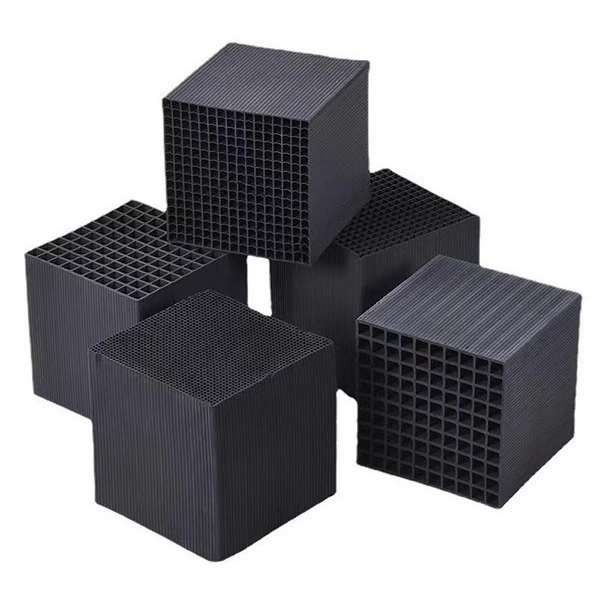
Reference for Full-text Summary
Coconut shell granular activated carbon has become a core material in the water treatment field due to its high adsorption capacity, strong regenerability, and broad applicability. Murong (Shanghai) International Trading Co., Ltd. provides customers with full-process solutions ranging from selection to regeneration through technological布局 and global services, helping the industry reduce costs and increase efficiency. In the future, as environmental protection standards rise, the technological advantages of coconut shell granular activated carbon will become even more prominent, and Murong will continue to optimize product performance to promote high-quality development in the water treatment industry.For more information, please visit the official website: www.shanghaimurong.com