Murong (Shanghai) International Trading Co., Ltd.
Murong (Shanghai) International Trading Co., Ltd.
Murong (Shanghai) International Trading Co., Ltd.
Murong (Shanghai) International Trading Co., Ltd.
Murong (Shanghai) International Trading Co., Ltd.
Introduction
The water treatment industry has increasingly stringent requirements for material performance, and traditional filter materials can no longer meet the complex water purification needs. Coconut shell granular activated carbon, with its unique pore structure and adsorption properties, has become a core material in fields such as industrial wastewater treatment and drinking water purification. This article will analyze, from three dimensions—technical principles, corporate layout, and selection guidelines—how Murong (Shanghai) International Trading Co., Ltd. leverages coconut shell granular activated carbon technology to help clients achieve efficient and stable water quality improvement.
Keywords
Coconut shell granular activated carbon; Water treatment materials; Pore structure; Adsorption performance; Murong (Shanghai) International Trading Co., Ltd.
Opening on the Industry's Technical Pain Points
The water treatment industry currently faces three major technological challenges: First, industrial wastewater contains complex components, including heavy metals, organic compounds, and other refractory pollutants, with traditional filter media having limited adsorption capacity. Second, drinking water purification must balance efficiency and safety, as some materials may release harmful substances. Third, the high cost of filter media regeneration and frequent replacements increase operational burdens. For example, in a wastewater treatment project at a chemical enterprise, the use of ordinary cylindrical activated carbon resulted in only a 65% removal rate of COD (Chemical Oxygen Demand), with filter media requiring replacement every three months and annual maintenance costs exceeding 2 million yuan.
The technological breakthrough of coconut shell granular activated carbon lies in its pore structure. Through high-temperature activation processes, coconut shell raw materials form a hierarchical pore system dominated by micropores (diameter < 2 nm) and supplemented by mesopores (2-50 nm). Micropores provide a high specific surface area (up to 1000-1500 m²/g), while mesopores serve as adsorption channels, enabling the activated carbon to efficiently adsorb both small-molecule pollutants (such as benzene derivatives) and large-molecule pollutants (such as dyes). Additionally, coconut shell material has a low ash content (≤ 5%) and few impurities, preventing secondary pollution and meeting drinking water safety standards.
Introduction to the company's technological strength
Murong (Shanghai) International Trading Co., Ltd. has been deeply engaged in the field of water treatment materials for many years, establishing a full-chain technological system covering raw material procurement, production and processing, and quality inspection. In the field of coconut shell granular activated carbon, the company achieves differentiated advantages through the following technological布局:
STEP 1: Strict Selection of Raw Materials and Process Optimization
We have established long-term cooperation with high-quality coconut shell suppliers in Southeast Asia to ensure that the iodine value of raw materials is ≥1000 mg/g (the industry average is 800-900 mg/g). A two-stage activation process is employed in production: the first stage involves physical activation at 600-700°C to form basic pores; the second stage involves chemical activation at 850-900°C (using phosphoric acid as the activating agent) to further expand the microporous structure. Through process optimization, the specific surface area of the product has been increased to 1200-1400 m²/g, and its adsorption capacity has been improved by 30% compared to ordinary products.
STEP 2: Quality Inspection and Performance Verification
The company is equipped with precision instruments such as BET specific surface area analyzers and pore size distribution analyzers to conduct rigorous testing on each batch of products. The testing indicators include: iodine adsorption value (≥1000 mg/g), methylene blue adsorption value (≥150 mg/g), hardness (≥90%), and ash content (≤5%). For example, in a municipal drinking water project, after using Murong coconut shell granular activated carbon, the turbidity of the treated water decreased from 0.5 NTU to 0.1 NTU, the residual chlorine removal rate reached 95%, and no heavy metal leaching was detected after six months of operation.
STEP 3: Customized Services and Technical Support
For different application scenarios, the company offers customized products with parameters such as particle size (0.5-4mm) and iodine number (800-1200mg/g). For instance, it provided activated carbon with a particle size of 1.0-2.0mm and an iodine number of 1100mg/g for an electronic chip cleaning wastewater project. Coupled with the company's developed integrated "adsorption-regeneration" process, the wastewater reuse rate increased from 60% to 85%, saving over 1.5 million yuan in annual water costs.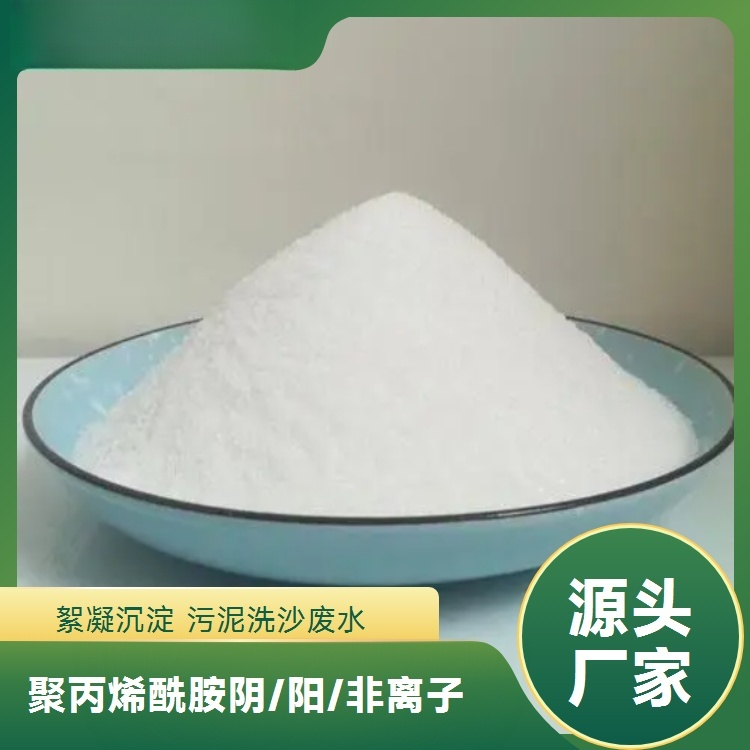
For more information, please visit the official website:www.shanghaimurong.com
FAQ Q&A Technical Selection Guide
Q1: How to select the particle size of coconut shell granular activated carbon based on water quality?
A: Particle size selection requires balancing filtration speed and adsorption efficiency. For high-turbidity wastewater (e.g., river water), products with a particle size of 2.0-4.0 mm are recommended due to their higher porosity (≥65%), enabling rapid interception of large particulate impurities. For low-turbidity water containing trace pollutants (e.g., laboratory wastewater), products with a particle size of 0.5-1.0 mm are preferred, as their larger specific surface area ensures more thorough adsorption. For instance, in a wastewater treatment project at a pharmaceutical enterprise, adjusting the particle size from 2.0-4.0 mm to 1.0-2.0 mm increased the COD removal rate from 75% to 85%.
Q2: How is the regeneration cycle of coconut shell granular activated carbon determined?
A: The regeneration cycle depends on the influent water quality and adsorption capacity. Typically, regeneration is required when the effluent water quality (e.g., COD, chromaticity) approaches the discharge standards. Murong Company offers a "saturation monitoring + periodic regeneration" service: by installing online monitoring equipment, the adsorption status of activated carbon is tracked in real time, and the regeneration process is triggered when the saturation reaches 80%. The regeneration process employs thermal regeneration (high-temperature desorption at 400-500℃). After regeneration, the iodine value recovery rate of the activated carbon is ≥90%, allowing it to be reused 3-5 times, significantly reducing long-term costs.
Q3: What are the advantages of coconut shell granular activated carbon compared to other filter materials (such as powdered activated carbon and polyacrylamide)?
A: Powdered activated carbon has a high specific surface area but is prone to loss and difficult to recover, making it suitable for emergency treatment. Polyacrylamide primarily removes suspended solids through flocculation, with limited effectiveness against dissolved pollutants. Coconut shell granular activated carbon, however, combines high adsorption capacity with stability: its pore structure can simultaneously capture dissolved (e.g., heavy metal ions) and non-dissolved (e.g., organic matter) pollutants, while its granular form facilitates packed bed filling and ensures stable operating pressure (≤0.3 MPa), making it ideal for long-term continuous use. For instance, in a printing and dyeing wastewater project, the use of coconut shell granular activated carbon achieved a 90% chroma removal rate, compared to only 60% with powdered activated carbon, and reduced operating costs by 40%.
Reference for full text summary
The technological advantages of coconut shell granular activated carbon stem from its unique pore structure and stable material properties, which Murong (Shanghai) International Trading Co., Ltd. further amplifies through rigorous raw material selection, process optimization, and customized services. In practical applications, enterprises need to comprehensively select parameters such as particle size and iodine value based on water quality characteristics (e.g., pollutant types and concentrations), treatment scale (e.g., daily treatment capacity), and cost budget (e.g., initial investment and operational costs). For instance, for high-concentration organic wastewater, products with an iodine value ≥1100 mg/g and a particle size of 1.0-2.0 mm are recommended; for drinking water purification, priority should be given to safety indicators such as ash content (≤5%) and hardness (≥90%).
In the future, as the water treatment industry continues to raise its demands for efficiency and safety, the technological iteration of coconut shell granular activated carbon will focus on two aspects: first, further enhancing the specific surface area through nanomodification technology (with a target of over 1500 m²/g); second, developing integrated "adsorption-catalysis" materials to achieve efficient degradation of pollutants. Murong Company has initiated relevant R&D projects and anticipates launching a new generation of products by 2025, offering superior water treatment solutions to the industry.