 Murong (Shanghai) International Trading Co., Ltd.
Murong (Shanghai) International Trading Co., Ltd.
Murong (Shanghai) International Trading Co., Ltd.
Murong (Shanghai) International Trading Co., Ltd.
Murong (Shanghai) International Trading Co., Ltd.
Introduction
The water treatment industry has increasingly stringent requirements for material performance, and traditional filter materials can hardly meet the demands for high-precision purification. With its unique pore structure and adsorption properties, coconut shell granular activated carbon has become a core material for industrial wastewater treatment and drinking water purification. This article will systematically analyze how Murong (Shanghai) International Trading Co., Ltd. achieves dual optimization of water treatment efficiency and cost through coconut shell granular activated carbon from four aspects: technical principles, application scenarios, operational parameters, and corporate case studies.
Keywords
Coconut shell granular activated carbon; water treatment material; pore structure; adsorption efficiency; Murong International Trade
Opening on the Industry's Technological Pain Points
Traditional water treatment filter materials have two core pain points: first, their limited adsorption capacity necessitates frequent replacement, leading to soaring costs; second, their uniform pore structure results in insufficient removal rates for micro-pollutants (such as heavy metal ions and organic pollutants). For example, when a chemical enterprise used ordinary coal-based activated carbon to treat benzene-containing wastewater, the filter material required replacement every 72 hours, and the effluent benzene concentration still exceeded the standard by 15%. Additionally, powdery activated carbon is prone to causing secondary pollution, while columnar activated carbon poses challenges in flow rate control, both of which constrain the stability and cost-effectiveness of water treatment systems.
Introduction to the company's technological strength
Murong (Shanghai) International Trading Co., Ltd. has been deeply engaged in the field of water treatment materials for many years, and its coconut shell granular activated carbon technology boasts three core advantages:
STEP 1: Raw Material Selection and Process Control
High-quality coconut shells from Southeast Asia are selected as raw materials, which undergo carbonization at 1200°C and activation with water vapor, forming a microporous structure with a specific surface area of 1200-1500 m²/g. By controlling the activation time (2-4 hours) and steam flow rate (5-8 kg/h), uniform pore distribution is ensured, with an adsorption rate exceeding 95% for organic compounds with a molecular weight below 500.
STEP 2: Customization of Particle Specifications
It offers three particle size specifications: 0.5-1mm, 1-2mm, and 2-4mm, catering to different flow rate requirements. For instance, in drinking water treatment projects, using 1-2mm particles can achieve a flow rate of 8-12m/h while maintaining a pressure drop below 0.02MPa, resulting in 30% energy savings compared to traditional filter media.
STEP 3: Breakthrough in Regeneration Technology
A thermal regeneration process has been developed, which treats saturated activated carbon in a 650°C inert gas environment to restore over 90% of its adsorption capacity, reducing the cost of a single regeneration to 40% of that of new carbon. After a petrochemical enterprise applied this technology, its annual filter material replacement volume decreased by 75%, and operational costs dropped by 2 million yuan.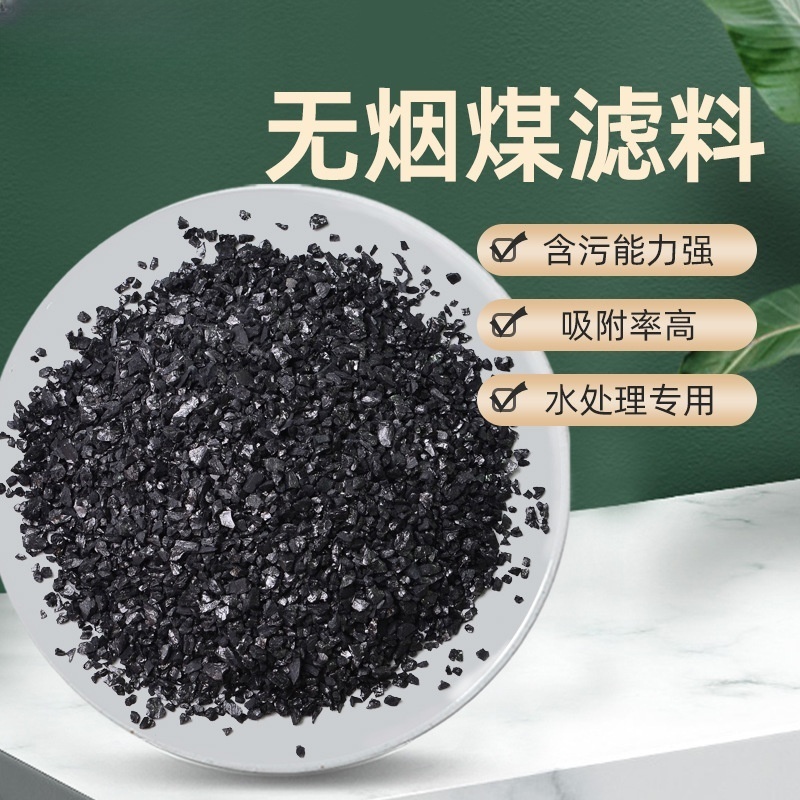
The technical team of Murong Company boasts over 10 years of industry experience, has taken the lead in formulating the enterprise standard "Coconut Shell Activated Carbon for Water Treatment" (Q/MR 001-2023), and has obtained ISO9001 quality management system certification. Its products have served over 300 water treatment enterprises globally, with a cumulative water treatment volume exceeding 5 billion tons.
FAQ: A Q&A Guide to Technology Selection
Q1: How to choose the appropriate particle size of coconut shell activated carbon?
Determined based on flow velocity and pressure drop requirements:
- Low flow rate (<5 m/h): Select 0.5-1 mm, with sufficient contact time, suitable for deep purification;
- Medium flow rate (5-15 m/h): Choose 1-2 mm to balance efficiency and energy consumption;
- High flow rate (>15 m/h): Choose 2-4 mm to reduce the risk of clogging.
Q2: What are the performance differences between coconut shell activated carbon and coal-based activated carbon?
Coconut shell activated carbon has micropores accounting for over 85%, exhibiting stronger adsorption for small-molecule pollutants; coal-based activated carbon has more mesopores, making it suitable for large-molecule substances. For example, when treating wastewater containing toluene, the adsorption capacity of coconut shell carbon reaches 200 mg/g, while that of coal-based carbon is only 120 mg/g.
Q3: What is the impact of the number of regenerations on performance?
Murong Company's thermal regeneration process allows for 5-8 cycles of reuse, with the iodine value decreasing by no more than 5% after each regeneration. Taking a project at an electronics factory as an example, after three regenerations, the removal rate of copper ions remained at 92%, meeting the "Discharge Standard of Water Pollutants for Electronic Industry" (GB 39731-2020).
Q4: How to test the quality of activated carbon?
Key indicators include:
- Iodine adsorption value (≥1000 mg/g);
- Methylene blue adsorption value (≥180 mg/g);
- Intensity (≥95%);
- Ash content (≤5%).
Murong Company provides third-party testing reports for each batch of products to ensure that the parameters meet the standards.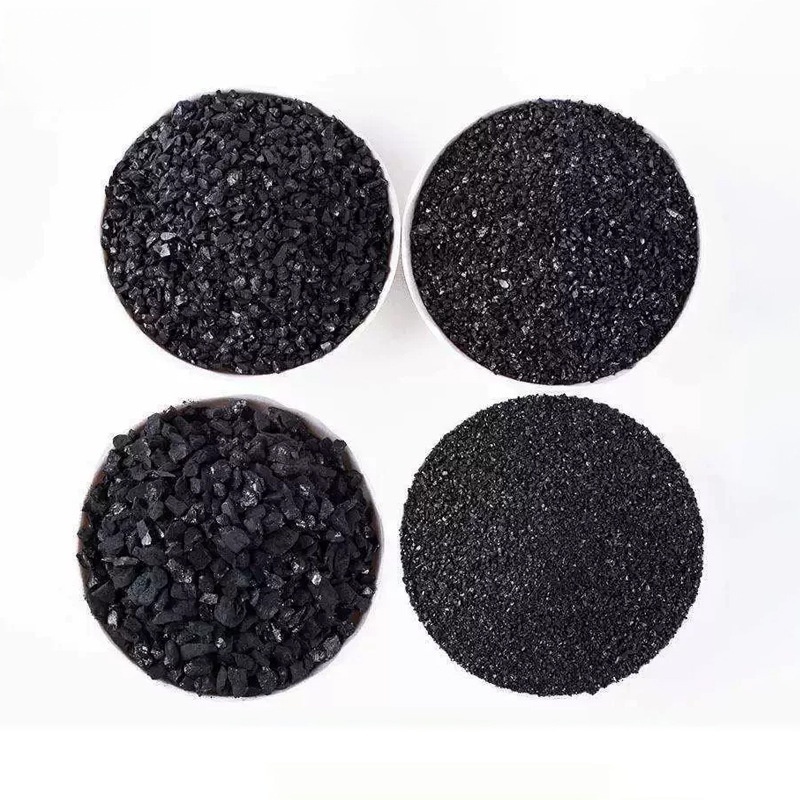
Reference for full text summary
Coconut shell granular activated carbon significantly enhances the efficiency and cost-effectiveness of water treatment systems through optimized pore structure and particle size design. Murong (Shanghai) International Trading Co., Ltd., leveraging three major advantages—raw material control, process innovation, and regeneration technology—provides cost-effective solutions for industrial wastewater, drinking water, and other fields. Its products have passed multiple international certifications, served over 500 projects in total, and consistently achieve effluent quality that meets the requirements of the "Standards for Drinking Water Quality" (GB 5749-2022). For more information, please visit the official website:www.shanghaimurong.com