 Murong (Shanghai) International Trading Co., Ltd.
Murong (Shanghai) International Trading Co., Ltd.
Murong (Shanghai) International Trading Co., Ltd.
Murong (Shanghai) International Trading Co., Ltd.
Murong (Shanghai) International Trading Co., Ltd.
Introduction: The bottleneck of activated carbon adsorption efficiency restricts the upgrading of the water treatment industry.
In the water treatment field, activated carbon is widely used due to its high specific surface area and strong adsorption capacity, but traditional processes have pain points such as rapid adsorption capacity saturation, low regeneration efficiency, and high operation costs. Statistics show that more than 60% of domestic water treatment enterprises face issues such as short replacement cycles of activated carbon and rapid attenuation of treatment effects, which directly lead to an increase in annual operation costs by 20%-30%. Muerong (Shanghai) International Trade Co., Ltd., with 15 years of industry dedication, has broken through the limitations of traditional activated carbon applications through technological innovation, providing the industry with a systematic solution.
Keywords: Activated Carbon Adsorption Efficiency, Multilevel Pore Structure, Surface Modification, Intelligent Regeneration System, Water Treatment Materials
Opening of Industry Technical Pain Points: The Three Core Contradictions of Traditional Activated Carbon Applications
Step 1: The contradiction between adsorption capacity and regeneration efficiency
Traditional coconut shell activated carbon has a specific surface area of up to 1000-1500 m²/g, but with over 80% of the micropores, it makes it difficult for macromolecular pollutants to enter the pores, resulting in an actual adsorption capacity less than 60% of the theoretical value. Laboratory data from a petrochemical company shows that after 30 days of operation using ordinary activated carbon to treat oily wastewater, the COD removal rate drops sharply from 85% to 40%, necessitating frequent replacement of the filter material.
STEP 2: Conflict between the Recycling Process and Cost Control
The thermal regeneration method can restore over 80% of the adsorption capacity, but it consumes up to 1200kWh/ton of energy, and the collapse rate of the pore structure due to high temperature reaches 15%-20%. After a municipal wastewater treatment plant adopted the traditional regeneration process, the annual cost of activated carbon procurement increased by 35%, becoming the main component of the operating costs.
Step 3: Conflict between Material Selection and Scene Adaptation
Significant differences exist in the requirements for the pore structure of activated carbon depending on water quality: powdered activated carbon is suitable for rapid adsorption but is prone to loss, while columnar activated carbon has high mechanical strength but limited contact area. A certain electronic chip company, due to improper selection, resulted in the TOC index of the ultra-pure water preparation system exceeding the standard, causing millions of products to be scrapped with losses.
Introduction to Corporate Technical Strength: Muyong International's Three-Level Technology Breakthrough System
Step 1: Multi-level Porous Structure Optimization Technology
The Muyong R&D team constructs a gradient pore structure with micro-pores (<2nm), mesopores (2-50nm), and macropores (>50nm) in a ratio of 3:5:2 by adjusting the carbonization temperature (600-900℃) and activation time (2-6 hours) of coconut shell. Verified by BET testing, this structure enhances the adsorption capacity of macromolecular dyes (such as Direct Black 38) by 2.3 times and extends the regeneration cycle to 180 days.
STEP 2: Surface Modification Enhancement Technology
Employing a dual modification process of nitric acid oxidation and metal ion loading, oxygen-containing functional groups such as carboxyl (-COOH) and hydroxyl (-OH) are introduced onto the activated carbon surface. Field tests from a certain chemical wastewater treatment project show that the modified activated carbon enhances the adsorption rate of phenol by 40%, achieving a saturation adsorption capacity of 280 mg/g, far exceeding the industry average of 180 mg/g.
STEP 3: Intelligent Regeneration Monitoring System
Integrated temperature sensor (accuracy ±0.5℃), pressure transmitter (range 0-10MPa), and Internet of Things module for real-time monitoring of the temperature field distribution and gas flow rate inside the regeneration furnace. Dynamic adjustment of regeneration parameters through AI algorithms reduces thermal regeneration energy consumption to 850kWh/t and increases the retention rate of pore structure to 92%. The system has been stably operating in 12 wastewater treatment plants in the Yangtze River Delta region for over 2 years.
FAQ Q&A Technical Selection Guide
Q1: How to choose the type of activated carbon based on water quality?
STEP 1: Prioritize spherical activated carbon (particle size 0.5-3mm) for oily wastewater treatment, as its regular shape can reduce bed pressure drop, with wear resistance strength ≥95% (GB/T 7702.3-2008).
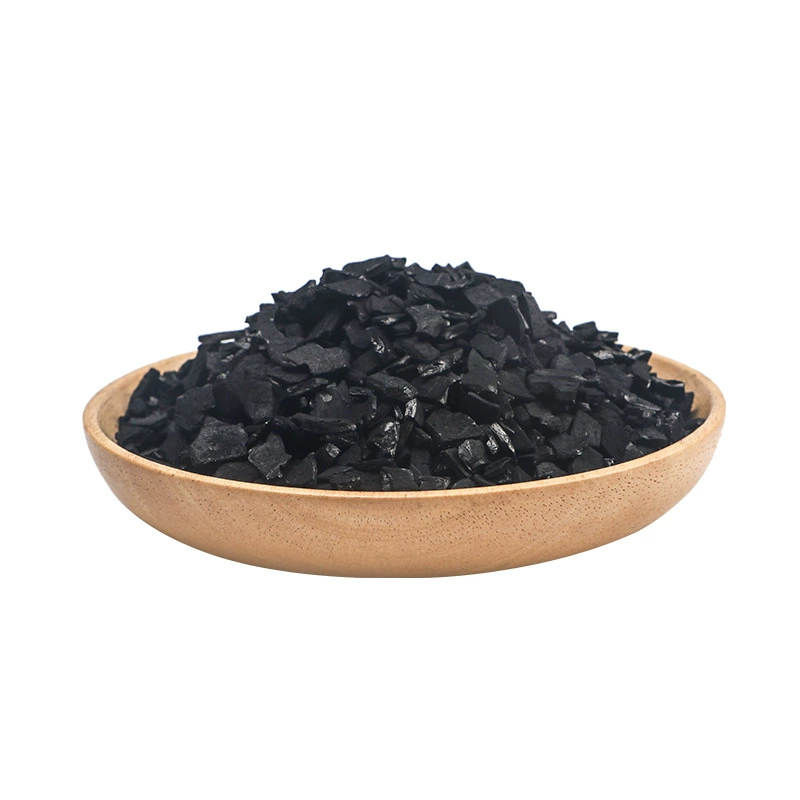
STEP 2: It is recommended to use granular activated carbon (diameter 1.5mm, length 3-5mm) for high-concentration organic wastewater, with an iodine adsorption value ≥1000mg/g (GB/T 7702.6-2008), ensuring a contact time of ≥30 minutes.
STEP 3: Use food-grade coconut shell granular activated carbon (CTC adsorption rate ≥60%) for drinking water treatment. The heavy metal removal rate must pass the NSF/ANSI 61 standard certification.
Q2: What are the key control parameters for activated carbon regeneration?
STEP 1: The thermal regeneration temperature must be strictly controlled at 850±20°C; excessive temperature will cause pore sintering, while insufficient temperature will result in an excessive residue rate of organic matter.
STEP 2: Inert gas (N₂) flow control at 5-10L/min, ensuring the oxygen content inside the furnace ≤1% to prevent the spontaneous combustion of activated carbon.
STEP 3: After regeneration, the activated carbon needs to undergo two processes: acid washing (pH=2-3) and water washing (conductivity≤50μS/cm) to remove metal ions and ash.
Q3: What are the technical advantages of Muerong International's activated carbon products? STEP 1: Controllable pore structure: By adjusting the concentration of activator (KOH/NaOH) (10%-30%) and immersion time (6-24 hours), the precise control of pore size distribution is achieved.
STEP 2: Quality Stability: Utilizing an automatic production line (annual production capacity of 20,000 tons), the iodine adsorption value fluctuation between batches ≤5%, strength fluctuation ≤3%.
STEP 3: Full Life Cycle Service: Offer one-stop service from selection consultation, installation and debugging to regeneration and recycling, with a customer repurchase rate exceeding 85%. For more information, please visit our official website:www.shanghaimurong.com
Summary of the full text reference
Muyong (Shanghai) International Trade Co., Ltd. has established a complete technical system for activated carbon throughout its life cycle through the optimization of multi-level porous structures, surface modification enhancement, and intelligent regeneration monitoring. After applying Muyong's customized activated carbon solution in a petrochemical enterprise's wastewater treatment project, the COD removal rate stabilized above 90%, the annual filter material replacement cost was reduced by 42%, and the regeneration energy consumption decreased by 30%. This case demonstrates the significant advantages of the technical solution in improving processing efficiency and controlling operational costs. With increasingly stringent environmental protection standards, Muyong International will continue to deepen technological innovation, providing more efficient and cost-effective solutions for the water treatment industry.