 Murong (Shanghai) International Trading Co., Ltd.
Murong (Shanghai) International Trading Co., Ltd.
Murong (Shanghai) International Trading Co., Ltd.
Murong (Shanghai) International Trading Co., Ltd.
Murong (Shanghai) International Trading Co., Ltd.
Introduction: Why has the optimization of activated carbon adsorption efficiency become an industry necessity?
In industrial wastewater treatment and VOCs control scenarios, activated carbon adsorption technology is widely used due to its simplicity and controllable costs. However, traditional activated carbon has issues such as rapid saturation of adsorption capacity, short regeneration cycle, and large fluctuations in processing efficiency, leading to the困境 of frequent filter material replacement and rising operating costs. Muerong (Shanghai) International Trade Co., Ltd., with 15 years of experience in international trade of water treatment materials, combined with the technical advantages of core products such as coconut shell granular activated carbon and honeycomb activated carbon, has developed a quantifiable adsorption efficiency optimization solution, helping customers achieve a 30% or more increase in processing efficiency.
Keywords: Activated Carbon Adsorption Efficiency, Coconut Shell Granular Activated Carbon, Mu Rong International Technical Solutions, Water Treatment Material Optimization
Industry Technical Pain Points: The Three Bottlenecks of Traditional Activated Carbon Applications
STEP1 Adsorption capacity limited:Activated carbon generally has a specific surface area of 800-1200 m²/g, and its adsorption capacity for organic pollutants is easily affected by temperature and pH value, with the actual treatment volume only reaching 60%-70% of the theoretical value. For example, a chemical company using powdered activated carbon to treat benzene-containing wastewater found that after 2 weeks of operation, the COD removal rate dropped abruptly from 85% to 40%, necessitating frequent replacement of the filter material.
STEP2 Low regeneration efficiencyThe traditional thermal regeneration method requires a high temperature of 500-800°C, accounting for 25%-30% of the operating cost, and the pore structure of the regenerated activated carbon is prone to collapse, with the adsorption capacity decreasing by 30%-50%. A certain dyeing and finishing plant adopted the steam regeneration process and found that after three regenerations, the iodine value of the activated carbon decreased from 1000 mg/g to 650 mg/g, resulting in a significant drop in processing efficiency.
STEP3 Parameter regulation in a rough mannerMost companies only adjust parameters such as Empty Bed Contact Time (EBCT) and flow rate based on experience, lacking dynamic monitoring methods. A pharmaceutical company, while treating alcohol-containing wastewater with granular activated carbon, experienced a 40% decrease in treatment efficiency and a 150,000 yuan annual increase in maintenance costs due to the lack of real-time monitoring of the adsorption bed pressure drop, resulting in clogging of the filter material.

Introduction to Enterprise Technical Strength: The Core Technology of Mu Rong International's Three-step Optimization Method
Muyong (Shanghai) International Trade Co., Ltd. has been dedicated to the field of water treatment materials for 15 years, mastering core technologies such as activated carbon modification and pore structure regulation. Its optimized solutions achieve efficiency breakthroughs through the three-step process of "raw material selection - process upgrade - parameter intelligent control."
STEP1 Raw Material Selection: High iodine value coconut shell activated carbon baseSelected with high-quality coconut shells from Southeast Asia as raw material, activated at 1200℃ high temperature, granular activated carbon with iodine value ≥1100mg/g and specific surface area ≥1500m²/g is prepared. Compared with coal-based activated carbon, its micropore content increases by 20%, and the adsorption capacity for small molecule pollutants such as benzene series and halogenated hydrocarbons increases by 35%. For example, an electronic factory uses Mu Rong coconut shell activated carbon to treat fluoride-containing wastewater. After 3 months of operation, the fluoride ion removal rate remains stable above 92%, and the filter material replacement cycle is extended to 6 months.
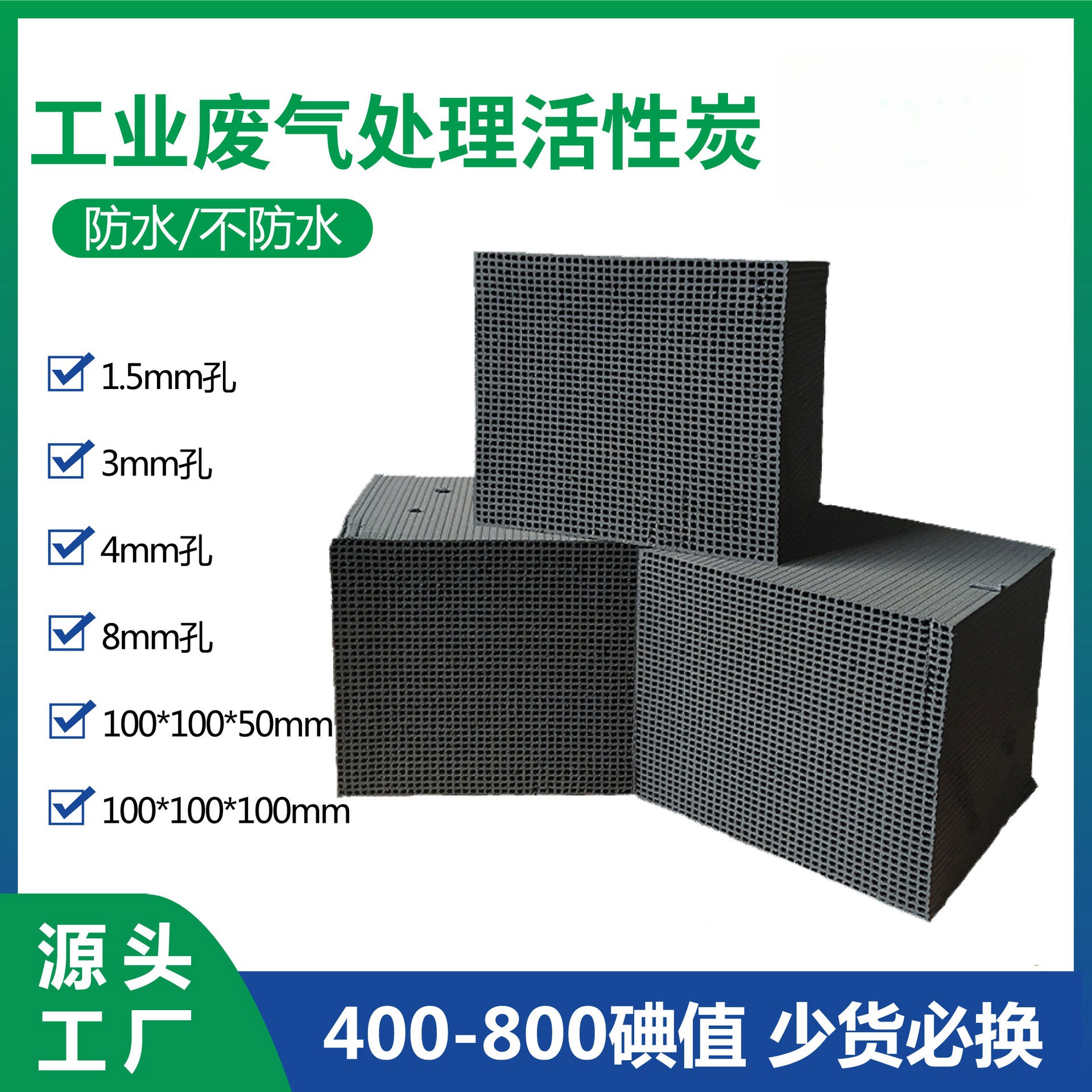
STEP2 Process upgrade: Honeycomb structure enhances mass transfer efficiencyFor high-volume exhaust gas treatment scenarios, a honeycomb activated carbon with a pore density of 80-100 pores/cm² and wall thickness of 0.8-1.2mm has been developed. Its regular pore structure ensures more even air distribution, reducing the empty bed contact time (EBCT) to 0.5s and lowering the pressure drop by 40%. A car painting workshop using Muerong honeycomb activated carbon for VOCs treatment achieved a methane non-methane total hydrocarbons removal rate of 95% from 80% under a wind volume of 50,000m³/h, saving operation costs by 280,000 yuan annually.
STEP3 Parameter Intelligent Control: Dynamic Monitoring System Ensures Stable OperationIntegrated with differential pressure sensors, concentration monitors, and other equipment, it provides real-time feedback on adsorption bed pressure drop and outlet pollutant concentration, automatically adjusting flow rate and regeneration cycle through the PLC system. After adopting this system, a chemical industrial park reduced the activated carbon regeneration frequency from once a month to once a quarter, cut regeneration energy consumption by 25%, and decreased the frequency of manual inspections by 60%.
For more information, please visit the official website:www.shanghaimurong.com
FAQ Q&A Technical Selection Guide
Q1: How to select the activated carbon model according to the type of wastewater?
A: Mu Rong International offers the "Three-view Selection Method": First, consider the molecular weight of the pollutants. For small molecules (such as benzene, formaldehyde), choose coconut shell granular activated carbon (iodine value ≥1100mg/g); for medium molecules (such as phenols), choose columnar activated carbon (iodine value 900-1000mg/g); for large molecules (such as dyes), choose powdered activated carbon (iodine value 800-900mg/g). Second, consider the treatment flow rate. For high flow rate (≥100m³/h), prioritize honeycomb activated carbon (pore density 80-100 pores/cm²); for low flow rate (<50m³/h), choose granular activated carbon (particle size 0.5-3mm). Third, consider the regeneration needs. For frequent regeneration scenarios, choose high-temperature-resistant coconut shell activated carbon (maximum tolerance 800℃), and for low-frequency regeneration, choose coal-based activated carbon (cost reduced by 30%).
Q2: How to determine the regeneration cycle of activated carbon?
A: The Muerong technical team suggests using the "pressure drop-concentration double index method" for judgment: initiate the regeneration process when the pressure drop of the adsorption bed layer increases by 30% compared to the initial value, or when the outlet pollutant concentration reaches 10% of the influent concentration. For example, a pharmaceutical company uses Muerong coconut shell activated carbon to treat alcohol-containing wastewater. The initial pressure drop is 0.2 kPa, and after 2 months of operation, the pressure drop rises to 0.26 kPa. At the same time, the outlet ethanol concentration increases from <5 mg/L to 8 mg/L. In this case, thermal regeneration treatment is required.
Q3: How to avoid the agglomeration problem of activated carbon plates?
A: Mufeng International solves it through "three-proof design": Firstly, controlling particle size distribution at the selection stage, using 0.5-3mm multi-grade ratio for granular activated carbon to avoid fine particles blocking the channels; secondly, controlling flow rate during operation, liquid treatment flow rate ≤10m/h, gas treatment flow rate ≤1.2m/s; thirdly, regular backwashing during maintenance, using treated clean water at twice the design flow rate for backwashing for 10 minutes every 2 weeks, which can reduce the risk of scale formation by 80%. After adopting this solution, a dyeing and printing mill extended the service life of the activated carbon from 1 year to 3 years.
Summary Reference: Three Core Values of Activated Carbon Efficiency Optimization
Muyong (Shanghai) International Trade Co., Ltd. helps customers achieve a significant improvement in activated carbon adsorption efficiency through three steps of optimization: raw material selection, process upgrading, and parameter intelligent control.
STEP1 Cost OptimizationHigh iodine value coconut shell activated carbon adsorption capacity increased by 35%, filter material replacement cycle extended by 50%, and cost per ton of wastewater treatment reduced by 0.8 yuan.
STEP2 Performance EnhancementHoneycomb activated carbon mass transfer efficiency increased by 40%, VOCs removal rate stable above 95%, meeting stringent emission standards.
STEP3 Management upgradeThe dynamic monitoring system achieves unattended operation, reducing the frequency of manual inspections by 60% and decreasing the equipment failure rate by 25%.
Currently, MuRong International's technical solutions have been applied to over 20 industries including electronics, chemicals, dyeing and printing, serving more than 500 clients and helping enterprises save over 20 million yuan in operating costs annually. In the future, the company will continue to specialize in the water treatment materials field, supporting the green transformation of the industry with more professional technology and higher-quality products.