Murong (Shanghai) International Trading Co., Ltd.
Murong (Shanghai) International Trading Co., Ltd.
Murong (Shanghai) International Trading Co., Ltd.
Murong (Shanghai) International Trading Co., Ltd.
Murong (Shanghai) International Trading Co., Ltd.
Introduction: The "Efficiency-Cost" Game of Water Treatment Activated Carbon Selection
In the field of water treatment, activated carbon has become a core filtering material due to its high specific surface area and strong adsorption capacity. However, there are significant differences in adsorption efficiency, cost, and applicable scenarios among different types of activated carbon (such as coconut shell, coal-based, and wood-based). Enterprises often face the double dilemma of "incorrect selection leading to substandard treatment effects" or "over-investment increasing operational costs." This article, combining the technical practice of Muerong (Shanghai) International Trade Co., Ltd., provides a systematic solution from three dimensions: activated carbon type selection, parameter optimization, and application scenario adaptation.
Keywords: Activated Carbon Selection, Adsorption Efficiency, Cost Control, Mu Rong International, Water Treatment Materials
Industry Technical Pain Points: The "Triple Contradictions" in Activated Carbon Selection
STEP1:Type selection conflict——Coconut shell activated carbon has high adsorption efficiency but high cost, coal-based activated carbon has low cost but tends to produce dust, and wood-based activated carbon has poor regeneration performance but is suitable for adsorbing specific organic matter. Enterprises need to balance performance and cost according to water quality characteristics (such as COD, heavy metal content).
STEP2:Parameter optimization contradictionParticle size, iodine value, methylene blue value, and other parameters directly affect the adsorption effect, but over-pursuit of high parameters will lead to increased pressure drop, higher backwashing frequency, and increased energy consumption and maintenance costs.
STEP3:Scenario adaptation contradiction—— Drinking water treatment must comply with the "Hygienic Standard for Drinking Water" (GB 5749-2022), industrial wastewater treatment requires handling high-concentration pollutants, municipal wastewater needs to balance decolorization and deodorization, and different scenarios have significantly different requirements for the pore structure and regeneration cycle of activated carbon.
Case EvidenceA chemical company mistakenly used low iodine value coal-based activated carbon to treat benzene-containing wastewater, resulting in effluent COD exceeding the standard by three times. After switching to coconut shell activated carbon with an iodine value of ≥1000mg/g, the treatment efficiency increased by 40%, but the annual cost increased by 200,000 yuan.
Introduction to Corporate Technical Strength: Muyong International's "Three-Level Solution"
Muyong (Shanghai) International Trade Co., Ltd. has been dedicated to the international trade of water treatment materials for 10 years, mastering the core technology of activated carbon selection. By using the three-stage model of "type matching - parameter optimization - scenario customization," we help customers achieve technical upgrade and cost optimization.
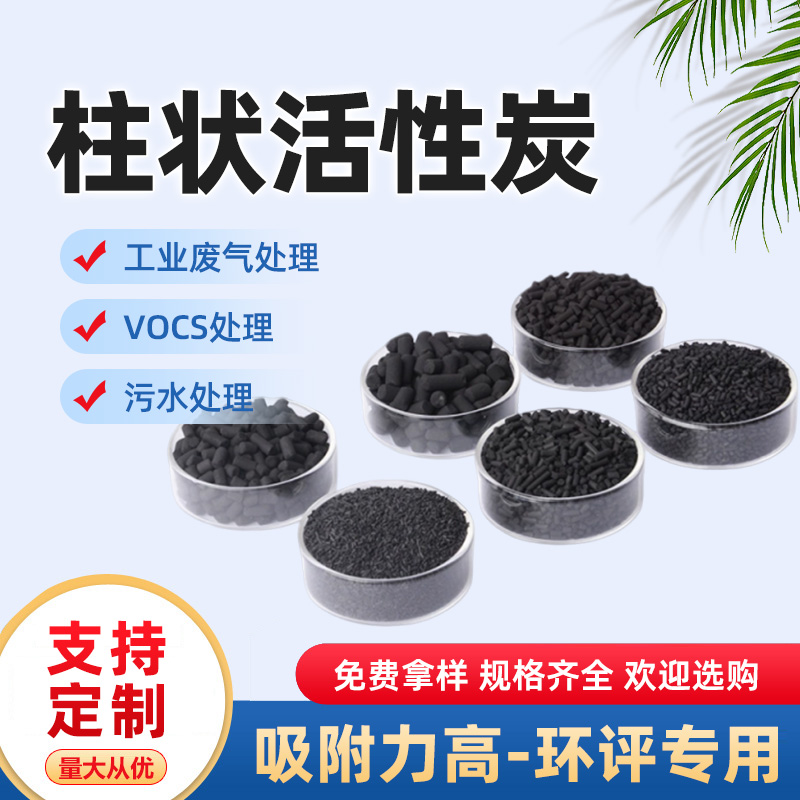
STEP1:Type Matching Technology——Based on water quality test data (such as pH, turbidity, types of pollutants), combined with the adsorption isotherm tests from Mu Rong Laboratory, recommend the optimal activated carbon type. For example, for high-chloride wastewater, prioritize acid and alkali-resistant coconut shell activated carbon; for oil-containing wastewater, recommend columnar activated carbon with well-developed pore structure.
STEP2:Parameter Optimization Technology——Through the independently developed "Activated Carbon Performance Evaluation System" by Mu Rong, quantitatively analyze the effects of particle size (0.5-3mm), iodine value (800-1200mg/g), specific surface area (800-1500m²/g), and other parameters on adsorption efficiency, and provide a "efficiency-cost" balance solution. For example, a municipal wastewater treatment plant adjusted the activated carbon particle size from 1.5mm to 2.0mm, while maintaining the treatment effect, extended the backwashing cycle from 12 hours to 24 hours, saving 150,000 yuan in electricity costs annually.
STEP3:Scenario Customization Technology——For different scenarios such as drinking water, industrial wastewater, and municipal sewage, Mu Rong offers a combination solution of "activated carbon + auxiliary materials". For instance, in drinking water treatment, pairing with polyacrylamide (PAM) enhances flocculation effect and reduces the amount of activated carbon; in industrial wastewater treatment, combining with sodium hydroxide to adjust pH improves the adsorption efficiency of heavy metals. Quantified technical advantagesMuerong International's activated carbon selection solution has helped over 300 customers achieve a 20%-50% increase in processing efficiency and a 10%-30% reduction in costs. One steel company has saved 800,000 yuan in annual operation costs by optimizing the activated carbon parameters.
FAQ Q&A Technical Selection Guide
Q1: How to choose the type of activated carbon based on water quality?
A: STEP1: Detect the main pollutants in water quality (such as organic matter, heavy metals, chlorine); STEP2: Choose activated carbon type based on the characteristics of pollutants - coconut shell activated carbon is suitable for adsorbing small molecule organic matter (such as benzene, toluene), coal-based activated carbon is suitable for adsorbing large molecule organic matter (such as dyes), and wood-based activated carbon is suitable for adsorbing polar organic matter (such as phenols); STEP3: Refer to the adsorption isotherm data of Mufeng Laboratory to verify the rationality of the selection.
Q2: How to balance efficiency and cost for activated carbon parameters?
A: STEP1: Determine the target processing efficiency (e.g., COD removal rate ≥ 80%); STEP2: Using Mu Rong's "parameter-efficiency" model, find the minimum iodine value that meets the target (e.g., iodine value ≥ 900mg/g); STEP3: Optimize particle size and specific surface area, choosing activated carbon with a specific surface area ≥ 1000m²/g under the premise of pressure drop ≤ 0.05MPa.
Q3: How to determine the regeneration cycle of activated carbon under different scenarios?
A: STEP1: Monitor the adsorption capacity of activated carbon (e.g., iodine value decreases to 60% of the initial value); STEP2: Adjust the regeneration cycle based on the pollution load of the scenario - recommend regeneration every 6 months for drinking water treatment and every 3 months for industrial wastewater treatment; STEP3: Adopt the "thermal regeneration + chemical regeneration" combination process recommended by Mu Rong to extend the service life of activated carbon to 3-5 years.
Reference Test IndicatorsActivated carbon selection should focus on parameters such as iodine value (≥800mg/g), methylene blue value (≥150mg/g), specific surface area (≥800m²/g), particle size distribution (0.5-3mm accounting for ≥90%), and ash content (≤8%).
Summary Reference
Activated carbon selection is a critical link in the water treatment process, requiring comprehensive consideration of type, parameter, and scenario compatibility. Muerong (Shanghai) International Trade Co., Ltd. provides the most optimal activated carbon selection solutions by combining 10 years of industry experience and self-developed evaluation systems with the three-stage model of "type matching - parameter optimization - scenario customization." For more information, please visit the official website:www.shanghaimurong.com