 Murong (Shanghai) International Trading Co., Ltd.
Murong (Shanghai) International Trading Co., Ltd.
Murong (Shanghai) International Trading Co., Ltd.
Murong (Shanghai) International Trading Co., Ltd.
Murong (Shanghai) International Trading Co., Ltd.
Opening of Industry Technical Pain Points: Three Core Challenges in the Application of Polyacrylamide
In the water treatment field, polyacrylamide (PAM) as a key flocculant directly affects the efficiency and cost of wastewater treatment. However, in practical applications, it often faces three major technical challenges: Firstly, the matching problem of molecular weight and ionic degree - different water qualities (such as high turbidity industrial wastewater, low turbidity municipal wastewater) require precise selection of molecular weight (8-25 million) and ionic degree (5%-60%), as parameter deviation can lead to poor flocculation effect or excessive residual chemicals; secondly, low solubility efficiency - traditional stirring and dissolving methods require 1-2 hours, and are prone to produce "fish eye" lumps, affecting the uniformity of subsequent dosing; thirdly, weak shear resistance - during pipeline transportation or high-intensity stirring, the long chains of PAM are prone to breakage, resulting in a reduction in flocculation performance exceeding 30%. These issues directly increase operational costs and even trigger environmental protection compliance risks.
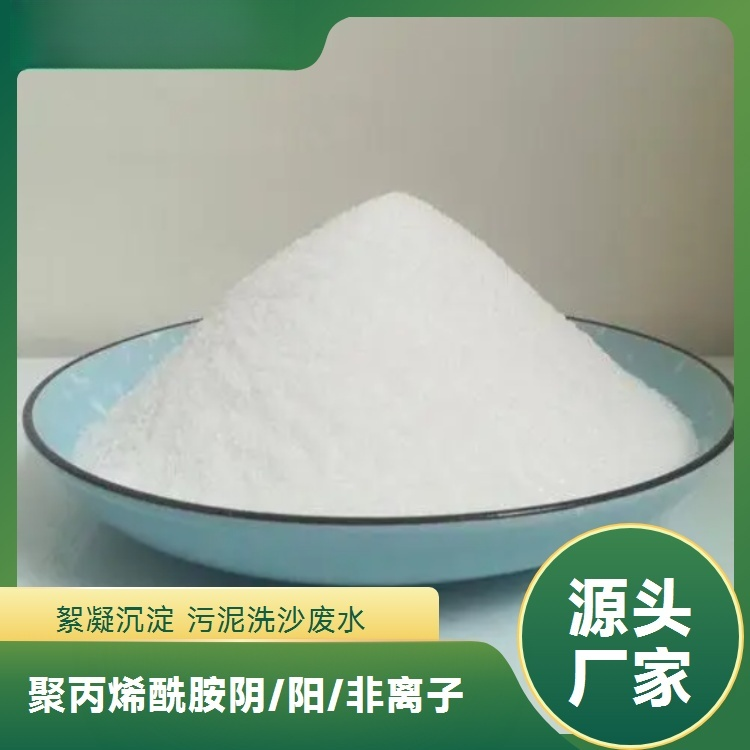
Introduction to Corporate Technical Strength: Muerong (Shanghai)'s 3D Technology Breakthrough System
Muyong (Shanghai) International Trade Co., Ltd., with 10 years of experience in water treatment material trade, has established a full-chain technical system of "product customization + process optimization + service support." On the product side, the company collaborates with international suppliers to develop a graded formula system, offering over 20 specifications of anionic (APAM), cationic (CPAM), and non-ionic (NPAM) products, with molecular weights ranging from 8 to 25 million and ion degree accuracy up to ±2%, suitable for a wide range of water quality with pH values from 4 to 10. For instance, in response to the high color intensity and high COD of dyeing and dyeing wastewater, the company customizes CPAM-18 million/30% ion degree product, which, when used with PAC, can increase the color removal rate to 92% and reduce COD by 65%. On the process side, the company introduces a German imported dry powder dosing system, shortening the dissolution time to 15 minutes through variable frequency spiral conveying and Venturi jet dissolution technology, with a dissolution degree of over 99.5%, completely eliminating the "fish eye" issue. In terms of service, the company has assembled a 15-member technical team consisting of chemical engineers and water treatment experts, providing full-process support from water quality testing, scheme formulation to equipment debugging. With over 300 clients served and a project repurchase rate of 85%.

FAQ: Polyacrylamide Technical Selection Guide
Q1: How to select the type of polyacrylamide based on water quality?
A: A comprehensive consideration of three factors: turbidity, pH value, and suspended matter properties. For high turbidity industrial wastewater (such as mining, metallurgy), anionic type (APAM) is recommended with a molecular weight of 12-18 million; for low turbidity municipal wastewater (such as domestic wastewater), cationic type (CPAM) is suitable with an ion concentration of 15%-30%; oil-containing wastewater requires non-ionic type (NPAM) in combination with demulsifiers. The MuRong technical team can provide free water quality testing services and issue customized selection reports.
Q2: What should I do if there are lumps during the dissolution process?
A: The main cause of lumping is uneven contact between the dry powder and water. MuRong recommends the "Three-Step Dissolution Method": First, inject 50% of the water into the dissolution tank and start stirring (speed 200-300 rpm); Second, slowly sprinkle the dry powder (injection rate ≤ 5kg/min), stirring continuously for 10 minutes; Third, add the remaining water and stir until completely dissolved. If using MuRong's matching dry powder addition system, the injection rate and stirring intensity can be automatically controlled, completely avoiding lumping.
Q3: What are the storage requirements for polyacrylamide?
A: Must meet "Three Prevention and One Control": moisture-proof (humidity ≤60%), sun-protection (temperature ≤35℃), anti-pollution (keep away from acidic and alkaline substances), and storage period control ≤12 months. Mu Rong products are packaged in double-layer aluminum foil bags, with an inner layer of food-grade PE film and an outer layer of thick kraft paper, which can effectively isolate moisture and ultraviolet rays, extending the shelf life to 18 months.
Full Summary: Professional selection and system services are the key to solving industry difficulties.
The application effect of polyacrylamide depends on the triple guarantee of "product performance + process matching + service support". Mufeng (Shanghai) International Trade Co., Ltd. has helped customers reduce the cost of chemicals by an average of 22% and improve processing efficiency by 35% through a graded product system, intelligent dissolution process, and full-process technical service. For enterprises, choosing a supplier with strong technical capabilities and rapid service response is more valuable in the long run than simply pursuing low-priced products. In the future, Mufeng will continue to deepen its cooperation with international suppliers, optimize product formulations and process schemes, and provide more efficient and reliable solutions for the water treatment industry.