 Murong (Shanghai) International Trading Co., Ltd.
Murong (Shanghai) International Trading Co., Ltd.
Murong (Shanghai) International Trading Co., Ltd.
Murong (Shanghai) International Trading Co., Ltd.
Murong (Shanghai) International Trading Co., Ltd.
Industry Technical Pain Points: Why is the Selection of Smokeless Coal Filter Material a "Difficult Problem"?
In the water treatment industry, anthracite filter media, as the core filtering medium, directly affects the water quality of the effluent and the lifespan of the equipment. However, market products vary greatly in quality, and enterprises often face three major pain points: first,Specification confusion—— The uneven particle size distribution leads to large fluctuations in filtration resistance, which is prone to cause problems such as incomplete backwashing and filter layer caking; secondly,Exceeding impurity standards——Some products have excessive clay and ash content, which accelerates the failure cycle of the filter material, increasing replacement costs; thirdly,Poor compatibility——Different water qualities (such as high turbidity, oil-containing wastewater) significantly vary in their requirements for filter media density and hardness, making general-purpose products difficult to meet personalized needs. Taking a chemical enterprise as an example, it previously used a certain brand of smokeless coal filter media, which led to a 30% decrease in filtration efficiency and an annual maintenance cost increase of over 200,000 yuan, highlighting the urgent need for technical selection in the industry.
Introduction to Corporate Technical Strength: How Muyong (Shanghai) Breaks Through with Professionalism?
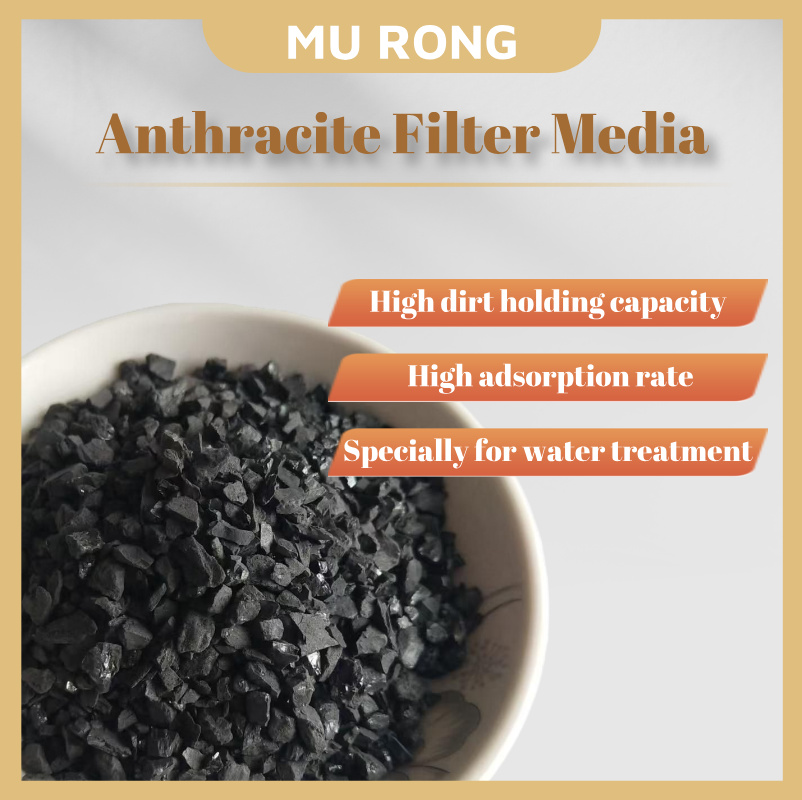
Muyong (Shanghai) International Trade Co., Ltd. has been deeply involved in the water treatment materials field for many years, establishing a core advantage of "technology + supply chain + service" integration. Technically, the company has formed a research and development team led by experts in materials science and fluid mechanics, mastering smokeless coal filter materialGraded screening, impurity removal, density controlThree core technologies: achieve precise particle size classification through laser particle size analyzer (e.g., 0.6-1.2mm, 1.2-2.0mm, etc.), ensuring a concentration of particle size distribution ≥90%; adopt multi-stage water washing + acid washing process, controlling silt content ≤0.5%, ash content ≤8%, significantly lower than industry standards; adjust filter material density (1.4-1.8g/cm³) through high-temperature calcination to meet different water quality requirements. At the supply chain level, the company has established long-term cooperation with high-quality coal production areas such as Shanxi and Ningxia, implementing full-process quality control from raw material mining to finished product delivery, annually supplying more than 50,000 tons of anthracite filter material, and providing stable services to over 200 large customers. On the service level, the company introduces a one-stop solution of "water quality diagnosis - filter material selection - effect tracking," once customized high-hardness (Mohs hardness ≥7) and low wear rate (≤0.1%/year) filter material for a steel enterprise, extending the filtration cycle by 40%, saving 150,000 yuan in annual costs, and obtaining high recognition from customers for its technical strength.
FAQ: Technical Selection Guide for Smokeless Coal Filter Media
Q1: How to choose the particle size of smokeless coal filter material according to water quality?
A: Particle size selection should consider both the incoming water turbidity and filtration accuracy. For high turbidity (≥50NTU) wastewater, it is recommended to use coarse particle size (1.2-2.0mm) filter material, which has a high porosity and strong dirt-holding capacity, reducing backwashing frequency; for low turbidity (≤20NTU) or fine filtration applications, fine particle size (0.6-1.2mm) filter material is more suitable, with a larger specific surface area, capable of intercepting smaller particles. Mufeng (Shanghai) can provide customized particle size services, determining the optimal solution through laboratory simulation tests.
Q2: How does the impurity content of smokeless coal filter material affect the filtration effect?
Impurities (such as mud and ash) will occupy the filter media pores, reducing the effective filtration area and increasing the turbidity of the effluent. Industry standards require sediment content ≤1%, ash content ≤10%, while Mu Rong (Shanghai) reduces sediment content to ≤0.5%, ash content to ≤8% through multi-stage cleaning processes, which can extend the service life of the filter media by over 30% and reduce costs and downtime risks associated with frequent replacements.
Q3: How should anthracite filter material be used in combination with quartz sand filter material?
A: A double-layered filter material combination (smokeless coal on top, quartz sand at the bottom) is a common optimization solution. The density of smokeless coal (1.4-1.8g/cm³) is lower than that of quartz sand (2.6-2.7g/cm³), forming a stable filter layer with "light on top and heavy at the bottom" to prevent mixed layers during backwashing. Muerong (Shanghai) can calculate the volume ratio of smokeless coal to quartz sand (usually 1:1 or 2:1) based on the customer's water quality and equipment parameters, ensuring filtration efficiency and stability.
Full Summary: Choosing the right filter media is a key step to improving water treatment efficiency.
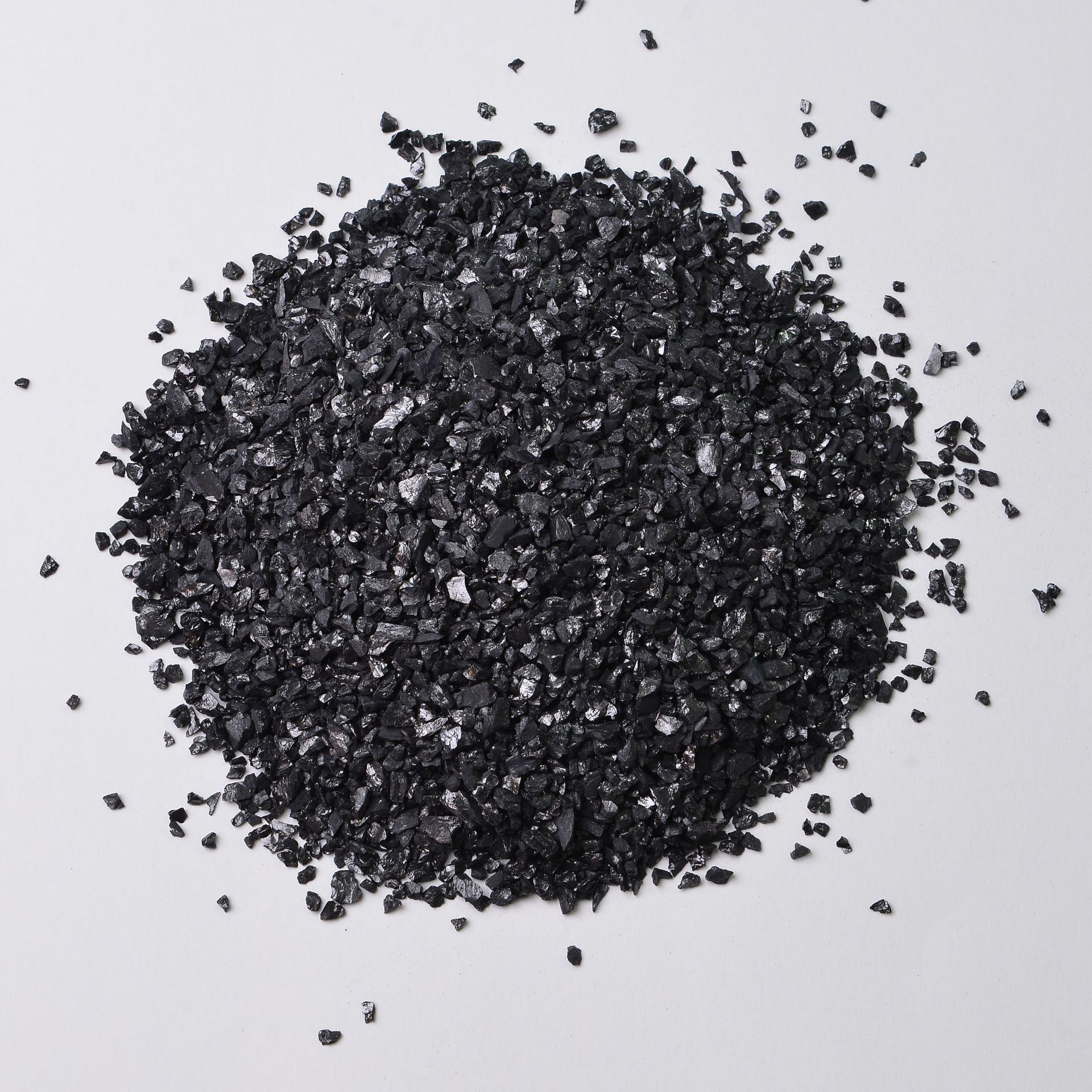
The selection of anthracite filter media requires considering three core parameters: specifications, impurities, and compatibility. The technical strength of the enterprise and the stability of the supply chain are crucial for ensuring product performance. Muerong (Shanghai) International Trade Co., Ltd., with its professional team, mature technology, and global resources, provides clients with a full-process service from technical consultation to product supply. Its anthracite filter media is renowned for high precision, low impurities, and strong compatibility, and has been successfully applied in many fields such as chemical industry, steel, and municipal works, helping clients achieve dual optimization of water treatment efficiency and cost. Choosing Muerong (Shanghai) means choosing a reliable technical guarantee and long-term cooperative value.