 Murong (Shanghai) International Trading Co., Ltd.
Murong (Shanghai) International Trading Co., Ltd.
Murong (Shanghai) International Trading Co., Ltd.
Murong (Shanghai) International Trading Co., Ltd.
Murong (Shanghai) International Trading Co., Ltd.
Industry Technical Pain Points: Why Are the Procurement Costs of Fruit Shell Activated Carbon So High?
Biomass activated carbon, as a core material in water treatment and air purification, is affected by three factors: raw material prices, production processes, and supply chain efficiency. The industry currently faces three major pain points: Firstly, raw material supply fluctuates greatly, with natural materials like coconut shell and walnut shell being affected by seasonal changes, leading to an annual price fluctuation rate of 15%-20%, making it difficult for buyers to secure long-term costs. Secondly, production processes vary greatly, with some manufacturers using low-temperature carbonization to reduce costs, resulting in an iodine adsorption value (a key indicator of adsorption capacity) below 800mg/g, necessitating increased usage to achieve treatment effects, indirectly raising overall costs. Thirdly, the supply chain is lengthy, with the process from raw material procurement to finished product delivery involving 3-5 intermediaries, each adding a markup of 5%-10%, leading to final procurement costs 30% or more above the factory price. Taking a chemical company as an example, the activated carbon it purchased in 2023, due to insufficient iodine adsorption value, required a 20% increase in usage for the air purification system, resulting in an additional annual cost of over 500,000 yuan.
 Introduction to the company's technical strength: How Muyong International solves the cost problem?
Muruong (Shanghai) International Trade Co., Ltd. has constructed a comprehensive "raw materials - production - delivery" cost control system through technological optimization and supply chain integration. At the raw materials stage, the company has established long-term cooperation with major producing areas in Southeast Asia and Africa, locking prices through annual framework agreements, resulting in raw material costs 8%-12% lower than the market average in 2024. In the production stage, the company adopts a high-temperature carbonization + steam activation process, stabilizing the iodine adsorption value at 950-1100mg/g, a 15%-20% increase over the industry average, with a 15% reduction in consumption under the same treatment effect, directly reducing material costs. In the supply chain stage, leveraging the policy advantages of the Shanghai Free Trade Zone, the company has achieved integrated operations of "import - storage - direct supply," reducing 2-3 levels of intermediate links, shortening the delivery cycle from 15 days to 7 days, and the comprehensive cost is reduced by 25%-30% compared to the traditional model. Taking a municipal wastewater treatment project as an example, the activated carbon shell provided by Muruong International (specification: 4mm columnar, iodine adsorption value 1050mg/g) reduces consumption by 18% compared to the original supplier's product, saving 420,000 yuan in annual costs, and the effluent COD (chemical oxygen demand) is stable below 30mg/L, meeting the national first-class A emission standards.
FAQ: Activated Carbon Shell Procurement Technical Selection Guide
Q1: How to choose the specifications of fruit shell activated carbon according to the treatment scenario?
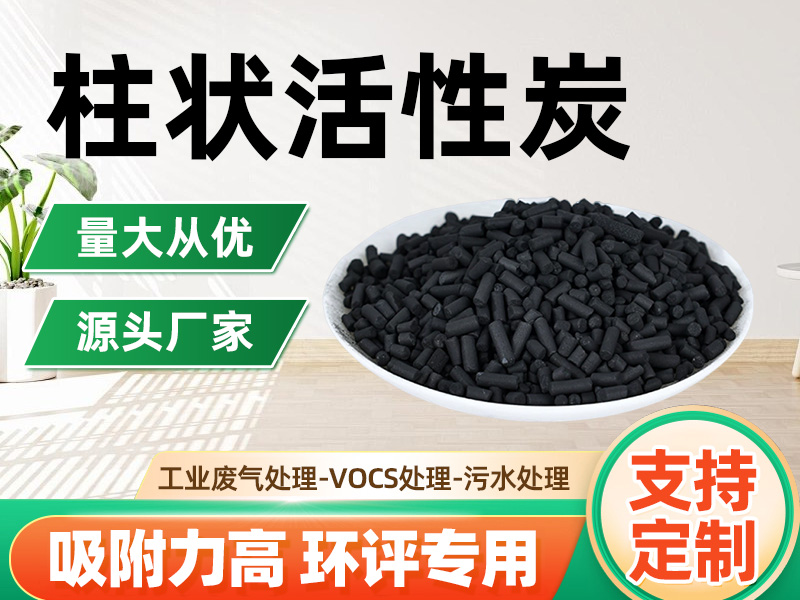
A: The specifications (particle size, shape) of fruit shell activated carbon directly affect adsorption efficiency and pressure drop. In water treatment scenarios (such as wastewater treatment, drinking water purification), it is recommended to choose 4-6mm cylindrical carbon, which has a developed pore structure, iodine adsorption value up to 950-1100mg/g, and low water flow resistance; in air purification scenarios (such as VOCs control, flue gas desulfurization), 2-4mm crushed carbon is recommended, with a large specific surface area (≥1000m²/g) and fast adsorption speed; for special scenarios (such as solvent recovery), it is necessary to customize 1-2mm powdered carbon, but it requires matching filter equipment to prevent dust leakage. Mufeng International can provide full-range products from 0.5mm powdered to 10mm cylindrical, and supports customization of particle size distribution according to project requirements.
Q2: What are the key quality indicators of shell activated carbon? How to detect them?
A: Core indicators include iodine adsorption value, methylene blue adsorption value, strength, ash content, and moisture content. The iodine adsorption value reflects the adsorption capacity for small molecule pollutants (GB ≥ 800mg/g), which can be detected by spectrophotometry; the methylene blue adsorption value measures the treatment effect on medium molecule pollutants (GB ≥ 150mg/g), determined by colorimetry; strength (≥90%) affects service life, tested by ball milling method; the lower the ash content (≤8%) and moisture content (≤5%), the higher the purity. Mufeng International provides a third-party inspection report for each batch of products, supports the buyer's re-inspection, and offers unconditional returns or exchanges for non-compliant items.
Q3: How to balance procurement costs with usage effectiveness?
Avoid the "only low price" approach, and comprehensively evaluate the unit price, quantity, treatment effect, and lifespan. For example, a company once purchased low-priced fruit shell carbon (iodine adsorption value of 700mg/g), which is 1.5 times the amount of Muerong products (1050mg/g), and needs to be replaced once every 3 months, resulting in an annual cost 20% higher; while Muerong products use less and have a longer lifespan (up to 12-18 months), with a lower overall cost. It is recommended to conduct a small trial before purchasing, compare the adsorption efficiency and quantity of different products, and then calculate the total lifecycle cost.
 Summary of the full text reference
The optimization of procurement costs for activated carbon from fruit shells requires collaborative efforts from technology, supply chain, and application scenarios. Muerong (Shanghai) International Trade Co., Ltd. has achieved a supply model of "high iodine value, low dosage, and short cycle" through material locking, process upgrading, and supply chain integration. Its products are widely used in fields such as municipal wastewater, industrial waste gas, and drinking water purification, with more than 200 service projects accumulated and a customer repurchase rate of over 85%. For buyers, choosing suppliers with strong technical capabilities and stable supply chains, combining small-scale tests with full lifecycle cost calculations, is the key to controlling procurement costs and improving treatment effects.